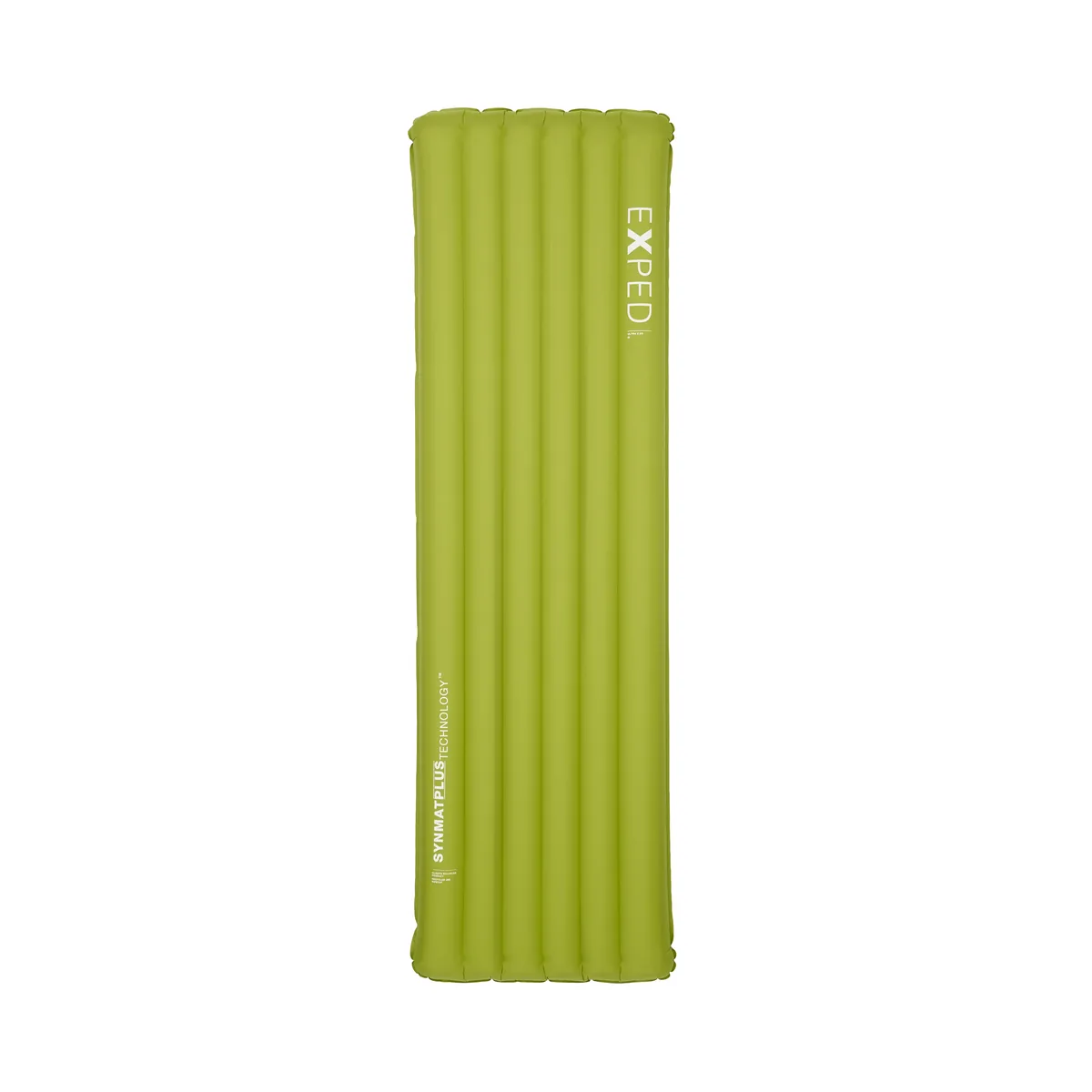
Exped
Exped Ultra 6.5R
No citable owner-review average published for this one, so no stars.
The oddity in this catalogue: an R 6.9 pad that weighs half an ounce less than the R 3.2 pad from the same brand. Exped's naming is confusing — the model is called 6.5R and tests at 6.9 — but the numbers are real and they make this the best warmth-per-ounce pad here, at 0.45 R per ounce. Three and a half inches thick, silent batting insulation, and again the same price in every width. If you were going to buy one insulated pad and use it from May to October and occasionally in snow, this is the strongest argument in the catalogue.
What this pad supports
R 6.9 puts it in the winter band — snow and sustained sub-freezing ground. On the pairing table that supports a bag rated to roughly 10 °F comfort before the ground becomes the limiting factor.
Size run
One product, 3 sizes. The headline numbers on this page describe the M.
| Size | Weight | Approx. price | Length | Width |
|---|---|---|---|---|
| M | 15.5 oz | ~$200 | 72 in | 20.5 in |
| MW | 1 lb 3 oz | ~$200 | 72 in | 25.6 in |
| LW | 1 lb 5 oz | ~$200 | 77.6 in | 25.6 in |
Specifications
Highlights
Features
- Pump sack included
- Repair kit included
- Winter R-value
- Wide option
- Quiet fabric
- Recycled fabric
- Under 1 lb
What it does well
- 0.45 R per ounce is the best warmth-per-weight figure in this catalogue — better than the XTherm's 0.47 only in the sense that it does it for less money and more loft.
- Actually lighter than Exped's own 3R at more than twice the R-value, which is the single strangest line on this site.
- 3.5 inches of loft and silent batting insulation.
- Same $200 in M, MW and LW, so the wide version is free.
- Winter-capable without being a winter-only pad.
What it costs you
- The name says 6.5R and the tested figure is 6.9, which is confusing in the other direction from most marketing.
- 20-denier fabric on a pad that will spend nights on frozen ground and scree.
- $200, and the 3R below it is only $30 cheaper for half the warmth — the cheaper pad is the worse buy.
- Batting insulation adds packed bulk compared with film at the same R-value.
Those two lists are drawn from Exped’s published specifications and from reviews that measured them. They are not owner sentiment — anything owners said appears under its own heading below.
What owners say
Distilled from owner discussions and long-term published reviews, not from anything measured here.
This pad sits in the odd position of being, on paper, one of the best warmth-per-ounce figures available, and of being under-discussed relative to that. The owners who have it describe it as their preference over better-known alternatives, usually on comfort grounds rather than warmth.
The dissent is worth recording: at least one owner who compared it directly with a competitor at home found it narrower, thinner and possibly shorter than expected, and preferred the alternative. That is a fit observation rather than a performance one, and it is the kind of thing worth checking in a shop.
Exped's model naming has churned — the same pad has been sold under different R-numbers across generations — so owners comparing notes frequently talk past each other. The published ASTM figure, not the name, is the number to shop on.
What owners like
- Owners who have compared it with better-known pads describe it as more comfortable, particularly for side sleepers, because of the lengthwise chambers.
- Some owners say they have not found its warmth limit in real use, which is a rare thing to say about any pad.
- Heavier sleepers get pointed toward it specifically, which suggests it holds up under load better than thinner pads.
- Flat pricing across the size range, like the rest of the Ultra line.
Common complaints
- Owners who tried it back-to-back with a competitor found it narrower and thinner-feeling than expected, which is a real dissent from the general praise.
- Exped's naming has changed enough over the years that owners get confused about which model is which, and the R-value does not match the name.
- Smaller owner base than the market leaders, so less accumulated reliability data.
Questions owners ask
Why is the R-value higher than the model name?
Is it comfortable for side sleepers?
Is it warm enough for winter?
Exped Ultra 6.5R, head to head
Other pads at this level
More from Exped →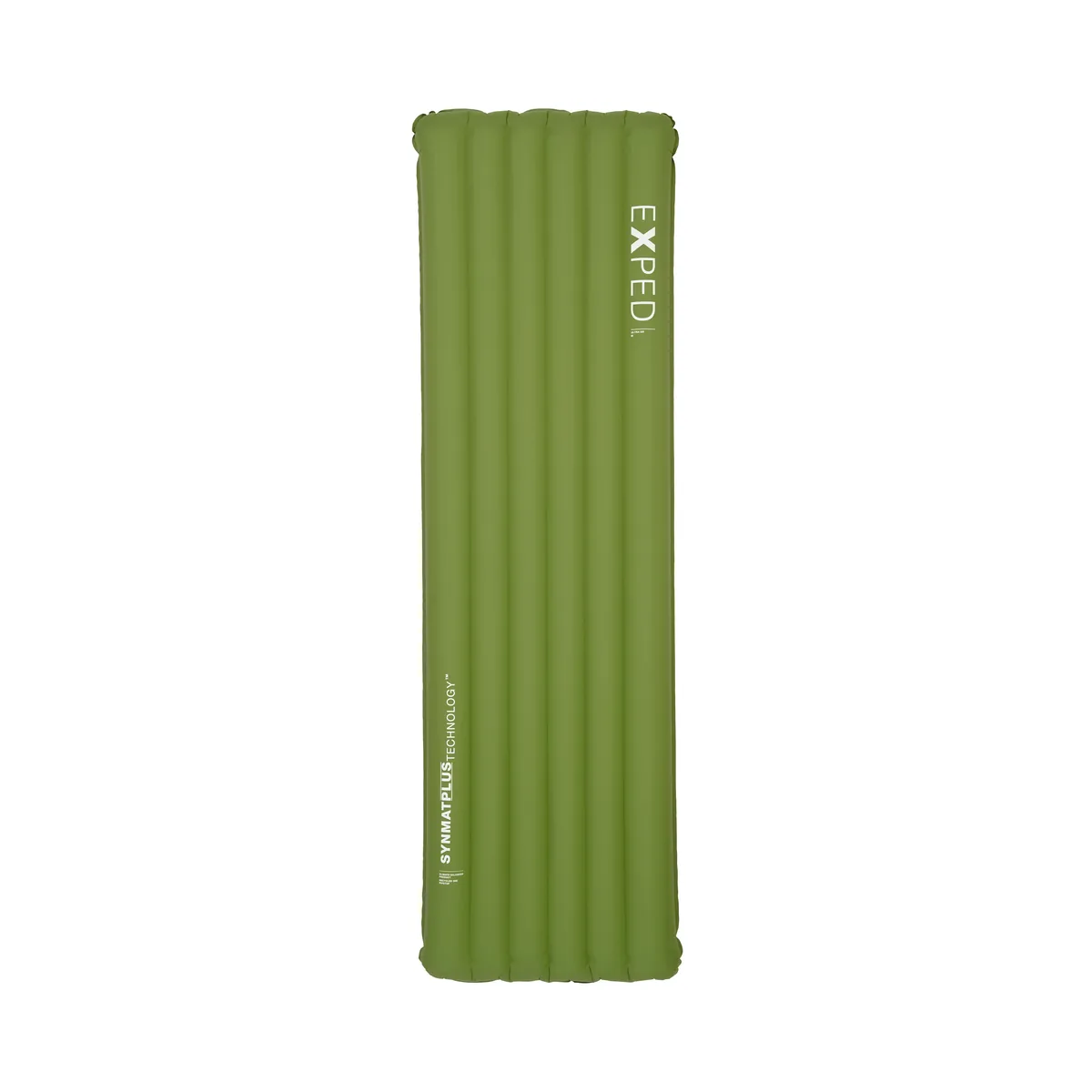
Exped
Exped Ultra 8R
Exped's winter flagship insulates with actual down inside the air chambers, which is why it reaches R 8.8 — the highest figure in this catalogue — at twenty ounces. Exped quotes it as good to about -49 °F, which is a number for expeditions rather than for anyone's weekend. Down inside a pad has one obvious vulnerability: moisture from breath-inflation will eventually kill it, which is exactly why the Schnozzel pump bag is in the box and why using it is not optional on this model.
Best for: Expedition and deep-winter camping
Full spec sheet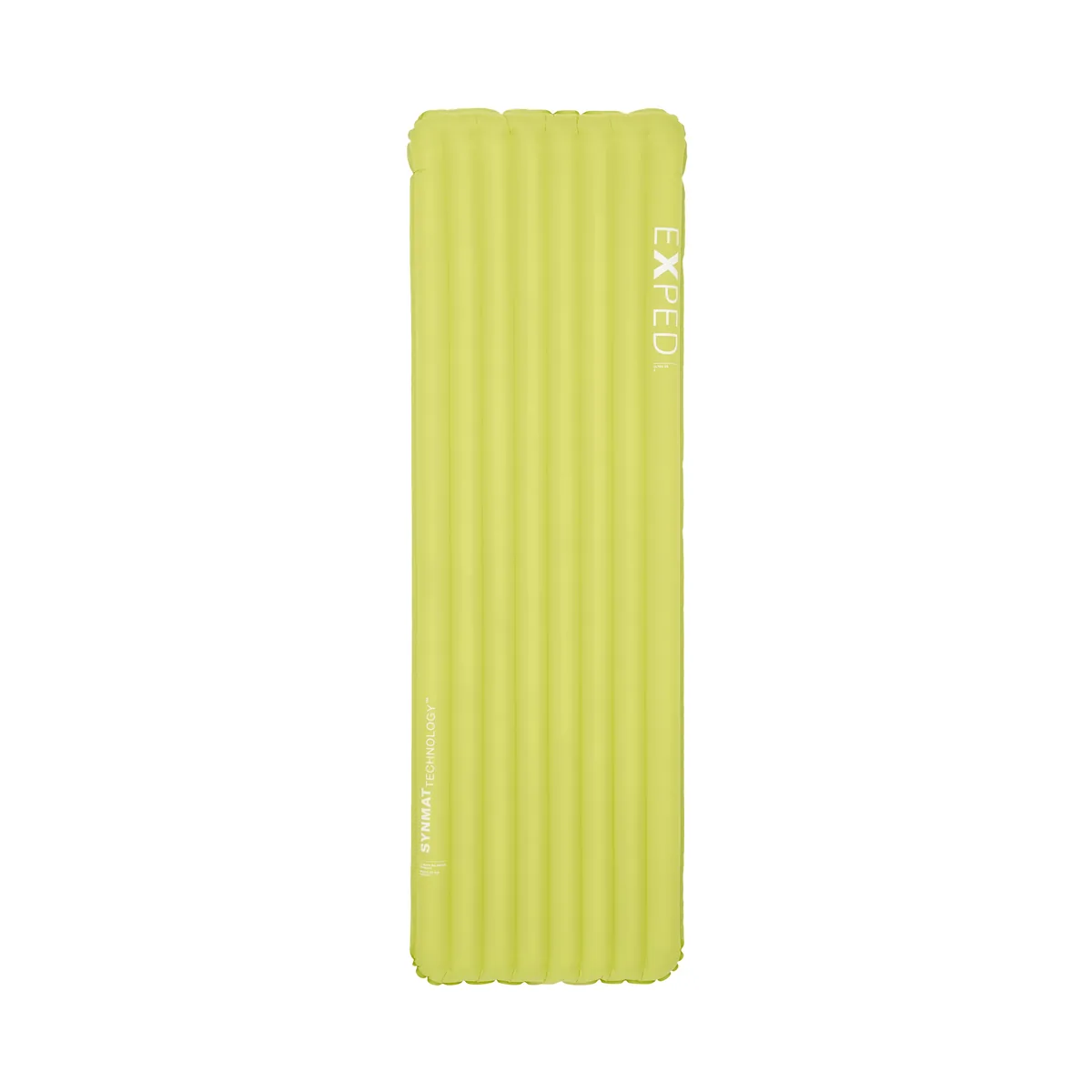
Exped
Exped Ultra 3R
Exped insulates with actual synthetic batting welded inside the air chambers rather than with reflective film, which is why their pads are silent and why they feel warm to the touch the moment you lie down instead of after ten minutes. The Ultra 3R is the three-season member: R-value 3.2, three inches thick, 16 ounces, and — unusually — the same price in every size, so a wide version costs nothing extra. The Schnozzel pump bag that comes with it doubles as a dry bag.
Best for: Three-season backpacking where pad noise is a dealbreaker
Full spec sheet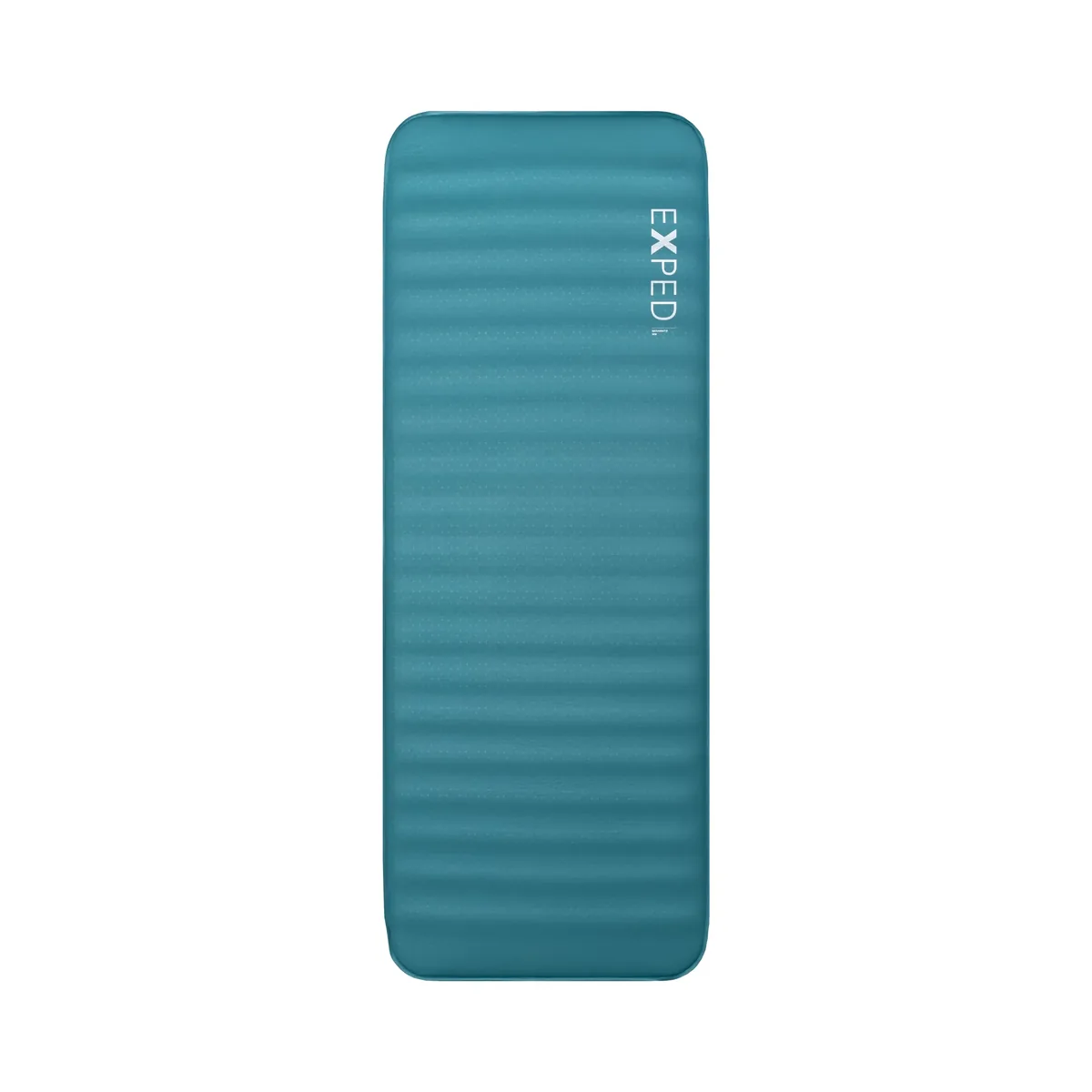
Exped
Exped MegaMat
The MegaMat is the reference car-camping mattress, and the reason is its foam: vertically laminated rather than a simple slab, so four inches of loft stays supportive under a hip instead of compressing to nothing. R-value 8.1 is warmer than any air pad here except Exped's own 8R, and Exped rates it to about -40 °F. It weighs four and a half pounds and rolls to the size of a sleeping bag, and once inflated it gets made up with a fitted sheet and forgotten about.
Best for: Car camping, van sleeping and cold basecamps
Full spec sheet