Exped
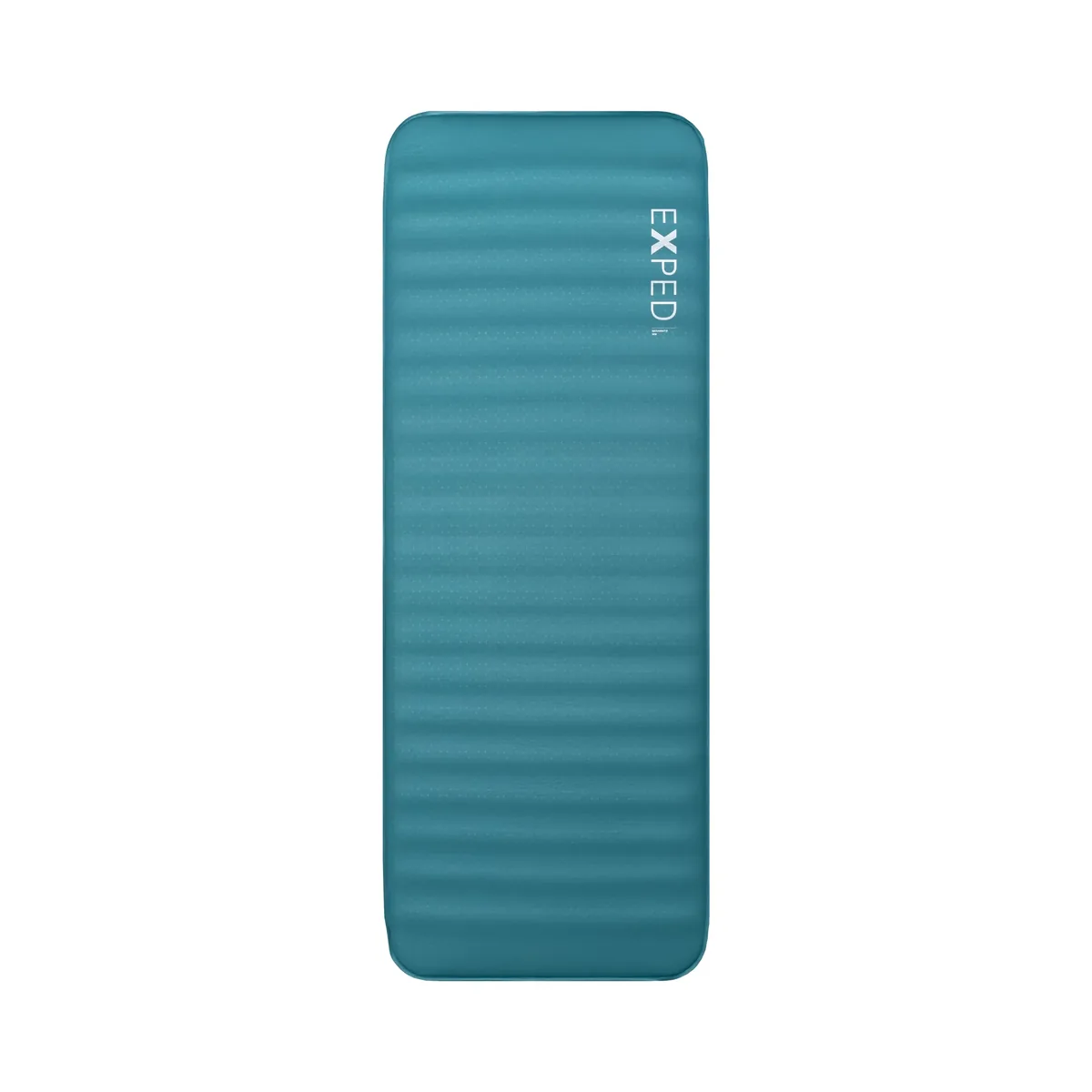
Exped MegaMat
No citable owner-review average published for this one, so no stars.
The MegaMat is the reference car-camping mattress, and the reason is its foam: vertically laminated rather than a simple slab, so four inches of loft stays supportive under a hip instead of compressing to nothing. R-value 8.1 is warmer than any air pad here except Exped's own 8R, and Exped rates it to about -40 °F. It weighs four and a half pounds and rolls to the size of a sleeping bag, and once inflated it gets made up with a fitted sheet and forgotten about.
What this pad supports
R 8.1 puts it in the winter band — snow and sustained sub-freezing ground. On the pairing table that supports a bag rated to roughly 0 °F comfort before the ground becomes the limiting factor.
Size run
One product, 3 sizes. The headline numbers on this page describe the MW.
| Size | Weight | Approx. price | Length | Width |
|---|---|---|---|---|
| MW | 4 lb 9 oz | ~$260 | 72 in | 25.6 in |
| LW | 5 lb | ~$270 | 77.6 in | 25.6 in |
| LXW | 5 lb 11.5 oz | ~$280 | 77.6 in | 30.3 in |
Specifications
Highlights
Features
- Self-inflating
- Built-in pump
- Winter R-value
- Wide option
- Quiet fabric
- Double or two-person option
What it does well
- R-value 8.1 with four inches of foam — the warmest self-inflating pad here, rated by Exped to roughly -40 °F.
- Vertically laminated foam holds its shape under a hip where a plain foam slab bottoms out.
- A Top-Up pump is built into the mat, so finishing the inflation doesn't need lungs or a separate sack.
- Three widths up to 30 inches, and a Duo version for two.
- Fabric and foam are built to a decade-scale standard rather than a season.
What it costs you
- Four and a half pounds and a 26.5-inch roll: strictly a vehicle mattress.
- $260 to $280, and the Duo and Max versions climb from there.
- Needs to be stored unrolled with the valve open, which takes real closet space.
- Getting it back into its bag after a trip is a two-person job the first few times.
Those two lists are drawn from Exped’s published specifications and from reviews that measured them. They are not owner sentiment — anything owners said appears under its own heading below.
What owners say
Distilled from owner discussions and long-term published reviews, not from anything measured here.
If camping-mattress discussion has a consensus product, this is it. The descriptions are not hedged: more comfortable than most real beds, the reason a partner agreed to go camping, the mattress people also use at home for guests. For side sleepers the specific claim is the useful one — hips not touching the ground, waking without pain.
Most of the advice owners give is about the first inflation: use the pump, use the right valve, and fill it completely the first time. Owners who did not describe an underwhelming first night.
The one real dissent concerns the Duo. Motion transfers across it, and where two sleepers differ in weight, owners recommend two narrower singles instead. Beyond that the complaints are all about bulk, which is inherent rather than a fault.
What owners like
- Owners repeatedly describe it as better than a real bed, and several say they keep one at home for guests.
- Side sleepers report waking without hip pain, which is the specific claim that recurs most.
- It is the default answer in camping-mattress discussion — when someone asks what to buy, this is what they are told.
- The Duo version is credited by more than one owner with converting a reluctant partner into someone who enjoys camping.
- Self-inflation gets it to eighty or ninety per cent on its own; the top-up pump handles the rest while you lie on it.
Common complaints
- Extremely bulky, and owners are unanimous that it is only useful if you are camping out of a vehicle.
- Motion transfer on the Duo is a real complaint — owners recommend two singles instead if the two sleepers are different weights.
- Expensive, and the step up to the thicker versions is another significant jump that owners argue about.
- Owners have to be told to use the pump and the correct valve on the first inflation, which suggests the instructions do not land.
Questions owners ask
Duo or two singles?
Does it really self-inflate?
Is it worth the money?
Do people use it at home?
Exped MegaMat, head to head
Other pads at this level
More from Exped →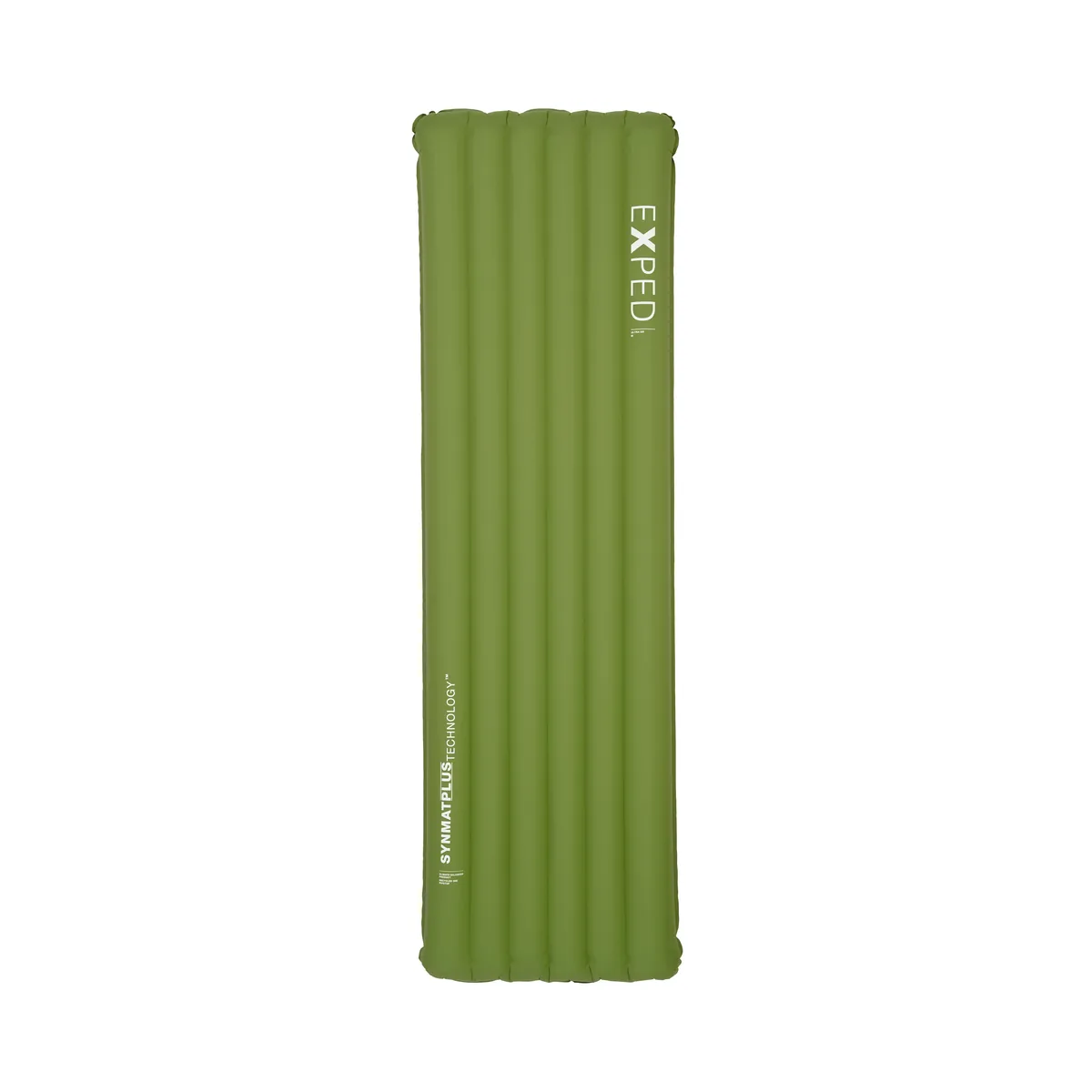
Exped
Exped Ultra 8R
Exped's winter flagship insulates with actual down inside the air chambers, which is why it reaches R 8.8 — the highest figure in this catalogue — at twenty ounces. Exped quotes it as good to about -49 °F, which is a number for expeditions rather than for anyone's weekend. Down inside a pad has one obvious vulnerability: moisture from breath-inflation will eventually kill it, which is exactly why the Schnozzel pump bag is in the box and why using it is not optional on this model.
Best for: Expedition and deep-winter camping
Full spec sheet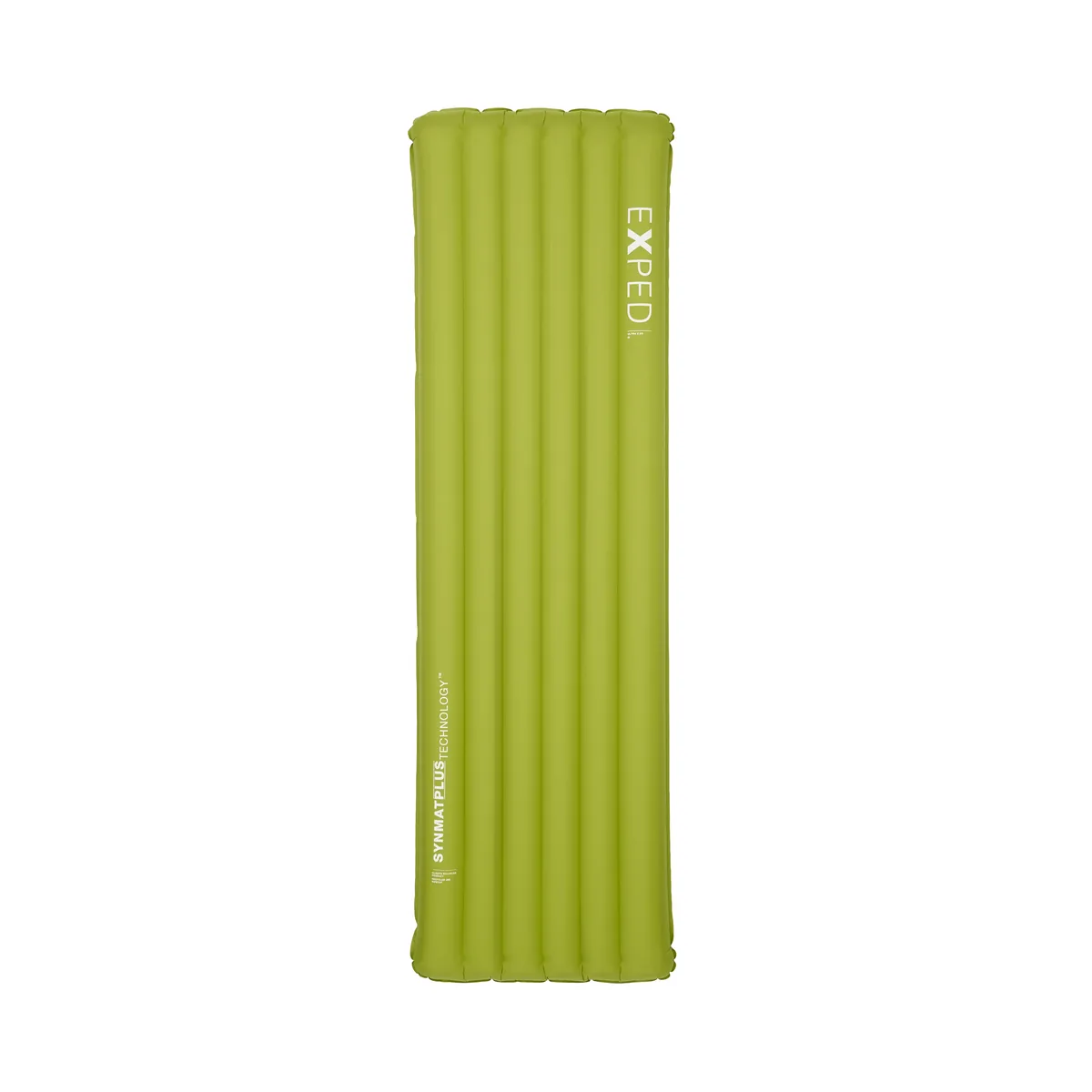
Exped
Exped Ultra 6.5R
The oddity in this catalogue: an R 6.9 pad that weighs half an ounce less than the R 3.2 pad from the same brand. Exped's naming is confusing — the model is called 6.5R and tests at 6.9 — but the numbers are real and they make this the best warmth-per-ounce pad here, at 0.45 R per ounce. Three and a half inches thick, silent batting insulation, and again the same price in every width. If you were going to buy one insulated pad and use it from May to October and occasionally in snow, this is the strongest argument in the catalogue.
Best for: One pad for everything, including the occasional night on snow
Full spec sheet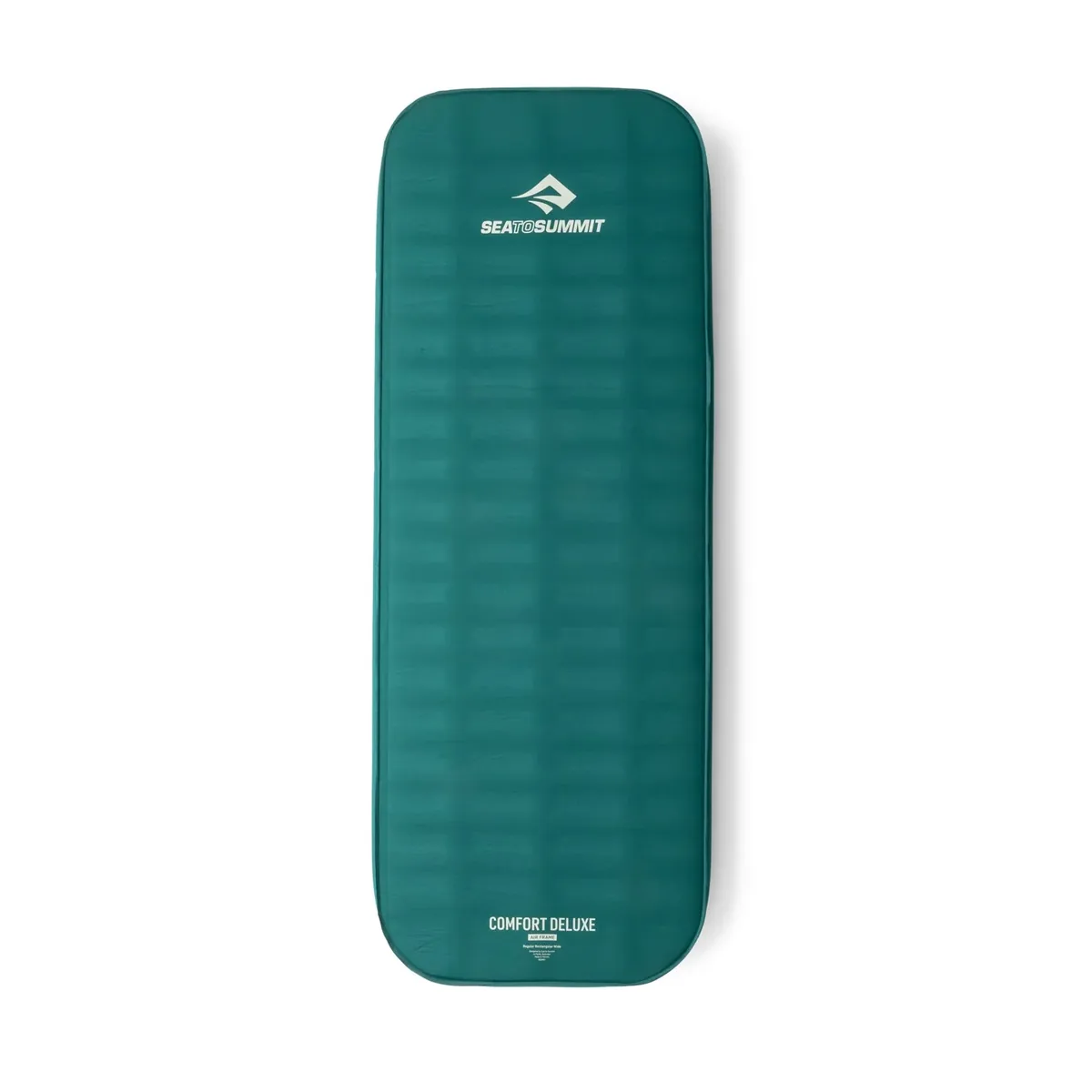
Sea to Summit
Sea to Summit Comfort Deluxe Self Inflating
R-value 7.7 and four inches of foam, with a stretch-knit face that takes a fitted sheet. This is the warmest camping mattress in the catalogue and the closest thing here to sleeping at home. The Air Frame construction puts a stabilising structure inside the foam, which is what stops a four-inch pad from feeling like a waterbed, and the 52-inch Double version genuinely fits two adults without the usual valley down the middle.
Best for: Car camping and van sleeping in cold weather
Full spec sheet