Backpacking Sleeping Bags
A hooded mummy is the most thermally efficient thing you can sleep in: the hood seals the one part a quilt leaves open, the draft collar stops the chimney effect at your shoulders, and there is nothing to arrange at 2 a.m. The price is weight — roughly four to six ounces of shell, hood and zip that a quilt deletes — and a fit you cannot change after buying. Two numbers decide which of these works for you, and only one of them is on the label: the ISO comfort rating, and the shoulder girth. A bag narrow enough to be efficient is also a bag you will rotate inside of, and a bag roomy enough to sleep in is a bag with more air to heat.
16 of them here from 10 makers, priced $200 to $795. The best warmth-per-ounce of the group is the Sea to Summit Spark 15 at 1.25 °F per ounce. The lightest is the Zpacks Classic Sleeping Bag 20F at 1 lb 2.8 oz, and the cheapest is the NEMO Forte 20 at ~$200.
Western Mountaineering
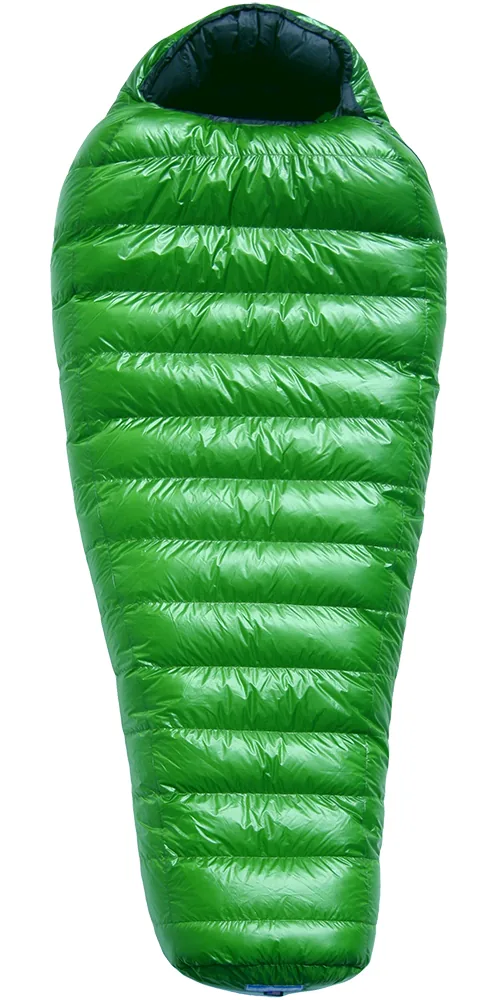
Western Mountaineering VersaLite 10
Ten degrees, six and a half inches of loft, twenty ounces of 850-fill down, and three inches more shoulder girth than the UltraLite — which is the point of it. The VersaLite is the bag for someone whose trips run from October frost to alpine summer and who would rather carry three extra ounces than own two bags. At 32 ounces it weighs less than plenty of 20-degree bags in this catalogue, and the girth means a puffy jacket can be worn inside it without crushing the loft.
Best for: One bag covering shoulder season and light winter
Full spec sheet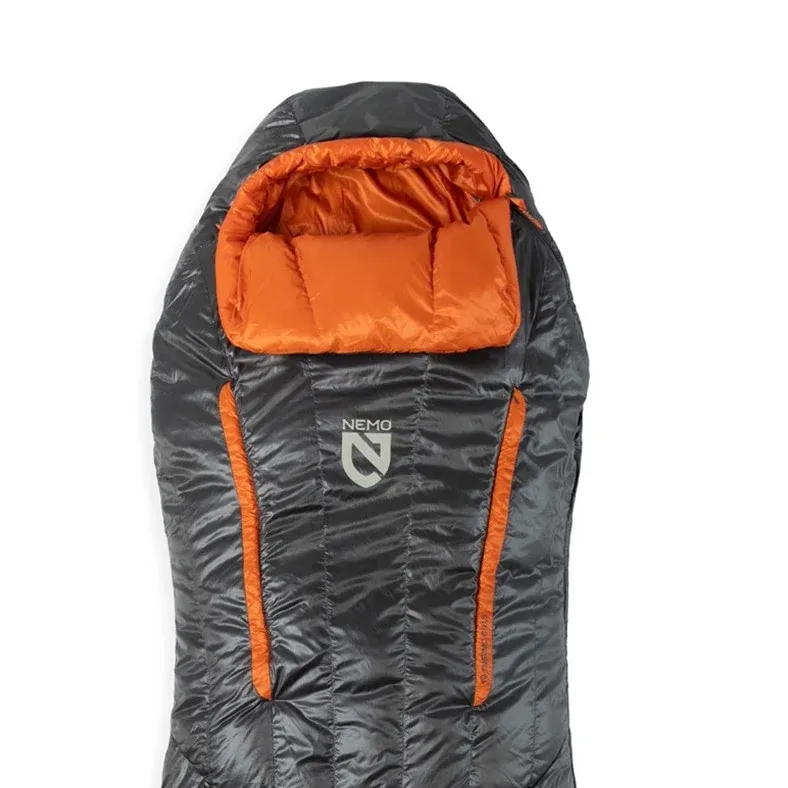
NEMO
NEMO Disco 15
The Spoon shape is NEMO's one genuinely original idea in sleeping bags: extra room cut in at the elbows and knees and taken back out at the shins, so a side sleeper can bend a leg without fighting the bag. If you have ever woken up wrapped in a mummy bag that rotated with you, this is the fix. The Disco is the 650-fill version — heavier and bulkier than the 800-fill Riff above it, and $100 cheaper. NEMO publishes an ISO lower limit of 16 °F but no comfort figure, which is the standard half-disclosure across this brand's line; assume comfort lands roughly ten degrees warmer.
Best for: Side sleepers who find mummy bags claustrophobic
Full spec sheet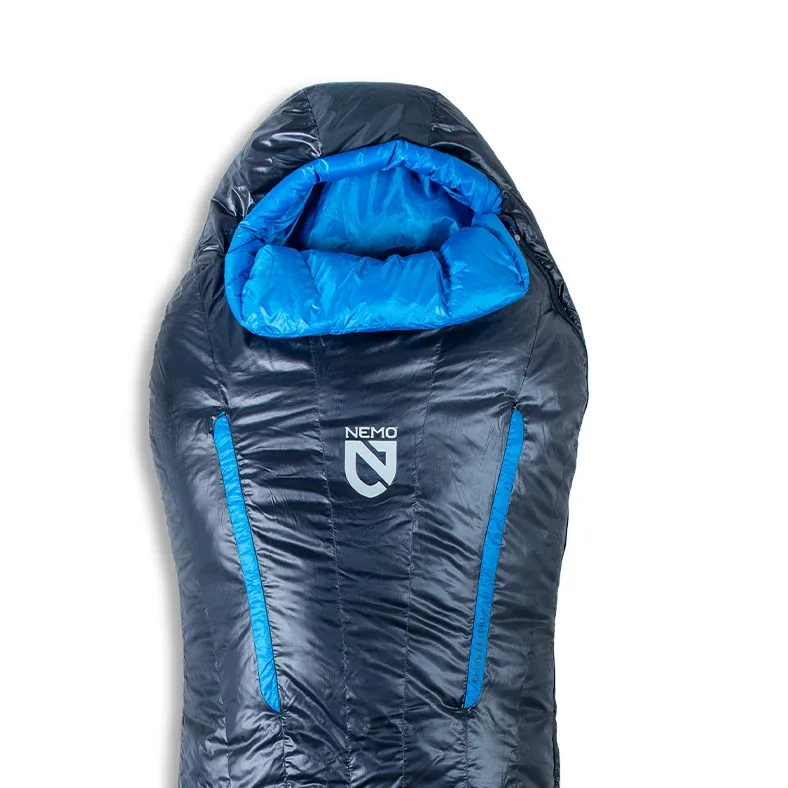
NEMO
NEMO Riff 15
The Disco's trimmer, more expensive sibling: the same Spoon silhouette and the same Thermo Gills in a narrower cut with 800-fill down instead of 650. That buys four ounces and half a litre of pack space for $100. Whether that is a good trade depends entirely on how far you are carrying it — for a weekend it is not, for a long trail it very much is.
Best for: Side sleepers going long enough that four ounces matters
Full spec sheet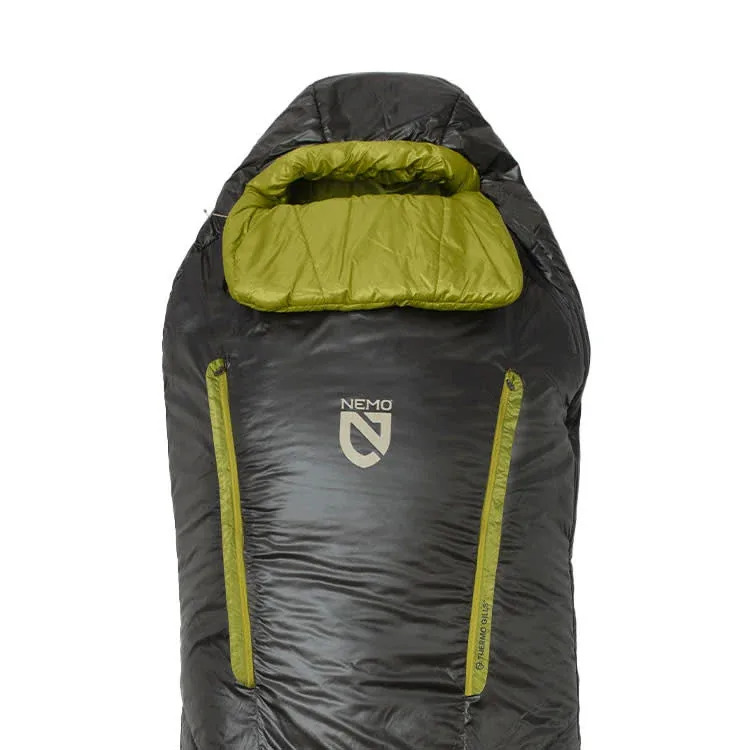
NEMO
NEMO Forte 20
The synthetic Spoon bag, and the right recommendation for anyone camping somewhere persistently damp — the Pacific Northwest, the Appalachians in spring, anywhere a down bag spends a week slowly losing loft. Zerofiber is made entirely from post-consumer recycled polyester, and it keeps insulating wet, which down does not. The cost is real: 53 ounces and 10.6 litres of pack space, roughly a quarter more weight and 60% more volume than the down Disco at a similar rating.
Best for: Wet-climate camping where down is the wrong insulation
Full spec sheet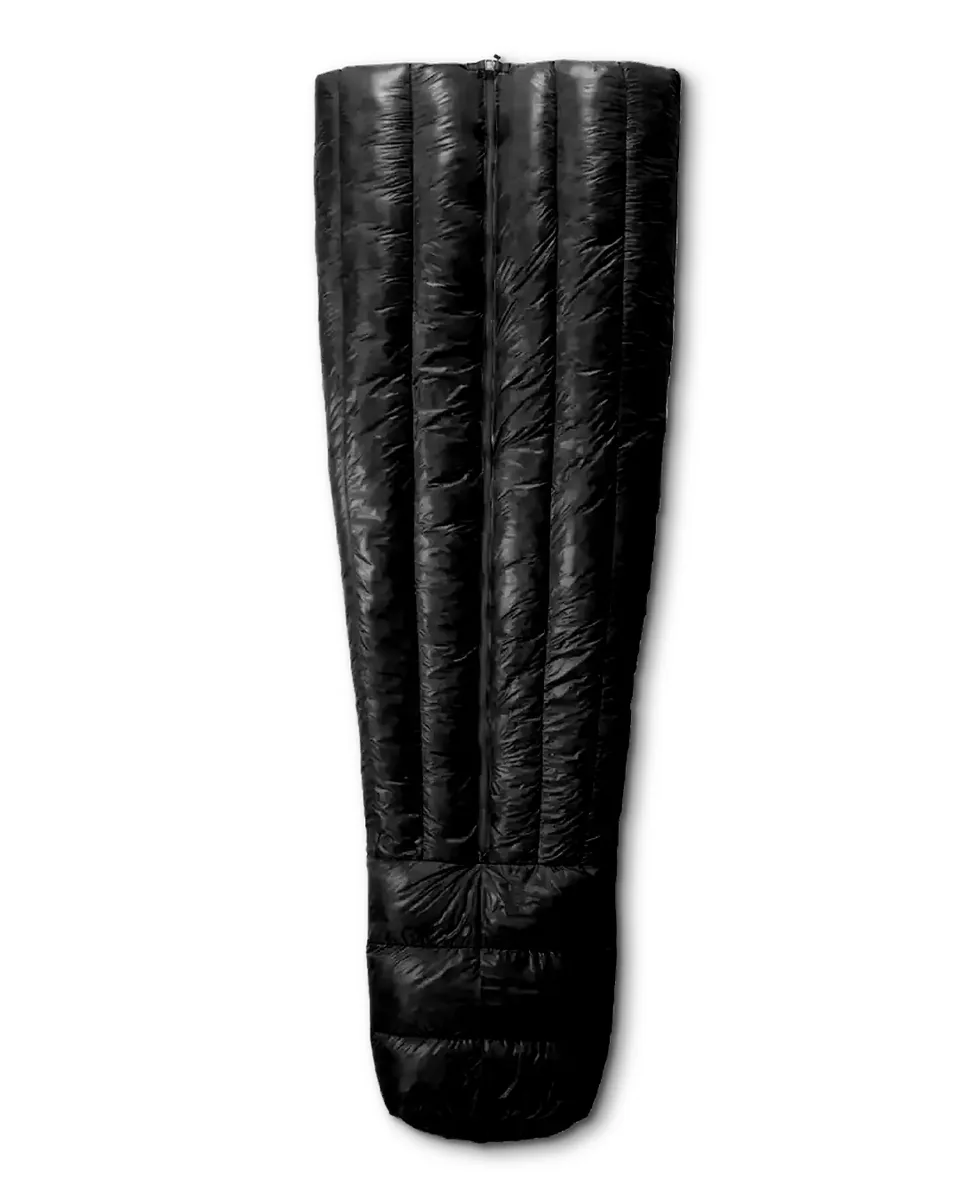
A sleeping bag with no zipper at all: a sewn tube with a hood, which is the lightest way to build a closed bag and the reason the Standard/Medium comes in at 18.8 ounces for a 20-degree rating. Zpacks publishes target loft (2.5 inches for the 20 °F version) and exact shell and down weights for every one of the twenty-one size combinations, which is more transparency about construction than anyone else in this catalogue offers — and no lab rating at all, which is less transparency about temperature. Getting in and out means going through the top, and the bag cannot be vented on a warm night.
Best for: Thru-hikers who want a hood without a quilt's drafts
Full spec sheet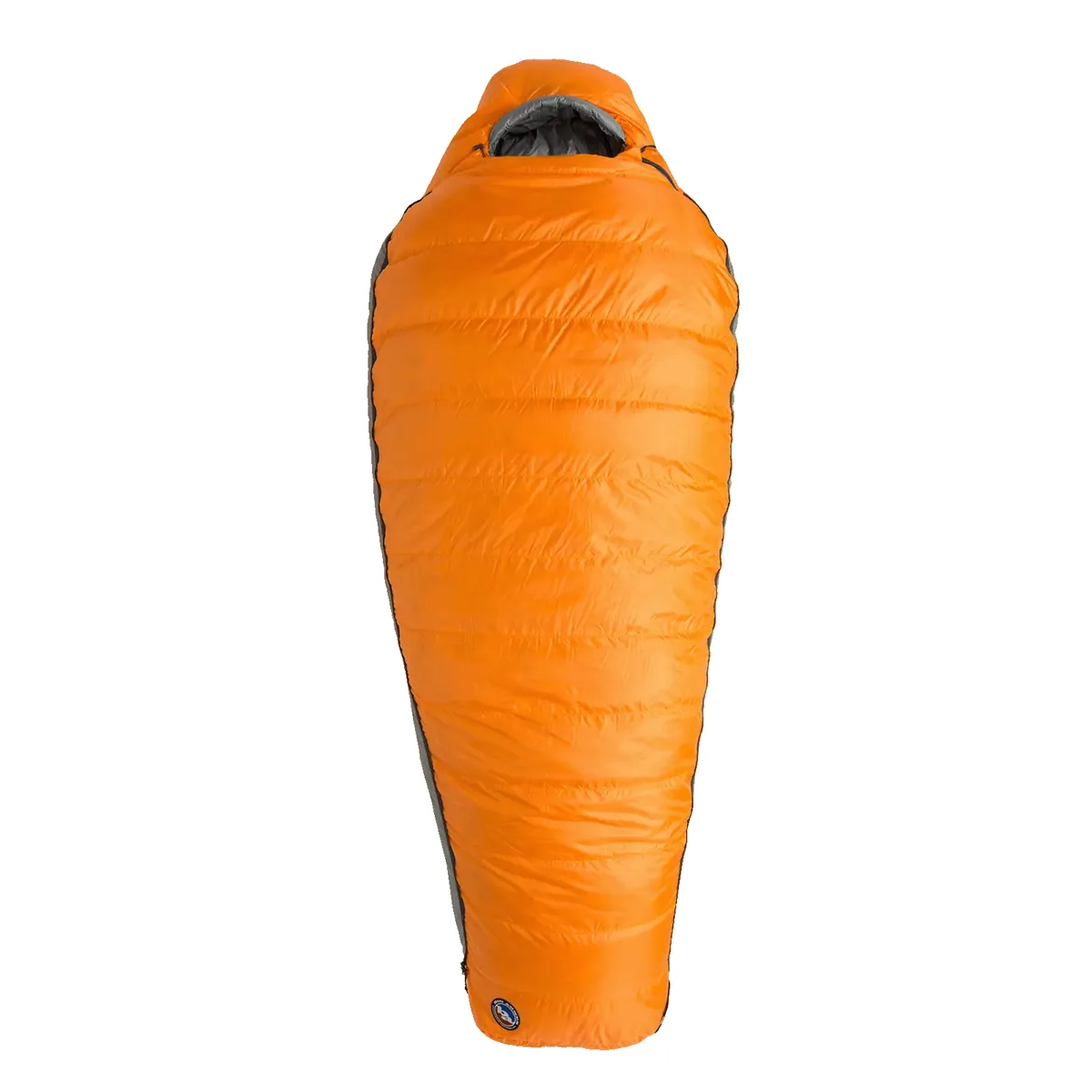
Big Agnes
Big Agnes Torchlight EXP 20
Two zippered expansion panels run from shoulder to footbox and add five inches of girth on each side — ten inches in total — which makes this the only bag here whose fit you can change after you have bought it. Zip them shut on a cold night and it is a normal mummy; open them on a warm one and it is closer to a semi-rectangular bag. That is a genuinely good answer to the problem that a bag tight enough to be warm is too tight to sleep in. The trade is 40 ounces and a manufacturer-only 20-degree rating with no lab figure behind it.
Best for: Sleepers who want a mummy some nights and room on others
Full spec sheet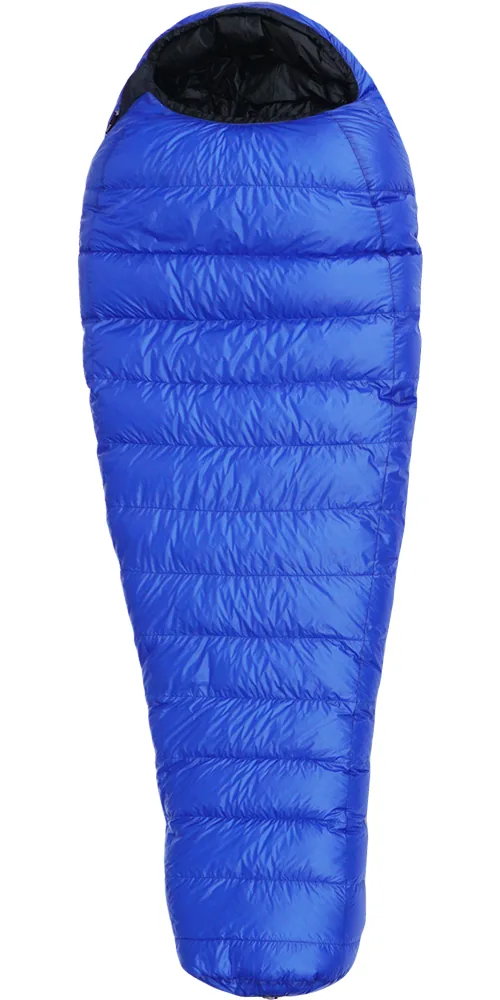
Western Mountaineering
Western Mountaineering UltraLite 20
Western Mountaineering has been building bags in San Jose for fifty years and has never published an EN or ISO rating for any of them — the 20 °F on the UltraLite is the company's own number, and its reputation rests on that number having been accurate for two generations of backpackers. What it does publish is the physics: 5.5 inches of measured loft, 16 ounces of 850-fill goose down, 59 inches of shoulder girth and a 12-denier shell, for a total of 29 ounces. Continuous horizontal baffles let you shake the down to the top on a cold night or to the sides on a warm one, which is a feature almost nobody else offers and which more than compensates for the missing zip vent.
Best for: Buyers who plan to own one bag for twenty years
Full spec sheet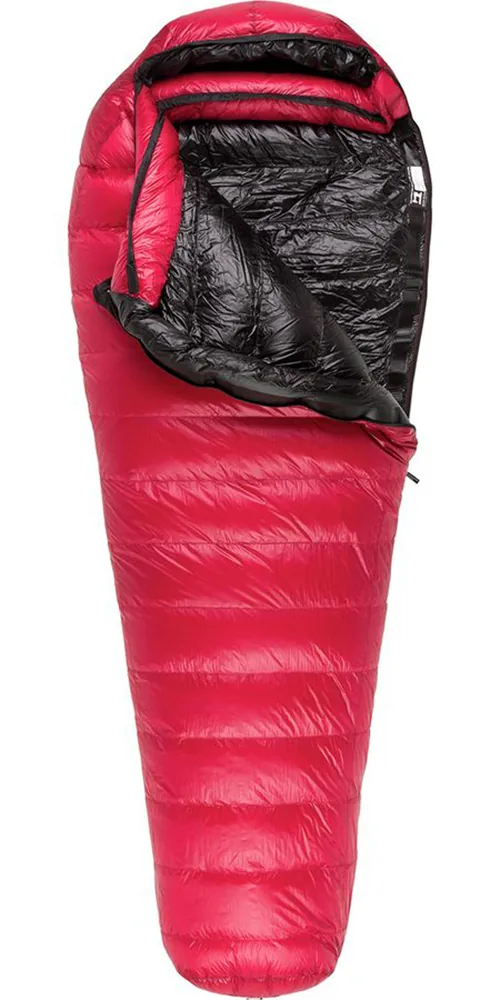
Western Mountaineering
Western Mountaineering AlpinLite 20
The UltraLite cut wider: same 20-degree rating, same 5.5 inches of loft, five more inches of shoulder girth and three more ounces of down to fill the extra space. Two ounces of total weight is the whole cost of the upgrade, and for anyone who has felt pinned in an UltraLite it is the obvious choice. The 7'0" length is the only bag in this catalogue that fits someone genuinely tall without compromise.
Best for: Broad-shouldered or very tall sleepers who want a proper down bag
Full spec sheet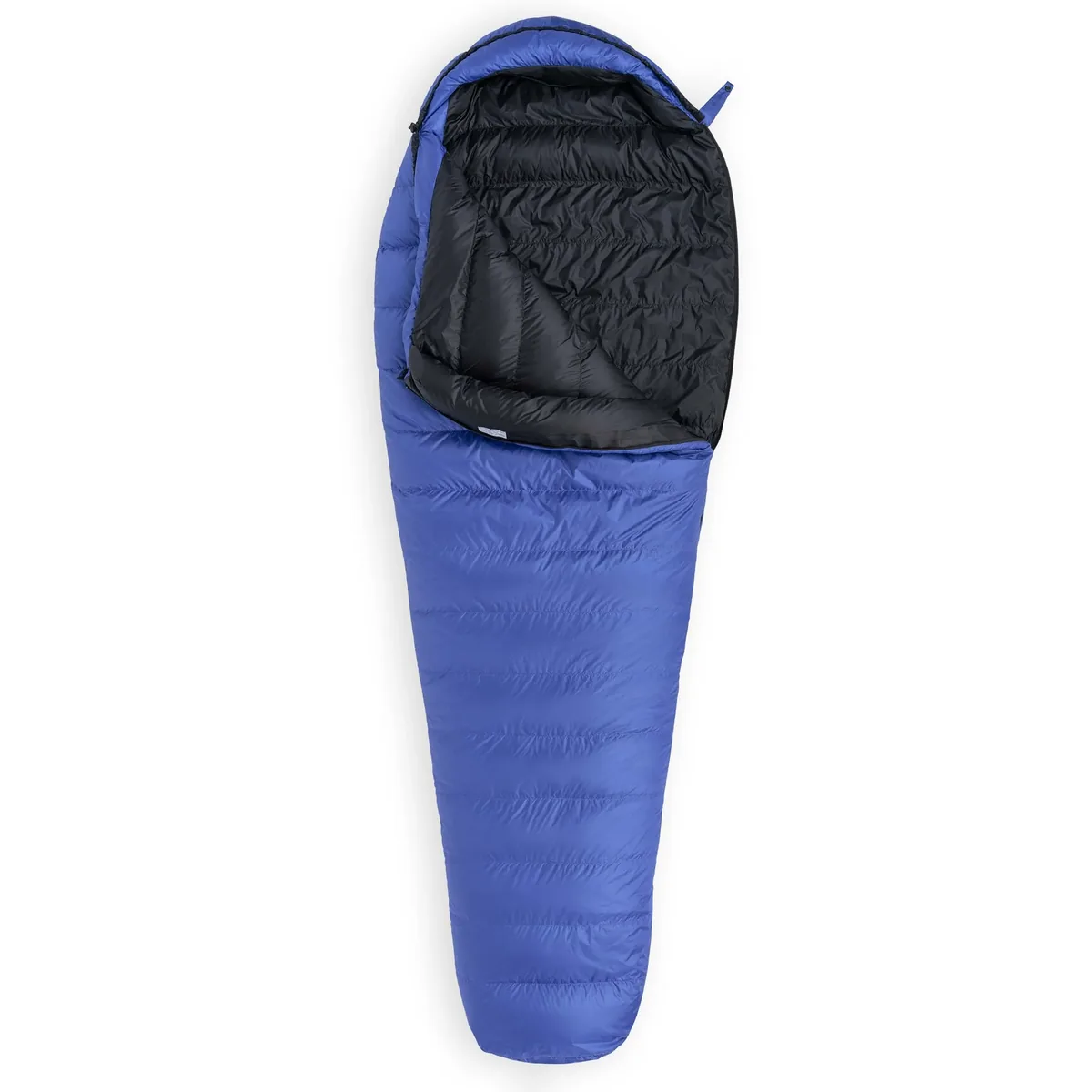
Feathered Friends
Feathered Friends Swallow YF 20
Feathered Friends sew every bag in Seattle and publish girth at four points — shoulder, elbow, hip and footbox — which tells you more about whether a bag will fit than any temperature rating can. The Swallow is their three-season workhorse: 900-fill-power Muscovy down, 16.8 ounces of it, in a 59-inch-shoulder mummy that weighs 29.2 ounces. Like Western Mountaineering they publish no ISO figure, and like Western Mountaineering they have a forty-year record that people buy on instead.
Best for: Three-season backpacking where fit matters as much as warmth
Full spec sheet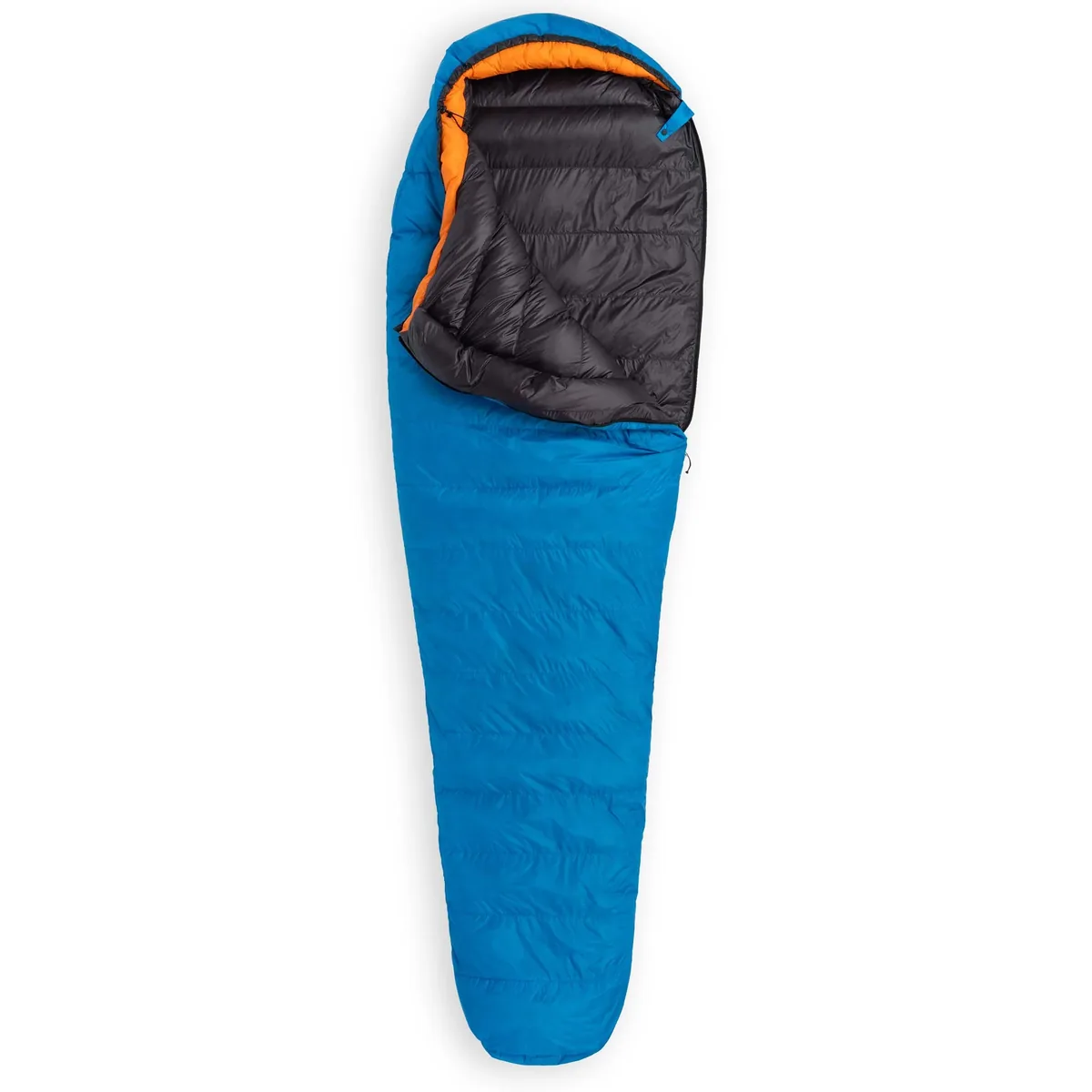
Feathered Friends
Feathered Friends Hummingbird UL 20
Twenty-three point nine ounces for a hooded, full-zip 20-degree bag with 950-fill down — the lightest bag of its kind in this catalogue by about five ounces. Feathered Friends gets there with a 7-denier-by-30-denier Pertex Quantum Pro shell, which is a waterproof-breathable fabric rather than a simple ripstop, and by trimming the shoulder girth to 57 inches. That last number is the thing to check before buying: this is a close-fitting bag, and a broad sleeper will compress the down against the shell and be cold in it.
Best for: Long trails where a hood is wanted but ounces decide
Full spec sheetREI Co-op
REI Co-op Magma 15
The Magma is the bag most people who compare specs end up buying, and the numbers explain why: 850-fill down, 23.3 ounces of it, an ISO comfort rating of 21 °F and an ISO lower limit of 9 °F, for $399. That is a genuinely six-degrees-warmer comfort figure than the 15 in the name, which is the opposite direction from almost every other bag in this catalogue — REI named the bag closer to its limit than its comfort and then published both, which is the honest way round.
Best for: Backpackers who want the best published numbers per dollar
Full spec sheet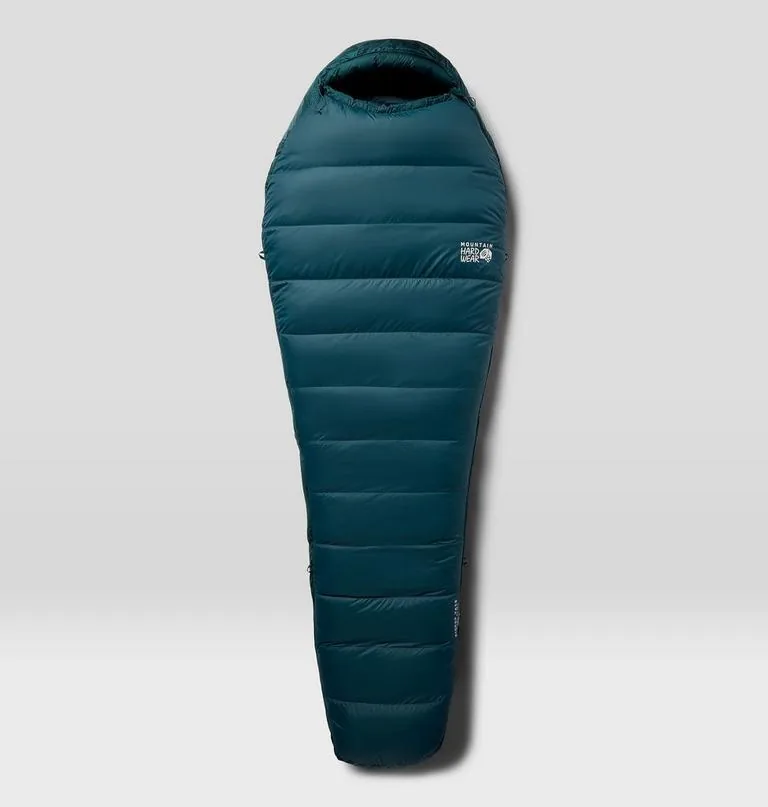
Mountain Hardwear
Mountain Hardwear Bishop Pass 15
A lot of down for the money: the Bishop Pass carries more fill than almost any bag at its price, at 650 fill power, and publishes an ISO comfort rating of 26 °F. Five and a half inches of measured loft in a 20-denier shell, with an expanded shoulder, hip and leg cut that Mountain Hardwear calls Performance Plus and most people would just call comfortable. At 37.4 ounces it is heavy for a 15-degree bag, and all of that weight is the low fill power buying loft through bulk.
Best for: Cold sleepers who want loft more than they want ounces
Full spec sheet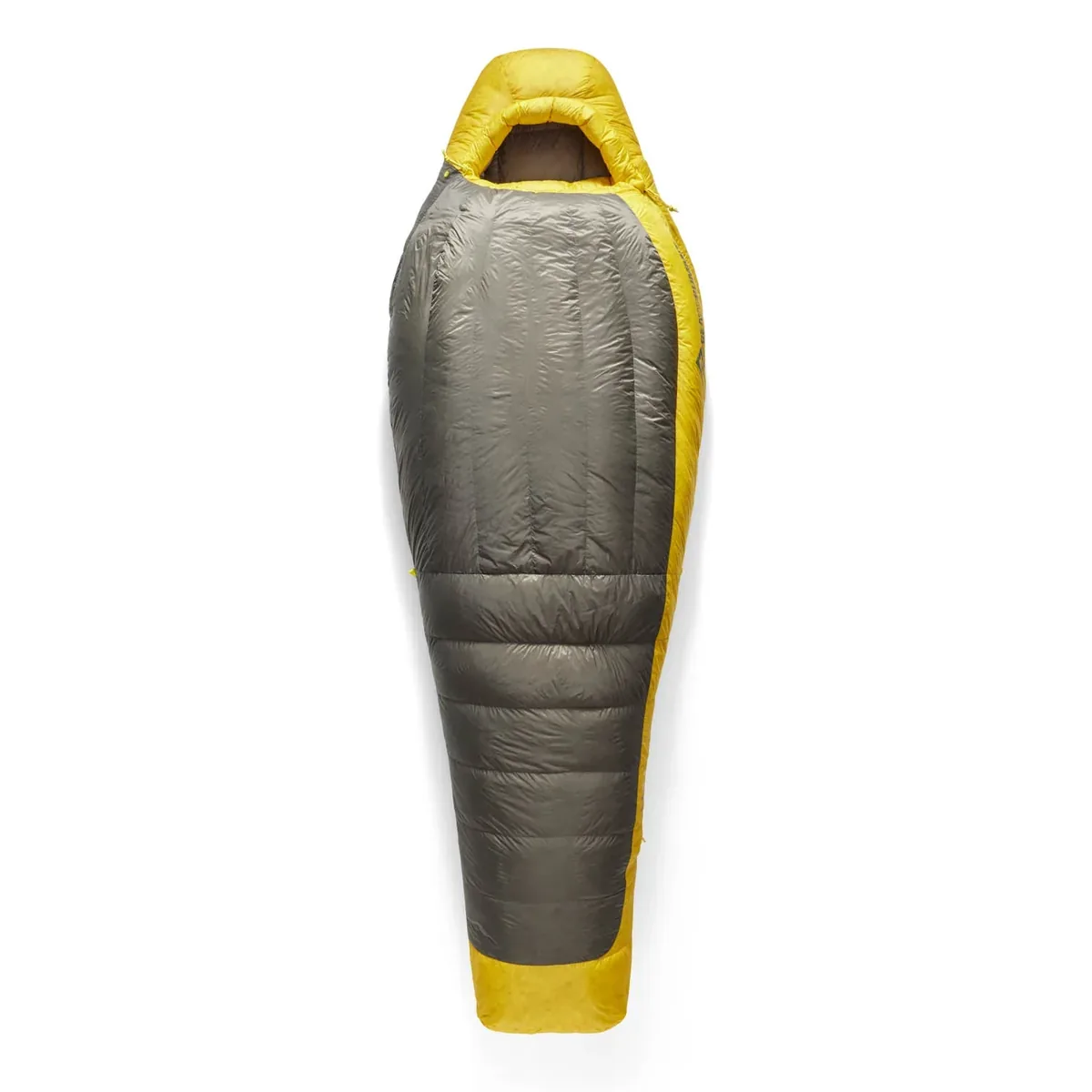
Sea to Summit
Sea to Summit Spark 15
Sea to Summit is one of the few brands that prints both ISO numbers next to each other, and the Spark 15 is the clearest illustration on this site of why that matters: the bag is sold as a 15, the lab limit is 16 °F, and the lab comfort figure is 28 °F. Twenty-eight is the number a cold sleeper should plan around, and it is thirteen degrees off the name. Everything else about the bag is excellent — 850-fill goose down, a 10-denier shell, a half-length zip to save weight, and 25.7 ounces total with nearly 17 ounces of that being down, which is one of the best fill-to-total ratios in the catalogue.
Best for: Backpackers who want the honest number before they buy
Full spec sheet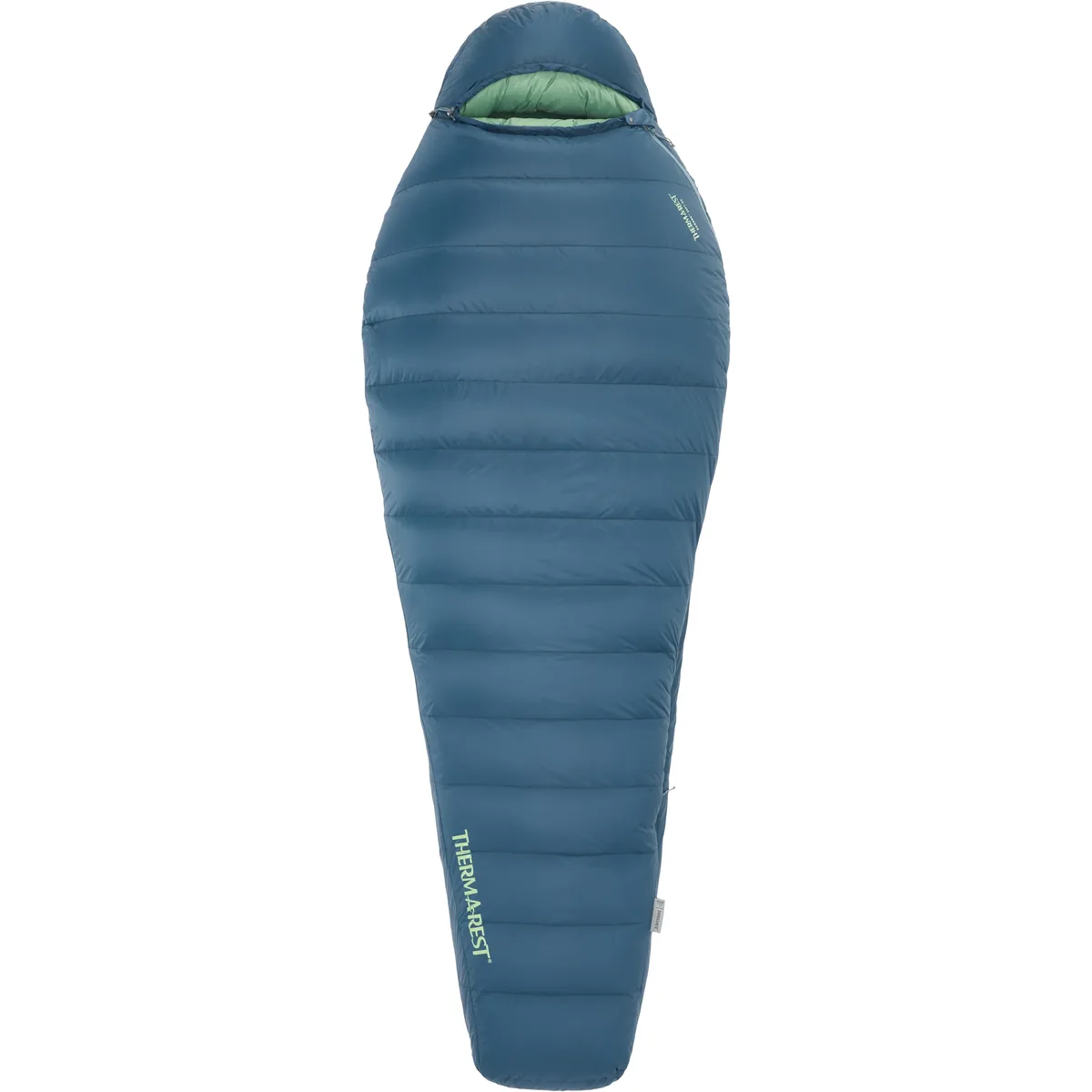
Therm-a-Rest
Therm-a-Rest Parsec 20
The Parsec is the lightest hooded mummy Therm-a-Rest makes, and the one entry here where the marketing number and the lab number sit only nine degrees apart — it is called a 20 and it tests to a 29 °F comfort figure and an 18 °F limit, which is about as close to truth-in-labelling as the 20-degree class gets. Seventeen ounces of 900-fill duck down inside a 20-denier recycled shell gets the whole bag to 29 ounces. The zoned baffles put more down on top and less underneath, on the correct theory that the down you lie on is doing nothing, and the shoulder girth is a generous 62 inches for a bag this light.
Best for: Three-season backpackers who want a hooded bag near quilt weight
Full spec sheet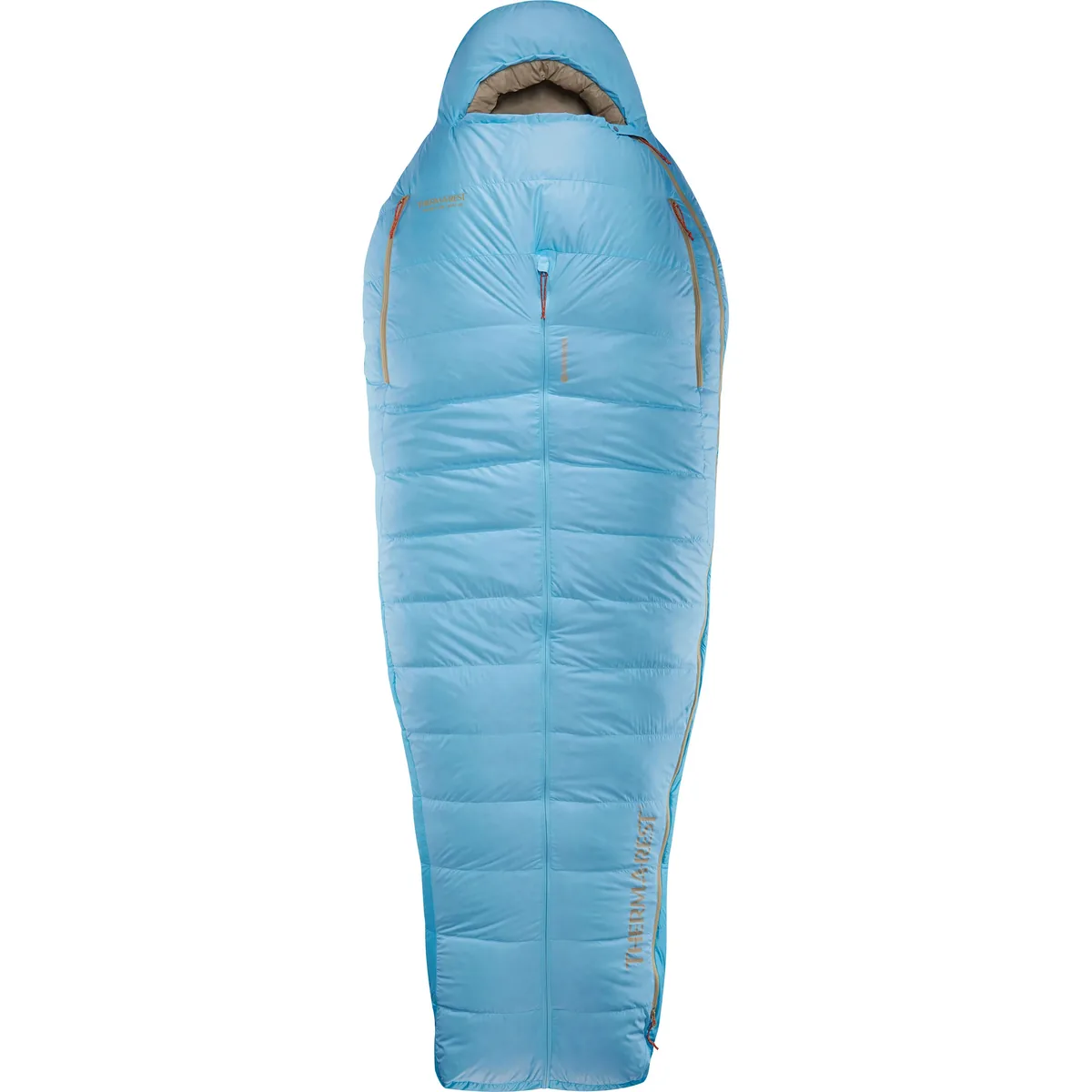
Therm-a-Rest
Therm-a-Rest Boost 650 20
Six sizes, three lengths in two widths, which is more fit choice than almost any other bag here offers and the reason the Boost is worth a look for anyone who has been cold in a standard mummy because they couldn't fill it — or trapped in one because they overfilled it. The Wide versions add eleven or twelve inches of shoulder girth, which is a genuinely different bag rather than a token option. The tradeoff is 650-fill down and 43 ounces in the Regular: heavy for backpacking, entirely reasonable for a bag that gets used a dozen nights a year.
Best for: Sleepers who have never found a mummy bag that fits
Full spec sheet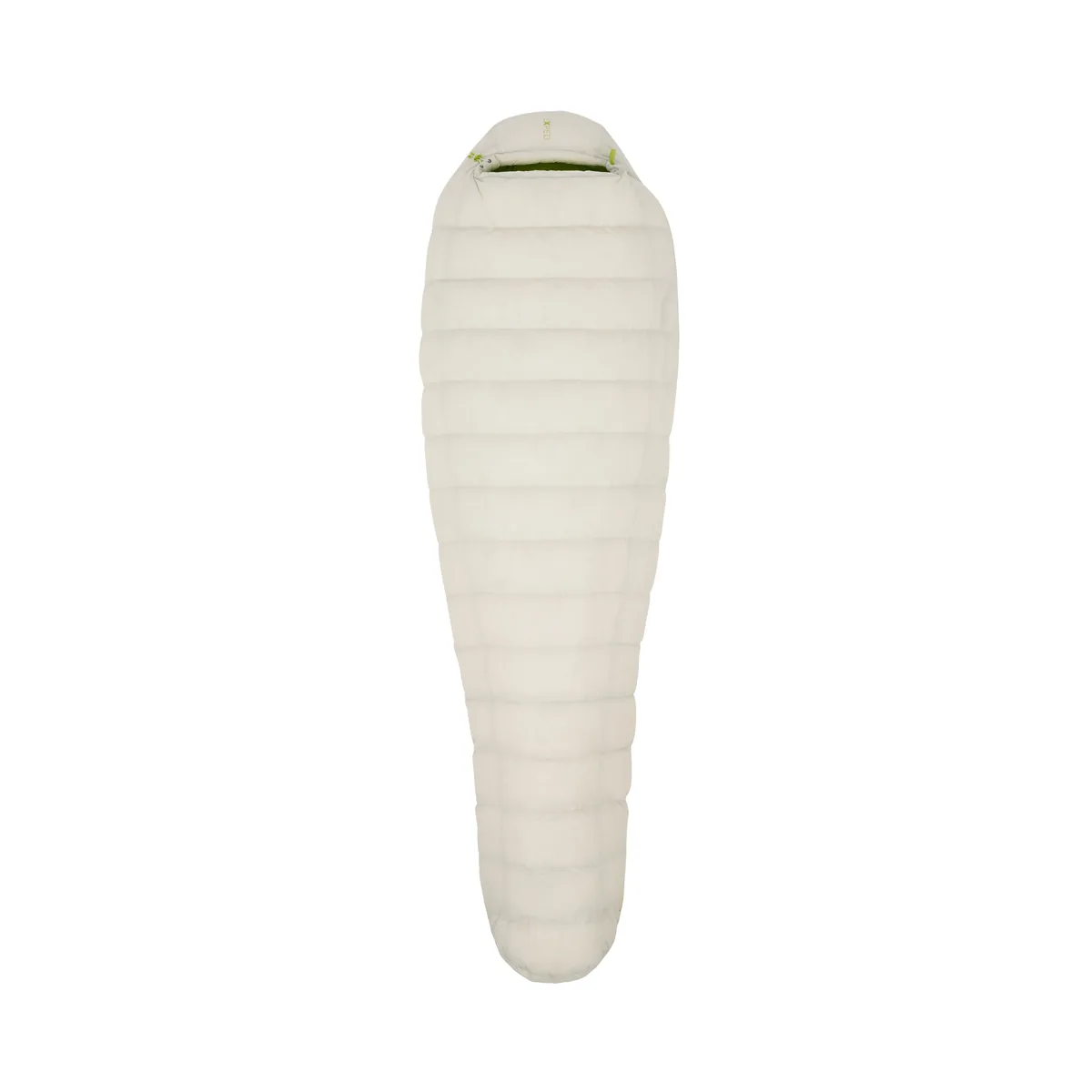
Exped
Exped Ultra 30
The widest honesty gap in this catalogue, and the reason the gap is worth measuring at all: this bag is sold as a 30 and its published ISO comfort figure is 43 °F. Thirteen degrees. Exped is not hiding it — they print comfort, limit and extreme side by side on the product page, which is more than most brands do — but a buyer reading the name and not the table will be cold on a 35-degree night. Taken on its real numbers it is a very good summer bag: 22.5 ounces, 850-fill RDS down, a 10-denier recycled shell and a shoulder girth of 58 inches with a wide option at 64.
Best for: Summer backpacking, once you read the comfort figure rather than the name
Full spec sheet