Exped
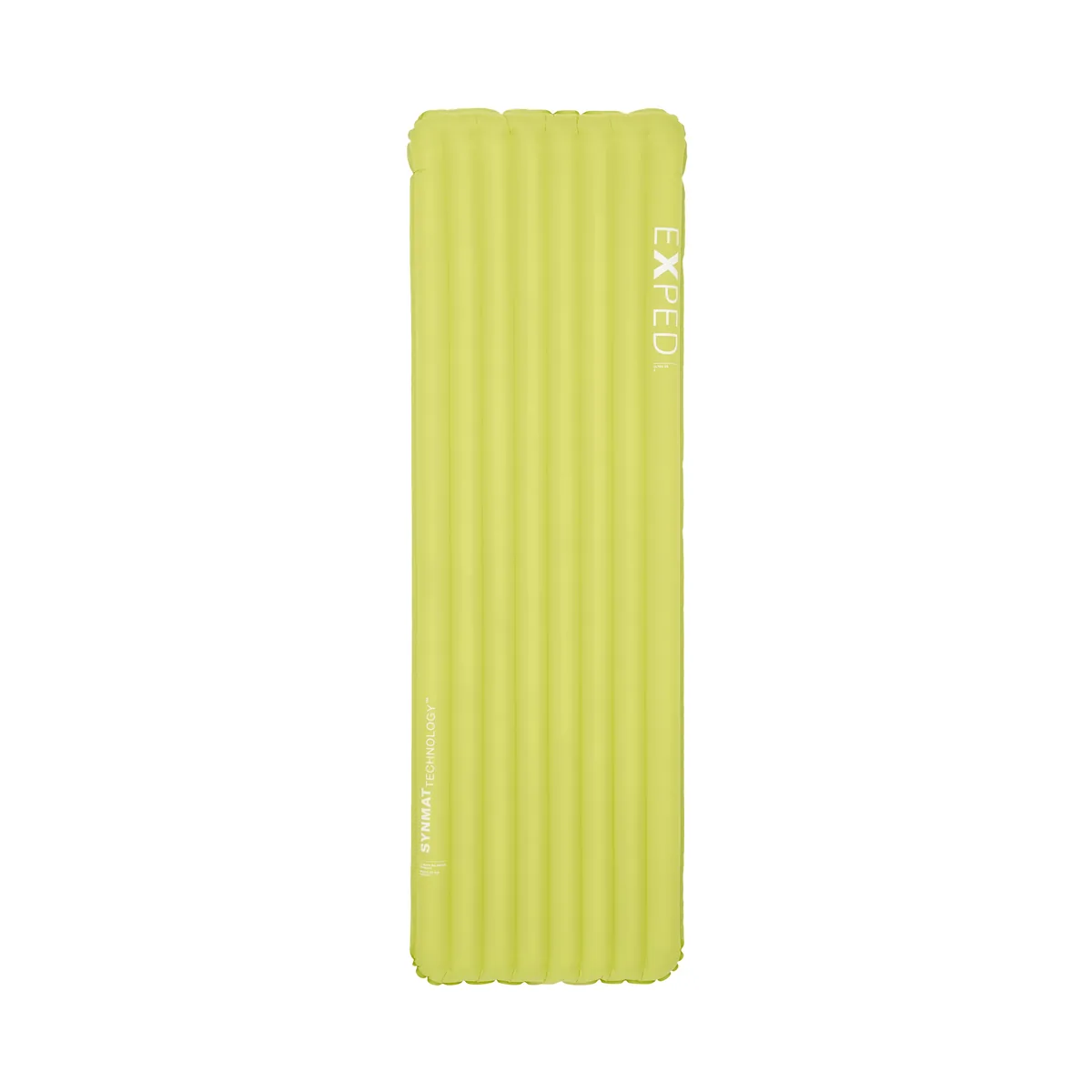
Exped Ultra 3R
No citable owner-review average published for this one, so no stars.
Exped insulates with actual synthetic batting welded inside the air chambers rather than with reflective film, which is why their pads are silent and why they feel warm to the touch the moment you lie down instead of after ten minutes. The Ultra 3R is the three-season member: R-value 3.2, three inches thick, 16 ounces, and — unusually — the same price in every size, so a wide version costs nothing extra. The Schnozzel pump bag that comes with it doubles as a dry bag.
What this pad supports
R 3.2 puts it in the three-season band — spring through autumn, above freezing. On the pairing table that supports a bag rated to roughly 30 °F comfort before the ground becomes the limiting factor.
Size run
One product, 3 sizes. The headline numbers on this page describe the M.
| Size | Weight | Approx. price | Length | Width |
|---|---|---|---|---|
| M | 1 lb | ~$170 | 72 in | 20.5 in |
| MW | 1 lb 3 oz | ~$170 | 72 in | 25.6 in |
| LW | 1 lb 4.5 oz | ~$170 | 77.6 in | 25.6 in |
Specifications
Highlights
Features
- Pump sack included
- Repair kit included
- Wide option
- Quiet fabric
- Recycled fabric
- Under 1 lb
What it does well
- Synthetic batting instead of reflective film: silent, and it feels warm immediately rather than after the air heats up.
- Every size is the same price, so the wide version is free — almost nobody else does this.
- The Schnozzel pump bag inflates the pad in two passes and works as a dry bag the rest of the time.
- Three inches of loft at 16 ounces with 20-denier recycled face fabric.
What it costs you
- R-value 3.2 is the lowest of the insulated pads here except the summer specialists.
- 16 ounces is three more than an XLite for a lower R-value — the batting costs weight.
- $170 is mid-pack, and the warmer 6.5R is only $30 more.
- Exped's size codes (M, MW, LW) take a chart to decode.
Those two lists are drawn from Exped’s published specifications and from reviews that measured them. They are not owner sentiment — anything owners said appears under its own heading below.
What owners say
Distilled from owner discussions and long-term published reviews, not from anything measured here.
Exped gets described by its own owners as overlooked, and the recommendations that follow are unusually enthusiastic for that reason — people who have found it tend to evangelise. The specific praise is about geometry: lengthwise chambers rather than crosswise, with larger rails at the edges that keep a side sleeper centred.
The reliability reports are quietly good. One owner describes using an Ultra 3R across the desert section of a long trail with no leaks, which is a higher bar than most pads clear in owner discussion.
The caveat that always follows is warmth. R 3.2 is a mild three-season number, and owners either pair it with a thin foam sheet or point people at the warmer models in the line. The flat pricing across sizes gets mentioned every time as a reason to take the wide version.
What owners like
- The lengthwise chambers get credited by owners for side-sleeping comfort specifically — the pad runs with the body rather than across it.
- The raised outer rails are described as genuinely keeping you on the pad, and owners with back problems name it as the pad that fixed their sleep.
- Owners report it carrying them into the mid-20s with a warm quilt and suffering no leaks on a long trail.
- The same price across every size, including the wide versions, is called out as unusual and appreciated.
- Owners who have both describe it as softer-feeling than competing pads at a similar spec.
- Owners find it discounted regularly, which brings a pad with these specifications into the price band of much simpler ones.
Common complaints
- Owners with cold nights ahead question whether R 3.2 is enough, and it is the first caveat attached to any recommendation.
- Exped is described as an overlooked company, which in practice means fewer owner reports and less accumulated reliability data.
- Several owners pair it with a thin foam pad for extra warmth, which suggests the R-value is marginal for shoulder season.
Questions owners ask
How warm is it really?
Do the lengthwise chambers make a difference?
Is it worth choosing over a better-known pad?
Exped Ultra 3R, head to head
Other pads at this level
More from Exped →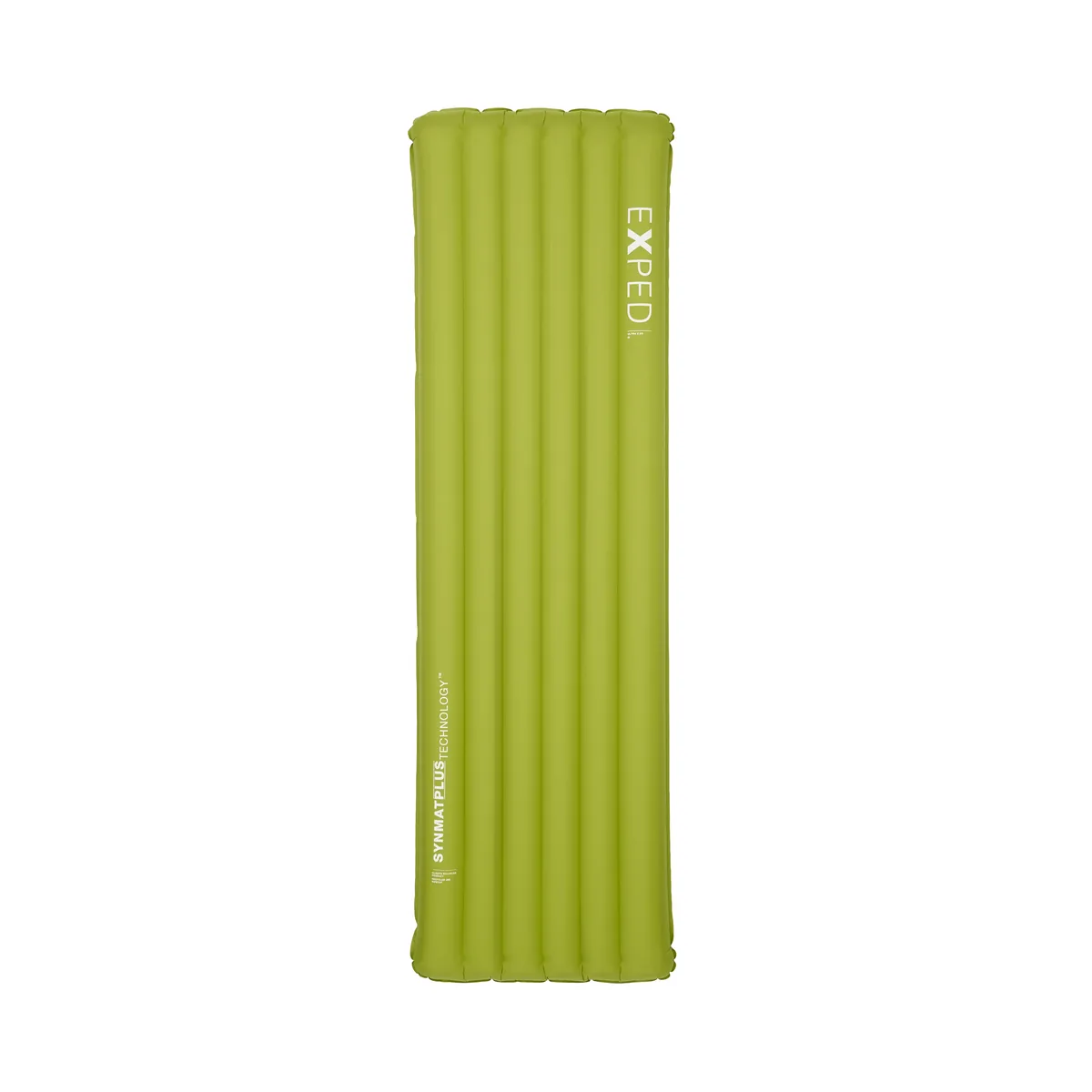
Exped
Exped Ultra 6.5R
The oddity in this catalogue: an R 6.9 pad that weighs half an ounce less than the R 3.2 pad from the same brand. Exped's naming is confusing — the model is called 6.5R and tests at 6.9 — but the numbers are real and they make this the best warmth-per-ounce pad here, at 0.45 R per ounce. Three and a half inches thick, silent batting insulation, and again the same price in every width. If you were going to buy one insulated pad and use it from May to October and occasionally in snow, this is the strongest argument in the catalogue.
Best for: One pad for everything, including the occasional night on snow
Full spec sheet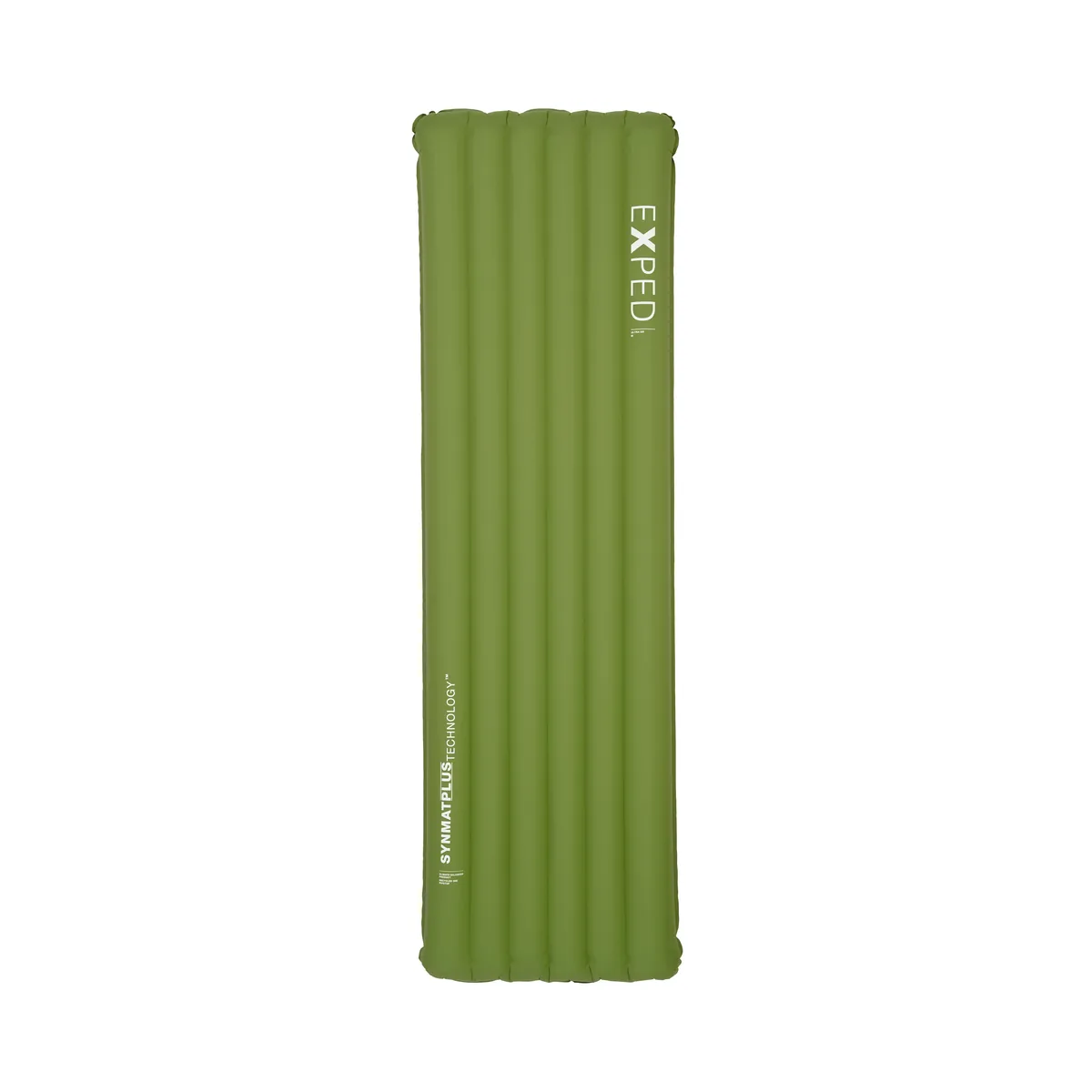
Exped
Exped Ultra 8R
Exped's winter flagship insulates with actual down inside the air chambers, which is why it reaches R 8.8 — the highest figure in this catalogue — at twenty ounces. Exped quotes it as good to about -49 °F, which is a number for expeditions rather than for anyone's weekend. Down inside a pad has one obvious vulnerability: moisture from breath-inflation will eventually kill it, which is exactly why the Schnozzel pump bag is in the box and why using it is not optional on this model.
Best for: Expedition and deep-winter camping
Full spec sheet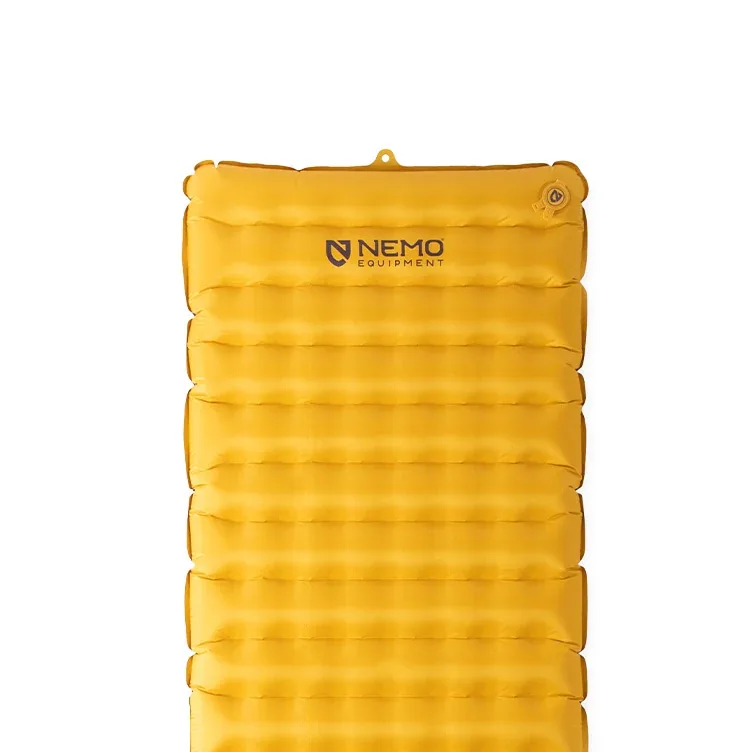
The summer member of the Tensor family: same 3.5-inch loft, same quiet suspended-film baffles, one layer of film instead of several, R-value 2.8. That is a proper three-season number in mild country and not enough for frost, and the pad is priced and weighted accordingly. For a summer sleeper who wants the Tensor's thickness and silence without paying for insulation they won't use, it is the sensible member of the line.
Best for: Summer backpacking where the ground never freezes
Full spec sheet