NEMO
11 entries here — 5 for on top of you and 6 for underneath, priced $60 to $550. The coldest-rated is the NEMO Disco 15 at 16 °F ISO limit. The warmest pad is the NEMO Tensor Extreme Conditions at R 8.5. The lightest thing they make here is the NEMO Tensor Elite at 8.5 oz.
NEMO
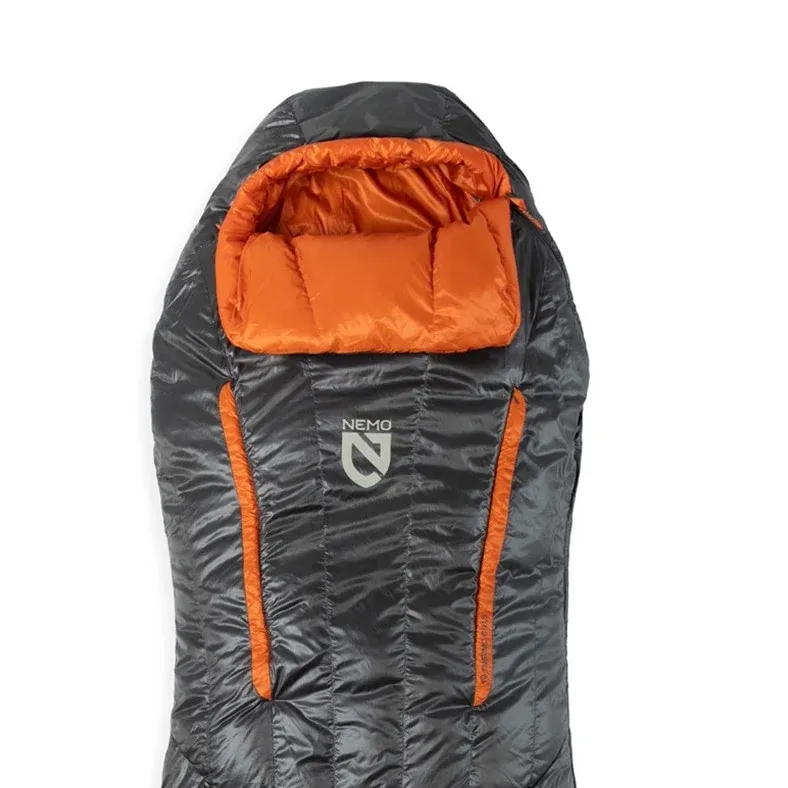
NEMO Disco 15
The Spoon shape is NEMO's one genuinely original idea in sleeping bags: extra room cut in at the elbows and knees and taken back out at the shins, so a side sleeper can bend a leg without fighting the bag. If you have ever woken up wrapped in a mummy bag that rotated with you, this is the fix. The Disco is the 650-fill version — heavier and bulkier than the 800-fill Riff above it, and $100 cheaper. NEMO publishes an ISO lower limit of 16 °F but no comfort figure, which is the standard half-disclosure across this brand's line; assume comfort lands roughly ten degrees warmer.
Best for: Side sleepers who find mummy bags claustrophobic
Full spec sheet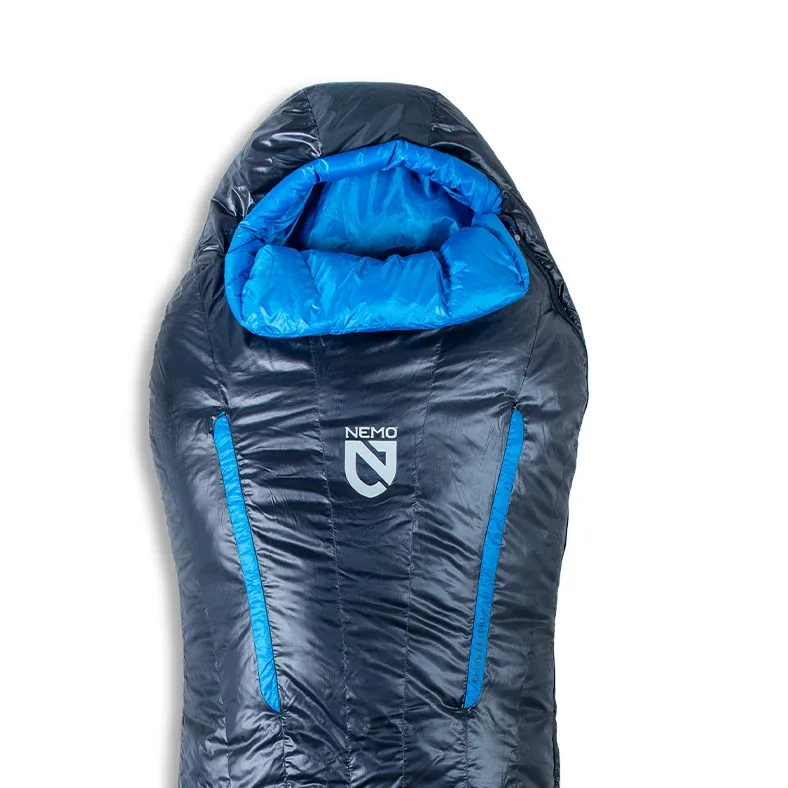
NEMO
NEMO Riff 15
The Disco's trimmer, more expensive sibling: the same Spoon silhouette and the same Thermo Gills in a narrower cut with 800-fill down instead of 650. That buys four ounces and half a litre of pack space for $100. Whether that is a good trade depends entirely on how far you are carrying it — for a weekend it is not, for a long trail it very much is.
Best for: Side sleepers going long enough that four ounces matters
Full spec sheet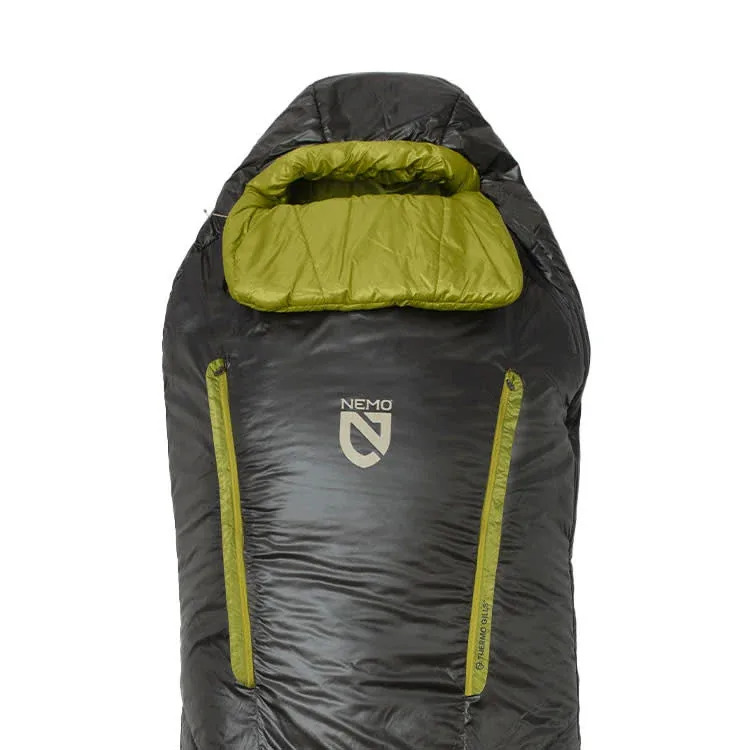
NEMO
NEMO Forte 20
The synthetic Spoon bag, and the right recommendation for anyone camping somewhere persistently damp — the Pacific Northwest, the Appalachians in spring, anywhere a down bag spends a week slowly losing loft. Zerofiber is made entirely from post-consumer recycled polyester, and it keeps insulating wet, which down does not. The cost is real: 53 ounces and 10.6 litres of pack space, roughly a quarter more weight and 60% more volume than the down Disco at a similar rating.
Best for: Wet-climate camping where down is the wrong insulation
Full spec sheet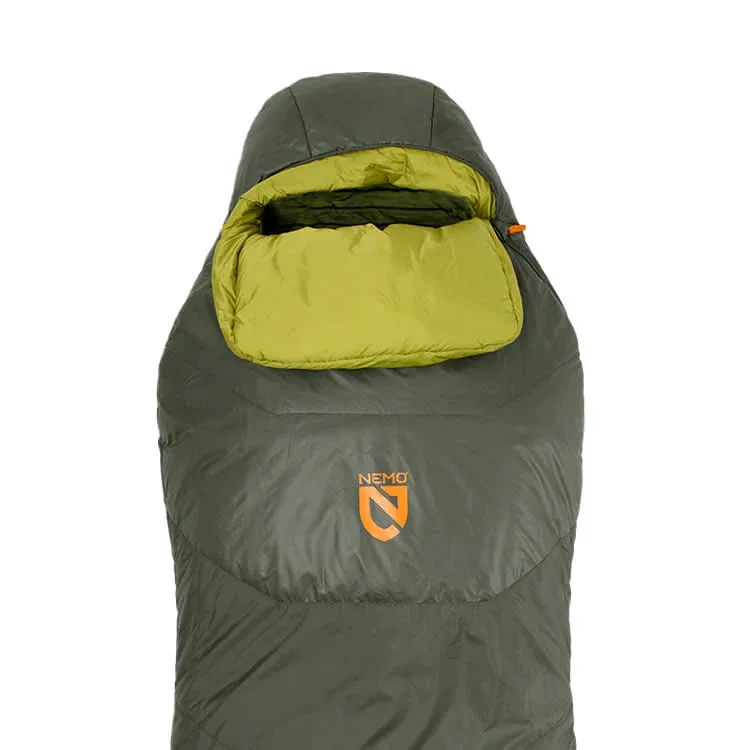
NEMO
NEMO Tempo 20
NEMO's entry synthetic bag: the Spoon shape and the Thermo Gills in a heavier 50-denier shell with a lower grade of Zerofiber, at $170. The 50D fabric is the real difference — it is a much tougher bag than the Forte, which matters more in a campground and on a car-camping trip than the 58-ounce weight does. Published ISO lower limit of 21 °F, honest for a bag with a 20 on the label.
Best for: Campground and car-camping trips in a wet climate
Full spec sheet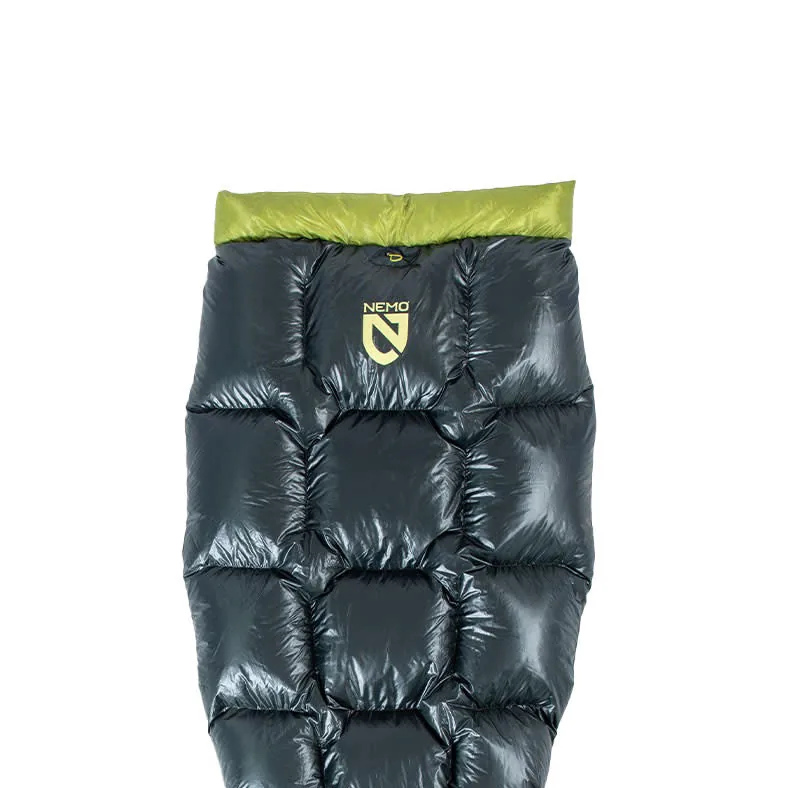
NEMO
NEMO Pulse Quilt
1000-fill down is the highest fill power available at any price, and the Pulse is the only item in this catalogue that uses it. The result is a 2.3-litre packed volume — smaller than a one-litre bottle and a bit — and 18 ounces for a quilt with a published ISO lower limit of 23 °F. It is also $550, which is the most expensive quilt here, and it is the only quilt in the catalogue with a lab figure attached. Whether 1000-fill is worth the money over 900 is the sort of question a spreadsheet answers better than a salesperson does; the honest answer is that the last hundred points of fill power buys about an ounce.
Best for: Thru-hikers optimising packed volume above everything
Full spec sheet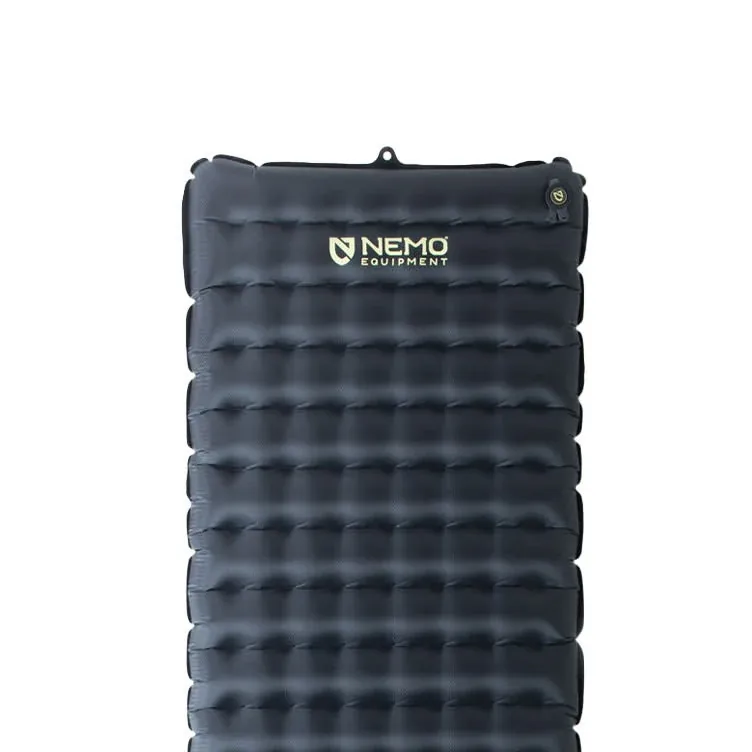
R-value 8.5 is the warmest figure in this catalogue and among the warmest published anywhere, and NEMO gets there at 18 ounces — which is what makes this the pad that turns up under expedition sleeping bags on glacier trips. Four suspended film layers instead of the All-Season's fewer, in the same quiet Spaceframe structure and the same 3.5-inch loft. The honest framing is that almost nobody needs 8.5: past about R 6 you are insulating against ice, and on anything but snow the extra is weight and money you spent to feel warmer than you had to.
Best for: Glacier camps, winter basecamps and sleeping on snow
Full spec sheet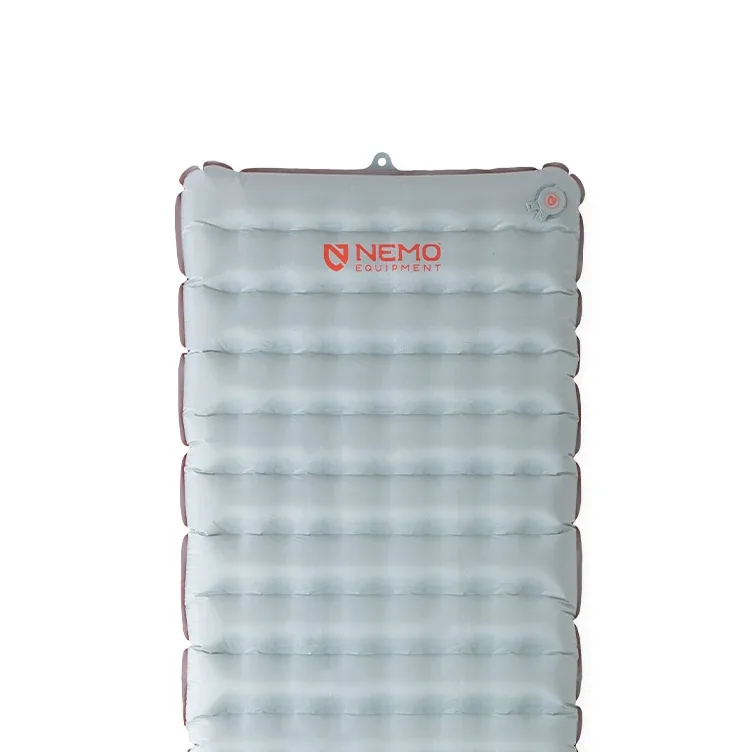
The 2024 Tensor redesign is the pad that took the crinkle argument away from Therm-a-Rest. NEMO's Spaceframe baffles hold the reflective film in suspension rather than laminating it to the fabric, which is why this is the quietest insulated air pad in the catalogue, and the same structure is what gets a three-and-a-half-inch pad to hold its shape under a hip instead of squirming. R-value 5.4 is a genuinely cold-weather number that most people will never max out on a three-season trip. It weighs two and a half ounces more than an XLite and is half an inch thicker.
Best for: Light sleepers and anyone who has returned a crinkly pad
Full spec sheet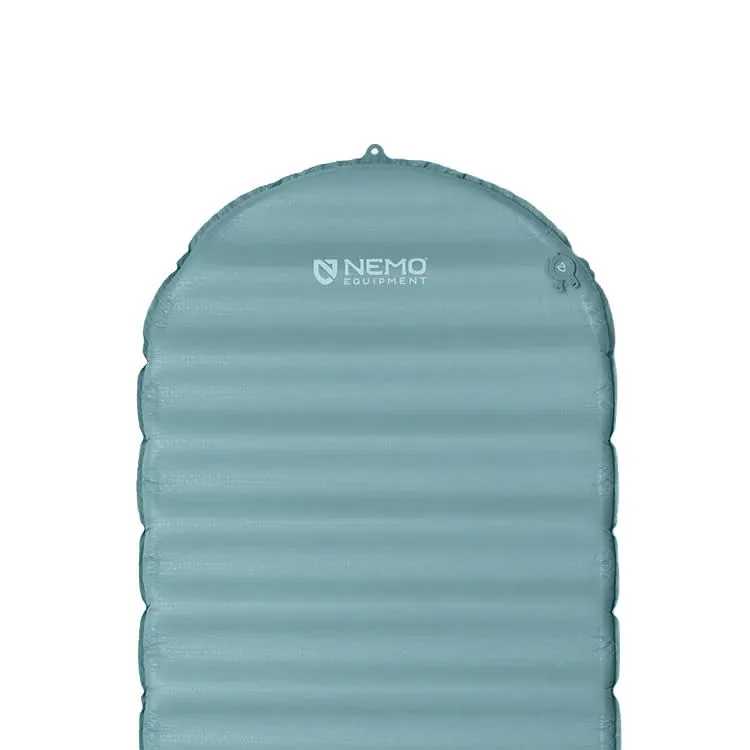
NEMO
NEMO Flyer
NEMO's self-inflating pad, and at 21 ounces it is the lightest foam-core pad here by a clear margin — three ounces under Therm-a-Rest's Trail ProLite for a slightly better R-value of 4.2. The die-cut foam has large sections removed to save weight, which is also why it is only two inches thick. It is the pad for someone who has punctured one too many air mattresses and wants the failure mode to be a softer night rather than no night.
Best for: Backpackers who have given up on air pads
Full spec sheet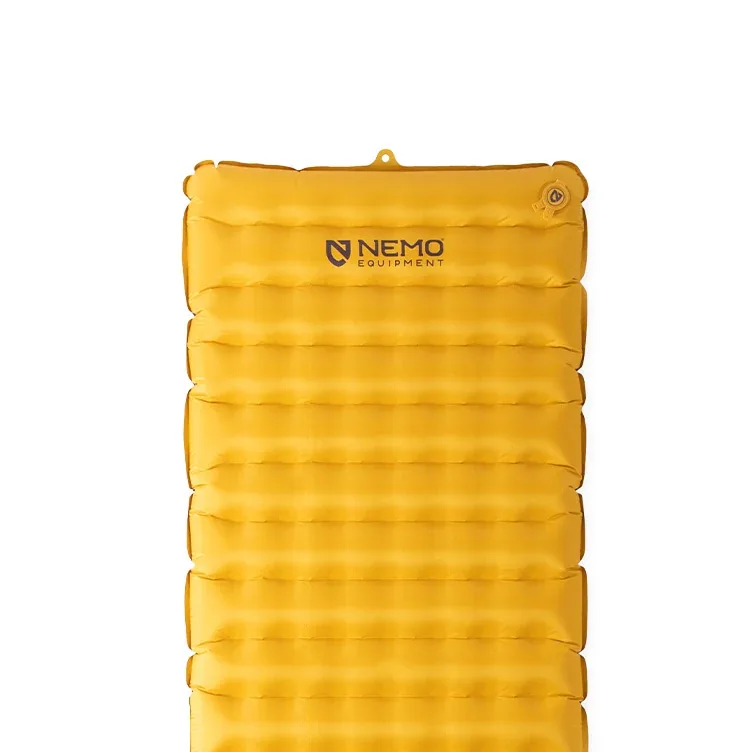
The summer member of the Tensor family: same 3.5-inch loft, same quiet suspended-film baffles, one layer of film instead of several, R-value 2.8. That is a proper three-season number in mild country and not enough for frost, and the pad is priced and weighted accordingly. For a summer sleeper who wants the Tensor's thickness and silence without paying for insulation they won't use, it is the sensible member of the line.
Best for: Summer backpacking where the ground never freezes
Full spec sheet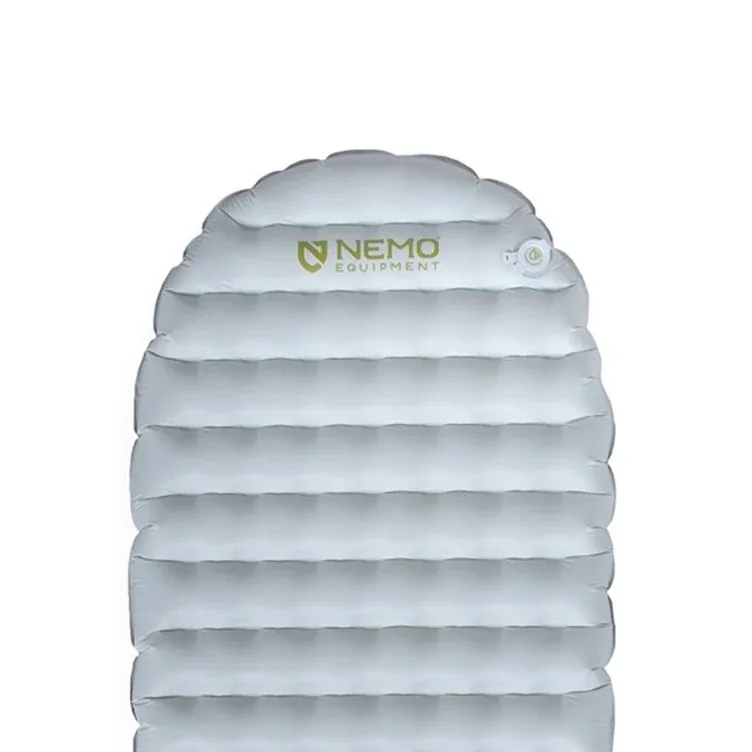
Eight and a half ounces, three inches thick, and a packed size of 5.5 × 3 inches — smaller than most people's water filter. The Elite is what happens when a pad is designed to win a spreadsheet: 10-denier fabric top and bottom, R-value 2.4, and a price that is higher than the warmer, tougher pads in the same family. It is a real product for a real use case — fast summer trips where the pack is the point — but the fabric is the thinnest here by a wide margin and it will not forgive a pine needle.
Best for: Summer fastpacking where packed size decides the kit
Full spec sheet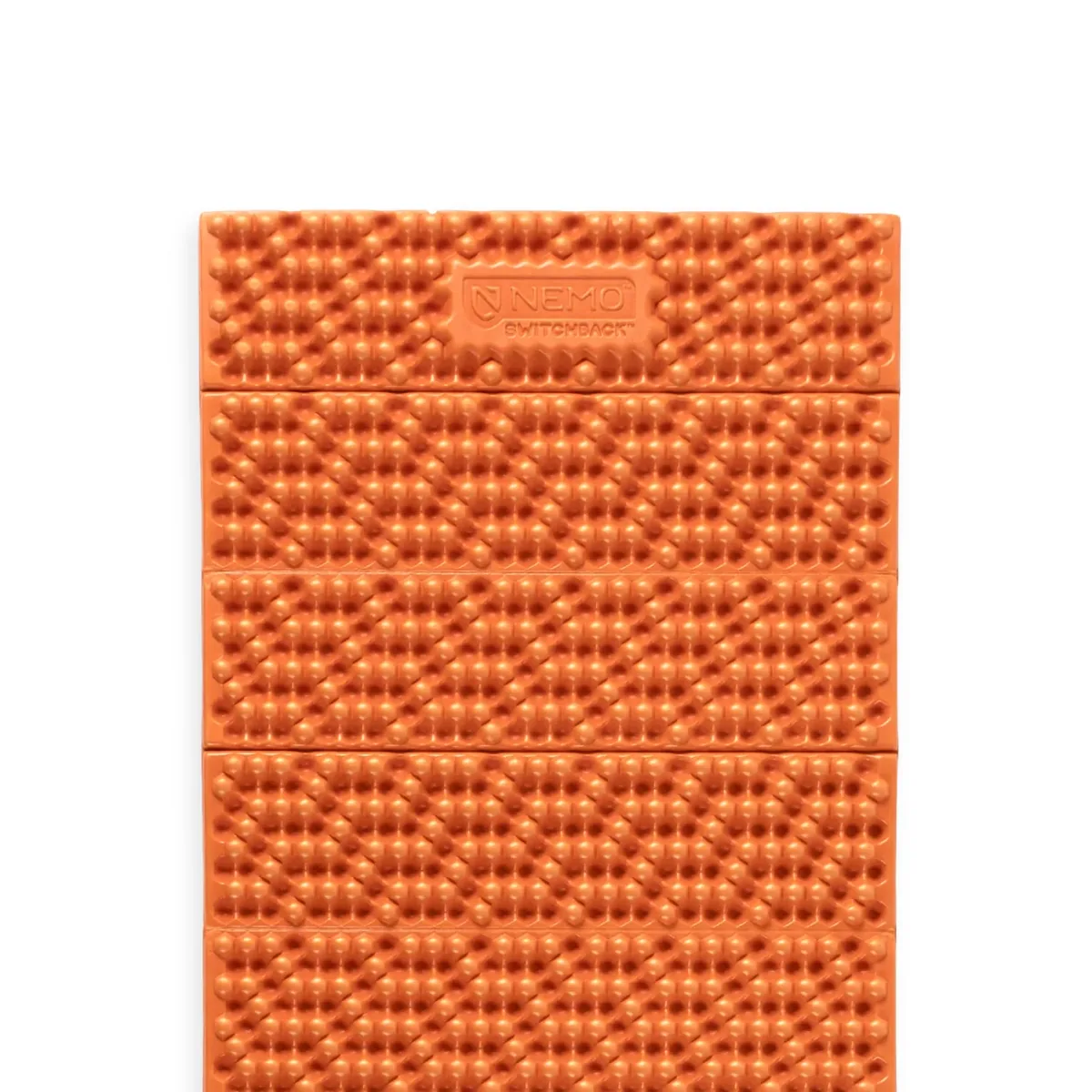
NEMO
NEMO Switchback
The direct competitor to the Z Lite Sol, and the one with slightly deeper nodes — 0.9 inches against 0.75 — which is the whole argument between them. Same R-value of 2, same accordion fold, same complete immunity to punctures. The dual-density foam is firmer underneath and softer on top, and the hexagonal node pattern traps a little more air than the Therm-a-Rest's dimples. Half an ounce heavier and a shade more expensive; whether the extra loft is worth it is a genuinely close call.
Best for: Foam sleepers and as a winter layer under an air pad
Full spec sheet