NEMO
NEMO Tensor All-Season
No citable owner-review average published for this one, so no stars.
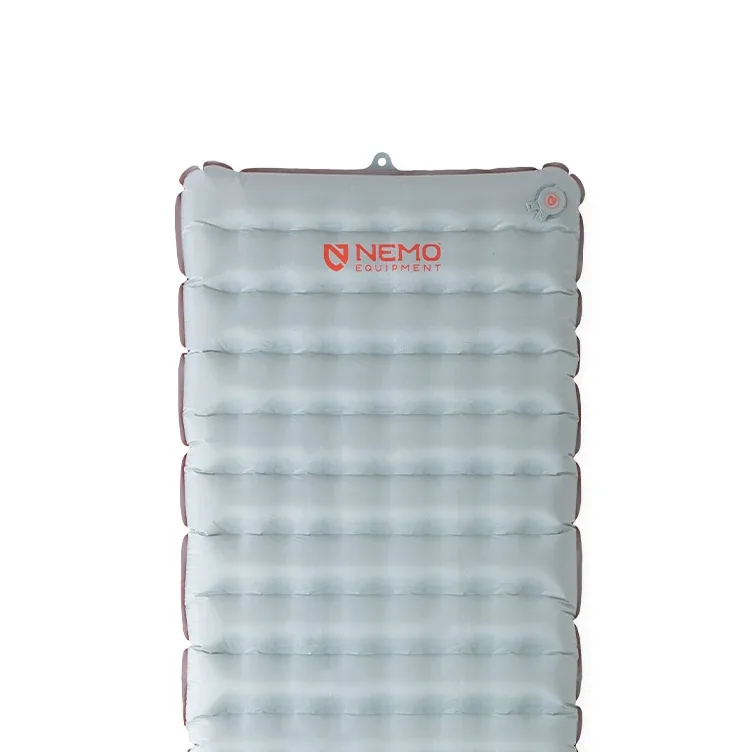
The 2024 Tensor redesign is the pad that took the crinkle argument away from Therm-a-Rest. NEMO's Spaceframe baffles hold the reflective film in suspension rather than laminating it to the fabric, which is why this is the quietest insulated air pad in the catalogue, and the same structure is what gets a three-and-a-half-inch pad to hold its shape under a hip instead of squirming. R-value 5.4 is a genuinely cold-weather number that most people will never max out on a three-season trip. It weighs two and a half ounces more than an XLite and is half an inch thicker.
What this pad supports
R 5.4 puts it in the cold three-season band — frost, frozen ground, shoulder season. On the pairing table that supports a bag rated to roughly 20 °F comfort before the ground becomes the limiting factor.
Size run
One product, 4 sizes. The headline numbers on this page describe the Regular.
| Size | Weight | Approx. price | Length | Width |
|---|---|---|---|---|
| Regular Mummy | 14.1 oz | ~$200 | 72 in | 20 in |
| Regular | 15.5 oz | ~$220 | 72 in | 20 in |
| Regular Wide | 1 lb 3 oz | ~$240 | 72 in | 25 in |
| Long Wide | 1 lb 4 oz | ~$260 | 76 in | 25 in |
Specifications
Highlights
Features
- Pump sack included
- Repair kit included
- Wide option
- Quiet fabric
- Rectangular option
What it does well
- Genuinely quiet — the film is suspended inside the baffles rather than bonded to the face fabric, and that is the single thing people switch to this pad for.
- 3.5 inches thick, half an inch more than the XLite, which is the difference for a heavy side sleeper.
- R-value 5.4 covers frozen ground; only the winter specialists in this catalogue beat it.
- Sold as a mummy or a rectangle in the same size, so you can pick between 1.4 ounces and a wider corner for your feet.
- The Vortex pump sack inflates it in about three squeezes and doubles as the stuff sack.
What it costs you
- $220 for the rectangular Regular, the most expensive three-season pad here per R-value.
- 20-denier top fabric is thin; NEMO's own repair kit is in the box for a reason.
- The mummy version tapers hard at the feet and is noticeably narrower than the rectangle at the shoulders.
- The Spaceframe baffles make it firmer than a simple I-beam pad, which not everyone prefers.
Those two lists are drawn from NEMO’s published specifications and from reviews that measured them. They are not owner sentiment — anything owners said appears under its own heading below.
What owners say
Distilled from owner discussions and long-term published reviews, not from anything measured here.
The Tensor line's 2024 redesign is one of the clearest before-and-after stories in owner discussion. The previous generation had a reputation for pinhole leaks that owners talk about unprompted, and the current one is recommended with an explicit instruction not to buy the older stock. The changes people credit are the 40-denier bottom fabric and the move to suspended film.
What owners praise most is not warmth but silence. Several describe it as the reason they switched from a Therm-a-Rest, and the comparison is always made directly. Warmth reports back the R-value up: cold sleepers describe comfortable nights in the mid-20s.
The caveat is that leaks are not entirely gone. There are credible reports of a new All-Season developing a slow, unlocatable leak within a few nights, which is worth knowing when weighing it against a foam-core pad.
What owners like
- The quietness is the first thing owners mention, and they mention it against the previous Tensor specifically: same pad shape, no crinkle.
- Owners describe staying comfortable in the mid-20s as self-declared cold sleepers, pairing it with quilts that were not especially warm.
- Comfort at 3.5 inches gets praised by people who moved from thicker pads and did not feel they had lost anything.
- The 2024 redesign is treated as a genuine fix: owners specifically warn each other away from the 2022 and 2023 pads and toward this one.
- Packed size is described as barely larger than the older, thinner, less warm pad it replaced.
Common complaints
- Slow leaks have not gone away entirely — there are owner reports of a brand-new All-Season developing an unfindable pinhole after two careful nights on a groundsheet.
- The pad it replaced had a bad enough reliability reputation that owners still bring it up when recommending this one, which colours the whole line.
- Some owners who prioritise comfort above all rank it behind the thicker-feeling alternatives despite the loft number.
- At $220 for the rectangular version it is one of the pricier three-season pads.
Questions owners ask
Is the 2024 Tensor really more reliable than the old one?
How does it compare to an XLite on noise?
Is R 5.4 enough for shoulder season?
Is it comfortable enough to replace a thicker pad?
NEMO Tensor All-Season, head to head
Other pads at this level
More from NEMO →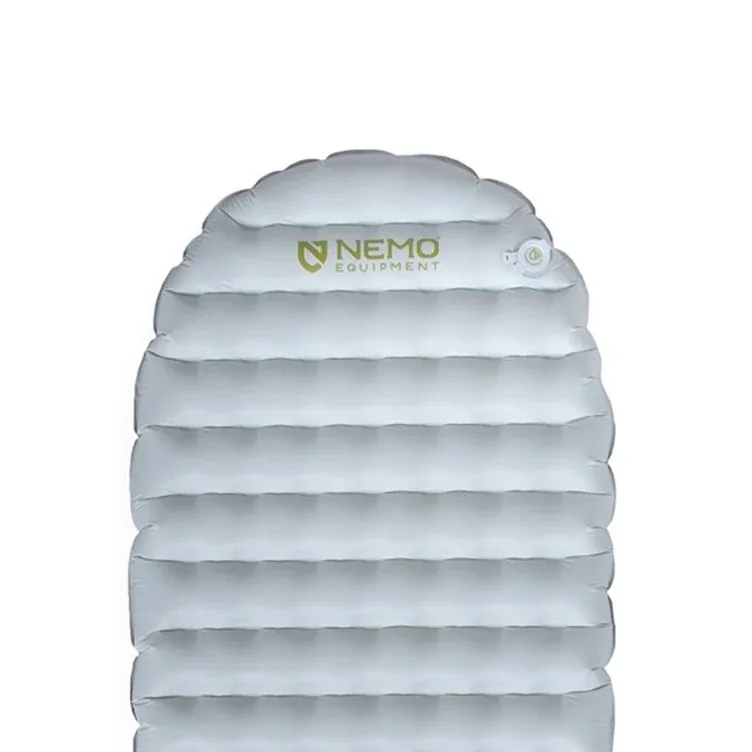
Eight and a half ounces, three inches thick, and a packed size of 5.5 × 3 inches — smaller than most people's water filter. The Elite is what happens when a pad is designed to win a spreadsheet: 10-denier fabric top and bottom, R-value 2.4, and a price that is higher than the warmer, tougher pads in the same family. It is a real product for a real use case — fast summer trips where the pack is the point — but the fabric is the thinnest here by a wide margin and it will not forgive a pine needle.
Best for: Summer fastpacking where packed size decides the kit
Full spec sheet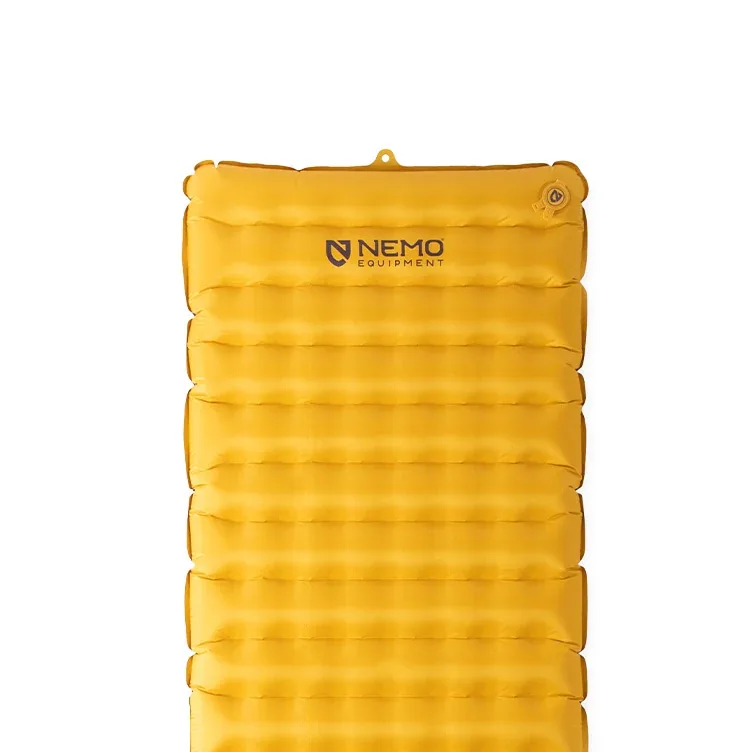
The summer member of the Tensor family: same 3.5-inch loft, same quiet suspended-film baffles, one layer of film instead of several, R-value 2.8. That is a proper three-season number in mild country and not enough for frost, and the pad is priced and weighted accordingly. For a summer sleeper who wants the Tensor's thickness and silence without paying for insulation they won't use, it is the sensible member of the line.
Best for: Summer backpacking where the ground never freezes
Full spec sheet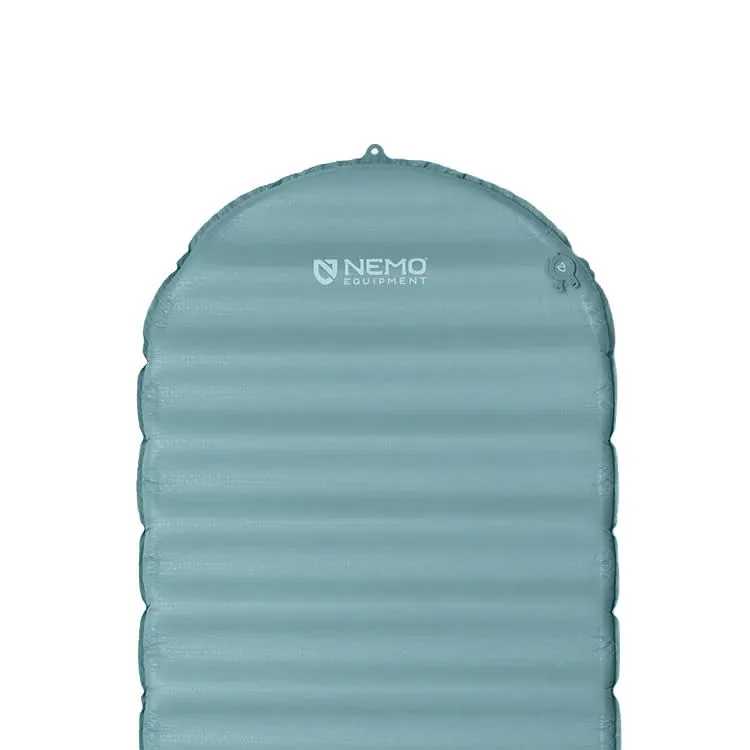
NEMO
NEMO Flyer
NEMO's self-inflating pad, and at 21 ounces it is the lightest foam-core pad here by a clear margin — three ounces under Therm-a-Rest's Trail ProLite for a slightly better R-value of 4.2. The die-cut foam has large sections removed to save weight, which is also why it is only two inches thick. It is the pad for someone who has punctured one too many air mattresses and wants the failure mode to be a softer night rather than no night.
Best for: Backpackers who have given up on air pads
Full spec sheet