NEMO
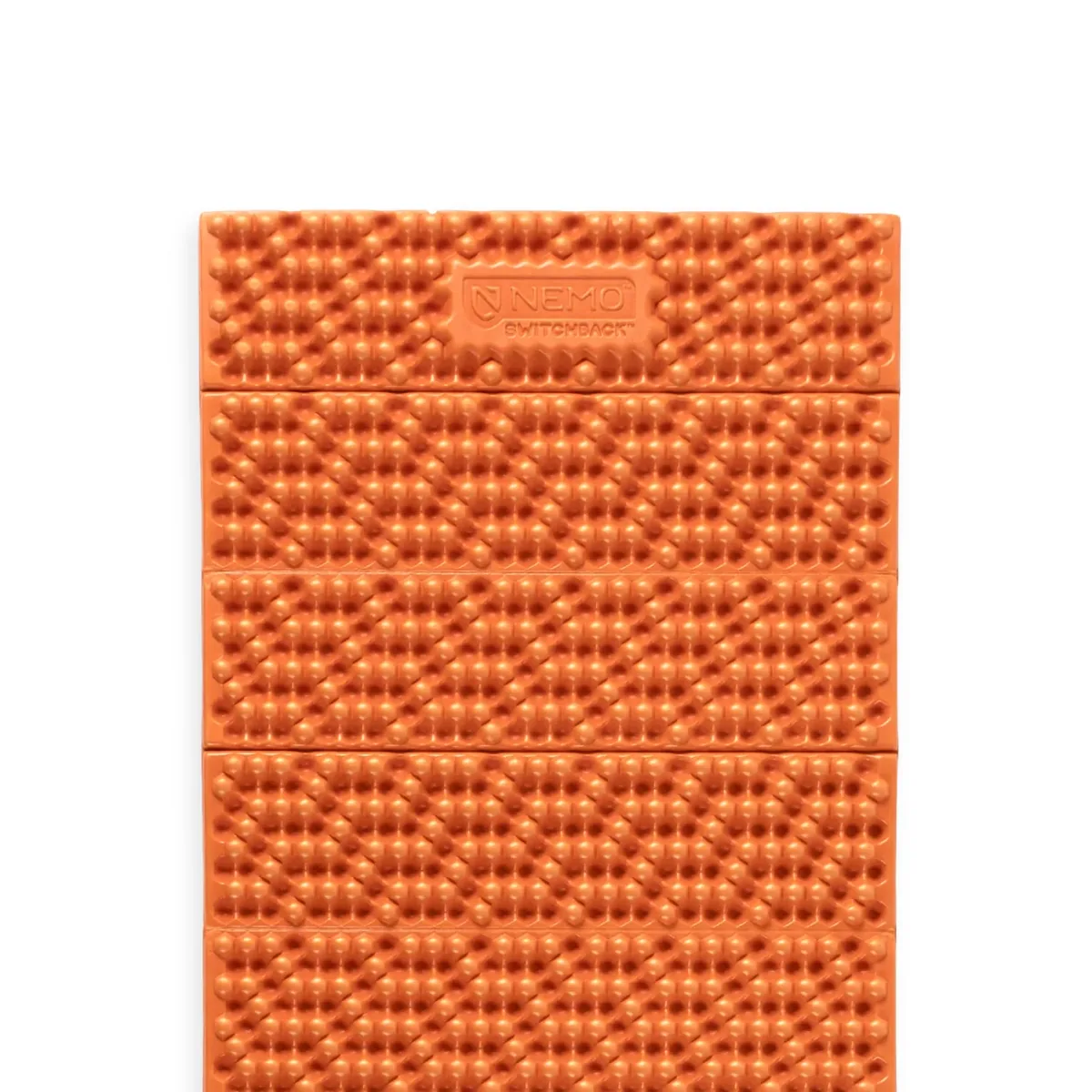
NEMO Switchback
No citable owner-review average published for this one, so no stars.
The direct competitor to the Z Lite Sol, and the one with slightly deeper nodes — 0.9 inches against 0.75 — which is the whole argument between them. Same R-value of 2, same accordion fold, same complete immunity to punctures. The dual-density foam is firmer underneath and softer on top, and the hexagonal node pattern traps a little more air than the Therm-a-Rest's dimples. Half an ounce heavier and a shade more expensive; whether the extra loft is worth it is a genuinely close call.
What this pad supports
R 2 puts it in the three-season band — spring through autumn, above freezing. On the pairing table that supports a bag rated to roughly 40 °F comfort before the ground becomes the limiting factor.
Size run
One product, 2 sizes. The headline numbers on this page describe the Regular.
| Size | Weight | Approx. price | Length | Width |
|---|---|---|---|---|
| Short | 10.5 oz | ~$55 | 51 in | 20 in |
| Regular | 14.5 oz | ~$60 | 72 in | 20 in |
Specifications
Highlights
Features
- Packs flat
- Under 1 lb
- Rectangular option
What it does well
- 0.9-inch nodes are the deepest of the accordion foam pads, which is where its small comfort edge comes from.
- R-value 2 with nothing to leak, nothing to inflate and nothing to carry a repair kit for.
- Stacks under an inflatable to add roughly two points of R-value and protect the fabric.
- $60 and effectively permanent — the cheapest sleeping system insurance there is.
What it costs you
- R 2 alone is summer-only, exactly like every other closed-cell pad.
- Straps to the outside of the pack and snags on brush; it does not compress.
- 0.9 inches of foam still lets a side sleeper feel the ground.
- Half an ounce heavier than the Z Lite Sol for a very small comfort gain.
Those two lists are drawn from NEMO’s published specifications and from reviews that measured them. They are not owner sentiment — anything owners said appears under its own heading below.
What owners say
Distilled from owner discussions and long-term published reviews, not from anything measured here.
Closed-cell foam has quietly become a second pad rather than a first one for most people, and the Switchback's owner discussion reflects that. It turns up most often as the layer under an inflatable — for puncture protection, for the extra R-value, and because some owners believe reflective insulation works better with the body close to it.
The durability reports are the standout. Owners describe a hundred-plus nights with no measurable loss of warmth, which is the exact opposite of every air pad's story and is why foam pads keep surviving gear culls.
The people who use one as their only pad are a real but small group, and they describe it as a deliberate choice rather than a compromise they were forced into.
What owners like
- Owners report over a hundred nights with no significant change in warmth, which is a claim no inflatable gets close to.
- Bony side sleepers who stuck with foam name it specifically as the one they kept using after air pads became the default.
- Widely used as the layer under an inflatable, with owners noting it both protects the pad and keeps reflective insulation close to the body where it works better.
- Cheap enough that owners buy a second one for the dog, which turns up more than once.
- Owners report the dog getting one too, which is a small thing that says how cheap and how indestructible it is.
Common complaints
- It is foam, and the comfort ceiling is what it is — owners who like it are explicit that they have made a tradeoff.
- It does not compress, so it lives on the outside of the pack and catches on brush.
- Alone it is a summer pad; owners pairing it with anything colder always add an inflatable.
Questions owners ask
Switchback or Z Lite Sol?
Does the foam pack out over time?
Foam above or below the inflatable?
NEMO Switchback, head to head
Other pads at this level
More from NEMO →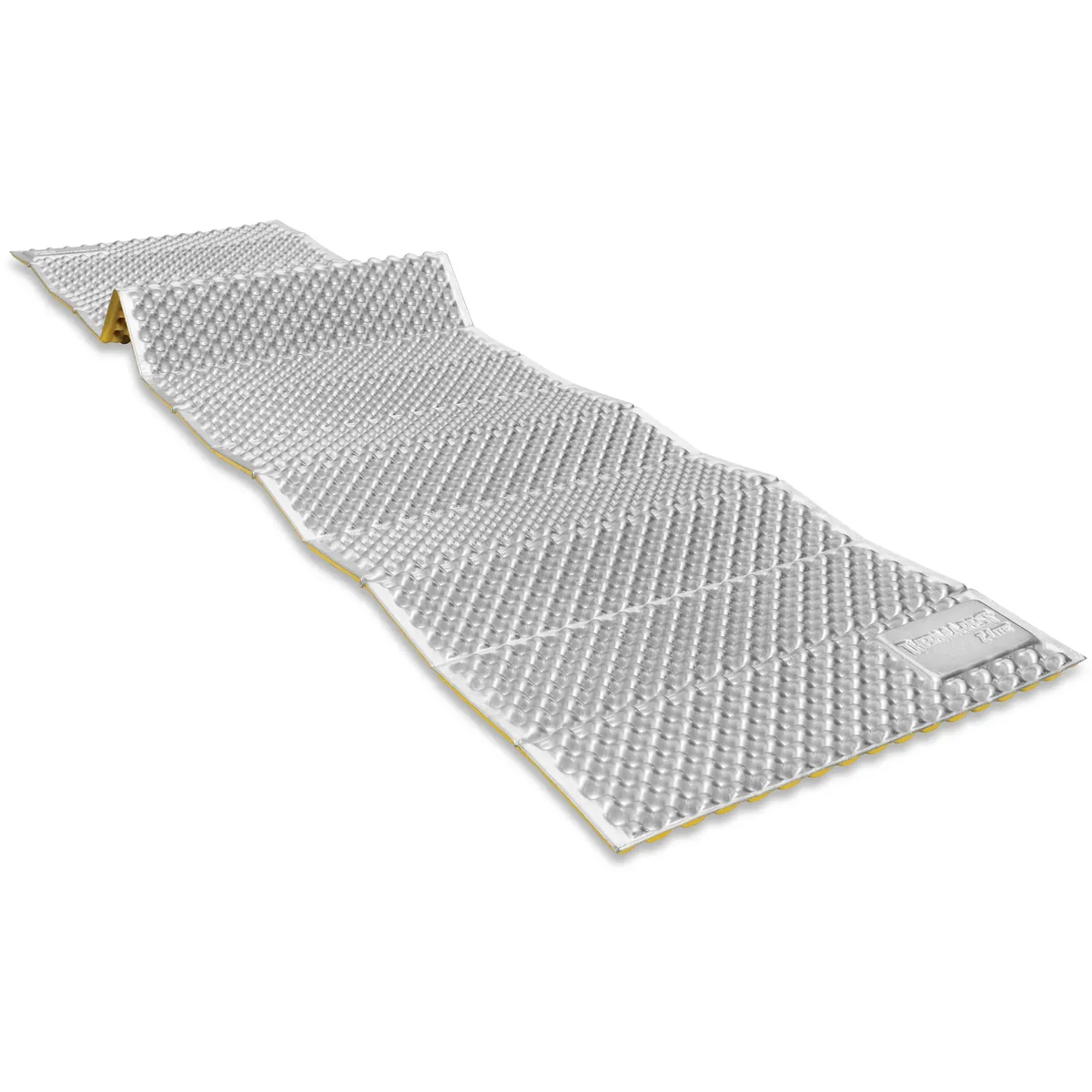
Therm-a-Rest
Therm-a-Rest Z Lite Sol
An accordion of dimpled foam that cannot be punctured, cannot leak, needs no valve and weighs 14 ounces. R-value 2 is genuinely marginal on its own once the ground drops below about 40 °F, and the three-quarter-inch thickness means hips and shoulders feel the ground — but nothing else in the catalogue is this indestructible or this cheap, and its second career is as the layer people put under an inflatable pad in winter to add roughly two points of R-value and protect the fabric. It also folds flat into a sit pad, a pack frame, and a splint, which is why it never quite leaves anyone's kit.
Best for: Foam sleepers, winter layering under an air pad, and anyone tired of leaks
Full spec sheet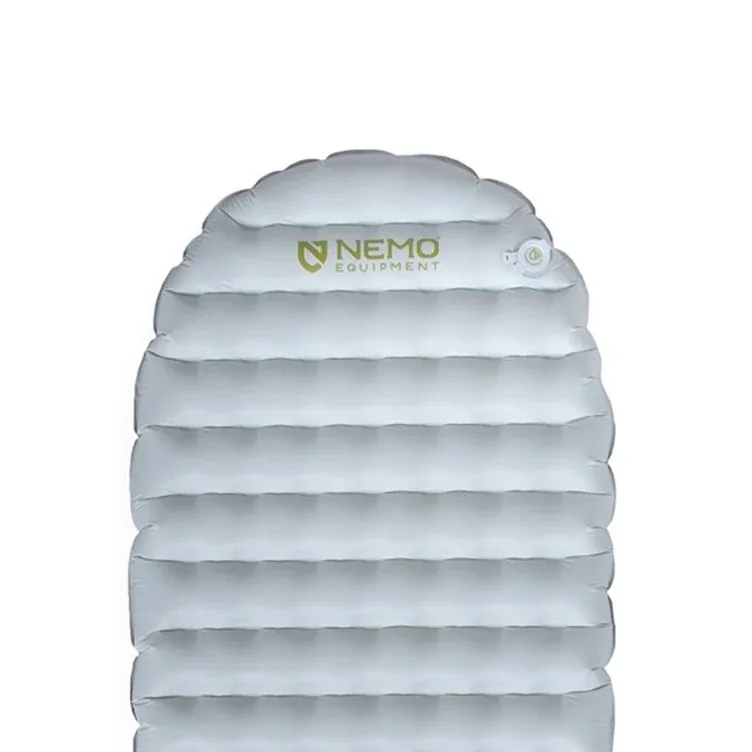
Eight and a half ounces, three inches thick, and a packed size of 5.5 × 3 inches — smaller than most people's water filter. The Elite is what happens when a pad is designed to win a spreadsheet: 10-denier fabric top and bottom, R-value 2.4, and a price that is higher than the warmer, tougher pads in the same family. It is a real product for a real use case — fast summer trips where the pack is the point — but the fabric is the thinnest here by a wide margin and it will not forgive a pine needle.
Best for: Summer fastpacking where packed size decides the kit
Full spec sheet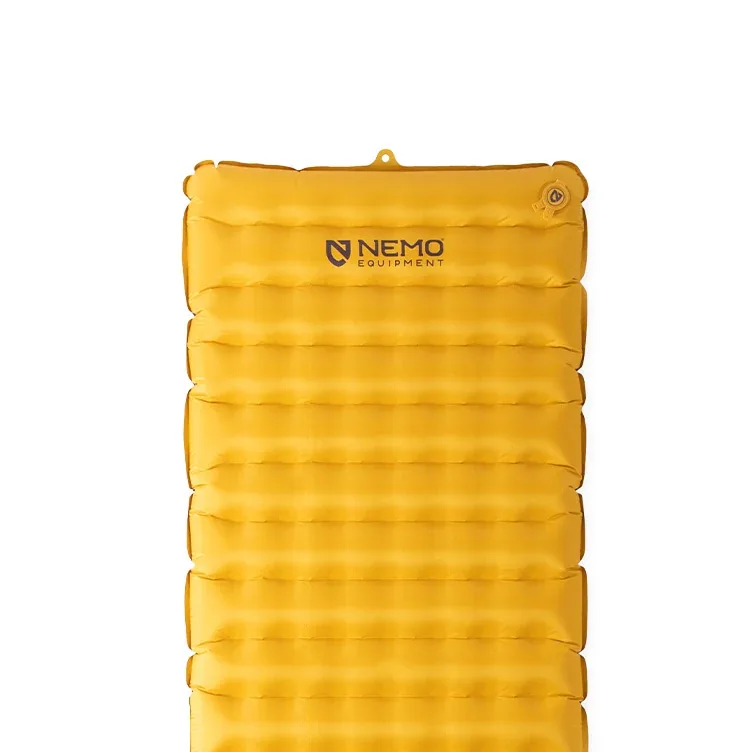
The summer member of the Tensor family: same 3.5-inch loft, same quiet suspended-film baffles, one layer of film instead of several, R-value 2.8. That is a proper three-season number in mild country and not enough for frost, and the pad is priced and weighted accordingly. For a summer sleeper who wants the Tensor's thickness and silence without paying for insulation they won't use, it is the sensible member of the line.
Best for: Summer backpacking where the ground never freezes
Full spec sheet