NEMO
NEMO Tempo 20
No citable owner-review average published for this one, so no stars.
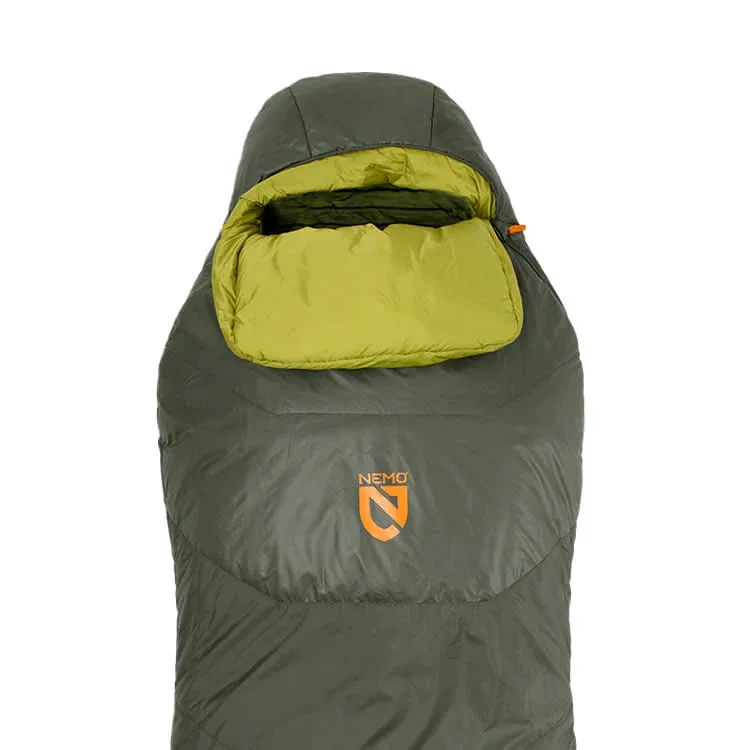
NEMO's entry synthetic bag: the Spoon shape and the Thermo Gills in a heavier 50-denier shell with a lower grade of Zerofiber, at $170. The 50D fabric is the real difference — it is a much tougher bag than the Forte, which matters more in a campground and on a car-camping trip than the 58-ounce weight does. Published ISO lower limit of 21 °F, honest for a bag with a 20 on the label.
Label against lab
NEMO publishes an ISO 23537 lower limit of 21 °F but no comfort figure. The comfort rating typically runs ten to twelve degrees warmer than the limit, so plan around the low thirties rather than the number on the label. Comfort against limit
At that temperature the pairing table wants at least an R 4 pad underneath it.
Size run
One product, 2 sizes. The headline numbers on this page describe the Regular.
| Size | Weight | Approx. price | Length | Shoulder girth |
|---|---|---|---|---|
| Regular | 3 lb 10 oz | ~$170 | — | — |
| Long | 3 lb 14 oz | ~$200 | — | — |
Specifications
Highlights
Features
- ISO or EN rated
- Draft collar
- Full-length zipper
- Spoon shape
- Recycled fabric
What it does well
- $170 for a bag with a published ISO figure is the cheapest lab-rated entry in this catalogue.
- 50-denier shell is more than twice the fabric of most backpacking bags — it will survive a tent floor and a dog.
- Synthetic fill that keeps working damp, and no special storage requirements.
- Spoon shape and Thermo Gills carried down from the more expensive bags.
What it costs you
- 58 ounces and 12.9 litres packed is a car-camping bag, no matter what the shape suggests.
- The ISO limit of 21 °F is a survival figure; the comfortable range is more like the mid-30s.
- Only two lengths, no wide option.
- Lower-grade synthetic fill will pack out faster than the Forte's.
Those two lists are drawn from NEMO’s published specifications and from reviews that measured them. They are not owner sentiment — anything owners said appears under its own heading below.
What owners say
No owner discussion has been collected for the NEMO Tempo 20 yet. The pros and cons above come from NEMO’s published specifications and from reviews that measured them — nothing on this page claims owners said anything. How that works.
NEMO Tempo 20, head to head
Others in the same band
More from NEMO →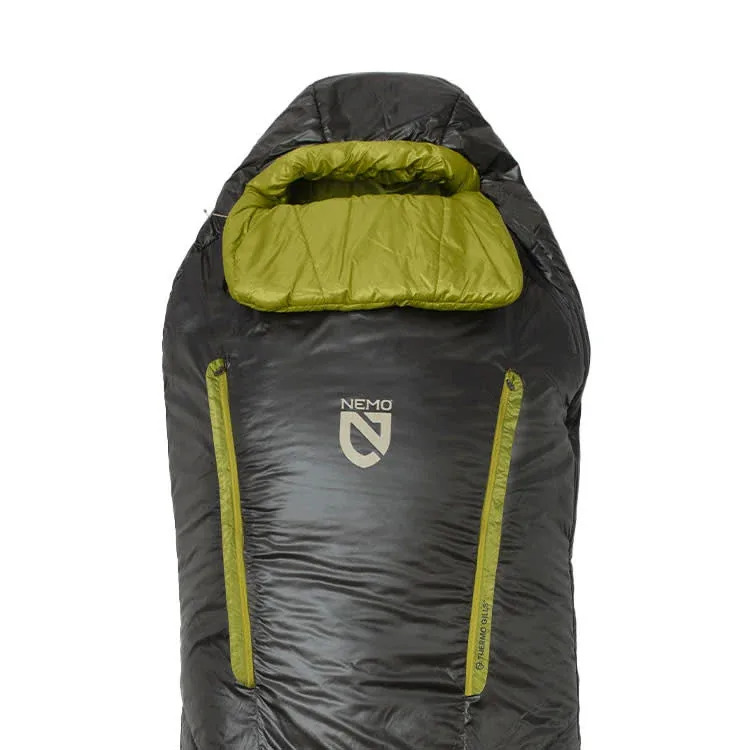
NEMO
NEMO Forte 20
The synthetic Spoon bag, and the right recommendation for anyone camping somewhere persistently damp — the Pacific Northwest, the Appalachians in spring, anywhere a down bag spends a week slowly losing loft. Zerofiber is made entirely from post-consumer recycled polyester, and it keeps insulating wet, which down does not. The cost is real: 53 ounces and 10.6 litres of pack space, roughly a quarter more weight and 60% more volume than the down Disco at a similar rating.
Best for: Wet-climate camping where down is the wrong insulation
Full spec sheet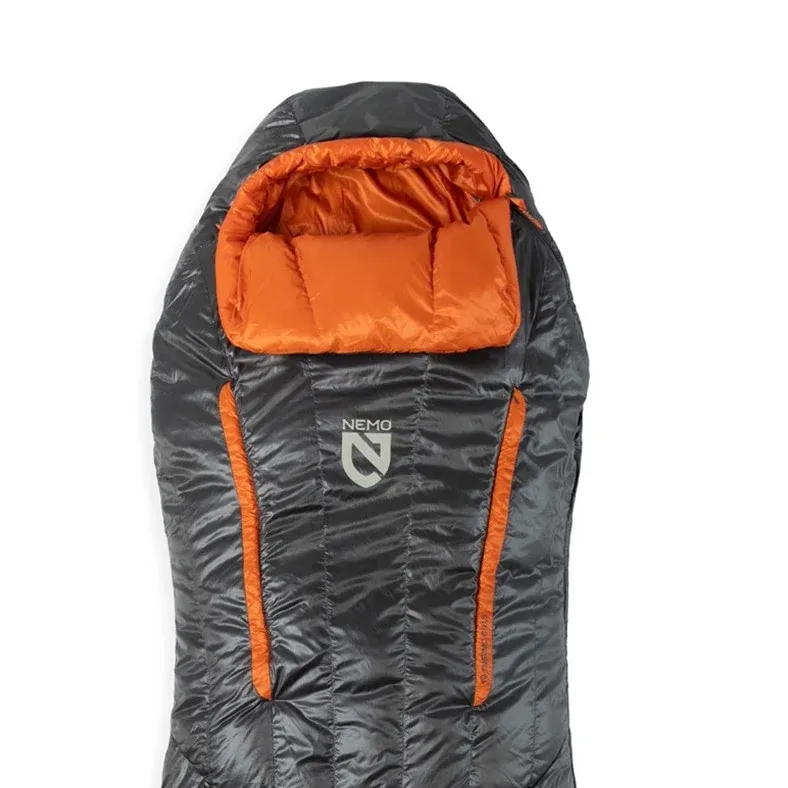
NEMO
NEMO Disco 15
The Spoon shape is NEMO's one genuinely original idea in sleeping bags: extra room cut in at the elbows and knees and taken back out at the shins, so a side sleeper can bend a leg without fighting the bag. If you have ever woken up wrapped in a mummy bag that rotated with you, this is the fix. The Disco is the 650-fill version — heavier and bulkier than the 800-fill Riff above it, and $100 cheaper. NEMO publishes an ISO lower limit of 16 °F but no comfort figure, which is the standard half-disclosure across this brand's line; assume comfort lands roughly ten degrees warmer.
Best for: Side sleepers who find mummy bags claustrophobic
Full spec sheetA synthetic mummy with an ISO comfort rating of 24 °F for $189, built entirely from recycled fabric and fill. That comfort figure is the interesting part: at four degrees off its own name it is one of the most honestly labelled bags here, and it is warmer at the comfort end than several down bags costing three times as much. The price is three and a half pounds and a stuff sack the size of a football, which is why this is a car-camping and canoe-trip bag rather than a backpacking one.
Best for: Damp-weather camping on a budget
Full spec sheet