NEMO
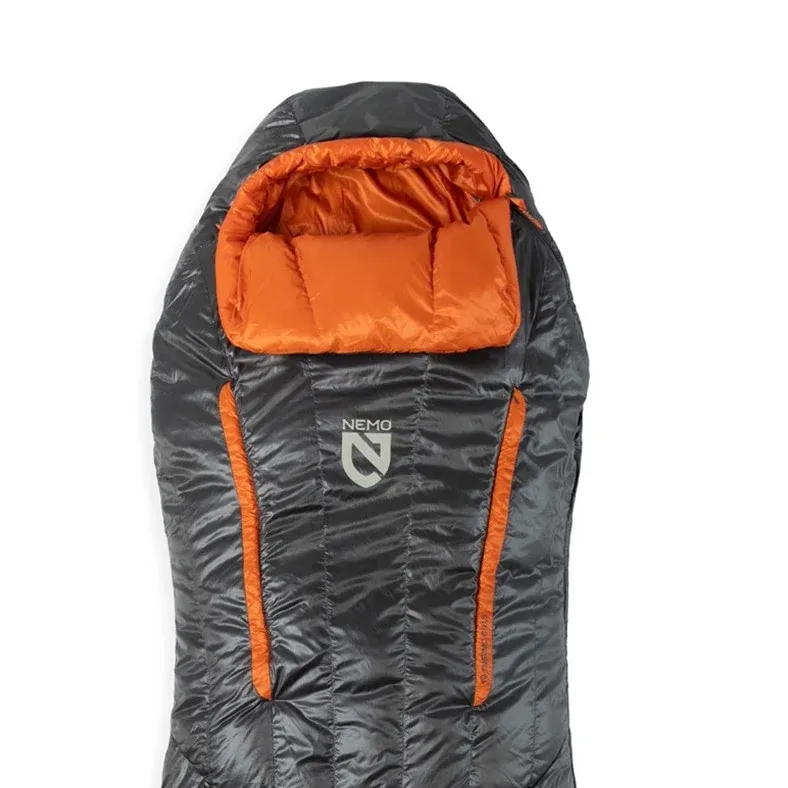
NEMO Disco 15
No citable owner-review average published for this one, so no stars.
The Spoon shape is NEMO's one genuinely original idea in sleeping bags: extra room cut in at the elbows and knees and taken back out at the shins, so a side sleeper can bend a leg without fighting the bag. If you have ever woken up wrapped in a mummy bag that rotated with you, this is the fix. The Disco is the 650-fill version — heavier and bulkier than the 800-fill Riff above it, and $100 cheaper. NEMO publishes an ISO lower limit of 16 °F but no comfort figure, which is the standard half-disclosure across this brand's line; assume comfort lands roughly ten degrees warmer.
Label against lab
NEMO publishes an ISO 23537 lower limit of 16 °F but no comfort figure. The comfort rating typically runs ten to twelve degrees warmer than the limit, so plan around the low thirties rather than the number on the label. Comfort against limit
At that temperature the pairing table wants at least an R 5.5 pad underneath it.
Size run
One product, 4 sizes. The headline numbers on this page describe the Regular.
| Size | Weight | Approx. price | Length | Shoulder girth |
|---|---|---|---|---|
| Regular | 2 lb 11 oz | ~$300 | — | — |
| Regular Wide | 2 lb 13 oz | ~$330 | — | — |
| Long | 2 lb 15 oz | ~$350 | — | — |
| Long Wide | 3 lb 1 oz | ~$360 | — | — |
Specifications
Highlights
Features
- ISO or EN rated
- Hydrophobic down
- RDS down
- Draft collar
- Full-length zipper
- Spoon shape
- Wide option
- Recycled fabric
What it does well
- The Spoon cut gives real elbow and knee room without the weight of a full semi-rectangular bag.
- Thermo Gills — two zipped vents over the chest — dump heat without letting a draft onto your torso, which is the usual problem with venting a bag.
- ISO lower limit of 16 °F published, so the 15 in the name is at least anchored to a lab.
- Four sizes including two widths, and the Wide is a genuinely different girth rather than a token.
- $300 for a lab-rated down bag is mid-market, and the Endless Promise version is built to be taken back and recycled.
What it costs you
- 650-fill down means 43 ounces and 6.7 litres packed — heavy and bulky next to the 800-fill Riff.
- NEMO publishes the ISO limit but not the comfort figure, so the number most people should plan around is missing.
- No published shoulder girth or fill weight, which makes it hard to compare against bags that do publish them.
- The Spoon's extra width is warmth you have to heat; it is not the bag for the coldest night of the year.
Those two lists are drawn from NEMO’s published specifications and from reviews that measured them. They are not owner sentiment — anything owners said appears under its own heading below.
What owners say
Distilled from owner discussions and long-term published reviews, not from anything measured here.
The Disco is the bag that comes up whenever someone says they cannot sleep in a mummy. The Spoon shape — wider at the elbows and knees, narrower at the shins — is the feature owners name, and the descriptions are specific: tucking a pillow inside the bag, sleeping with legs in a figure four, shifting position without the bag turning with you.
That last point recurs enough to be worth repeating as advice. Several owners describe the learning curve as getting used to rolling inside the bag rather than rolling the bag, and say the Disco has enough room to make that possible where a standard mummy does not.
The objections repeat too: it is heavy, it is bulky, and the same money buys a much lighter quilt. Owners who bought it anyway generally say the comfort trumped the weight, which is an unusually clear-eyed way to describe a purchase.
What owners like
- Side sleepers name it more often than any other bag here, and the Spoon shape is always the reason given — room at the knees and elbows without a rectangular bag's bulk.
- Owners report being able to tuck a pillow inside the zipped bag and sleep in a figure-four position, which is not possible in a standard mummy.
- The Thermo Gills get specific praise for venting heat without opening the bag onto your torso.
- Several owners call it the best gear purchase they have made, and say the comfort outweighed any wish to save weight.
- Owners who have also used a 0-degree bag from another maker say they prefer the Disco unless it is genuinely very cold.
Common complaints
- It is heavy, and owners who suggest alternatives point out that a cottage quilt saves well over a pound for similar money.
- The technique of rolling inside the bag rather than letting it roll with you has to be learned, and owners mention it as something they had to get used to.
- Price gets flagged regularly, with owners advising each other to wait for a sale.
- 650-fill down means it packs large, which comes up whenever someone is trying to fit a kit into a smaller pack.
Questions owners ask
Is the Spoon shape actually different, or is it marketing?
Disco or Riff?
Is it too heavy for backpacking?
What do the Thermo Gills do?
Does the bag turn with you or do you turn inside it?
NEMO Disco 15, head to head
Others in the same band
More from NEMO →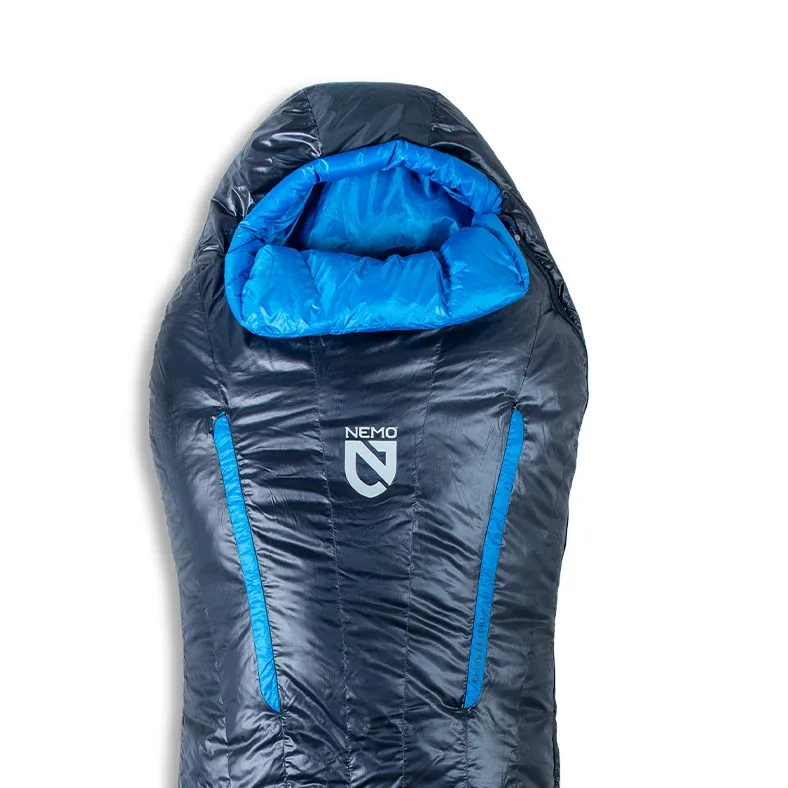
NEMO
NEMO Riff 15
The Disco's trimmer, more expensive sibling: the same Spoon silhouette and the same Thermo Gills in a narrower cut with 800-fill down instead of 650. That buys four ounces and half a litre of pack space for $100. Whether that is a good trade depends entirely on how far you are carrying it — for a weekend it is not, for a long trail it very much is.
Best for: Side sleepers going long enough that four ounces matters
Full spec sheet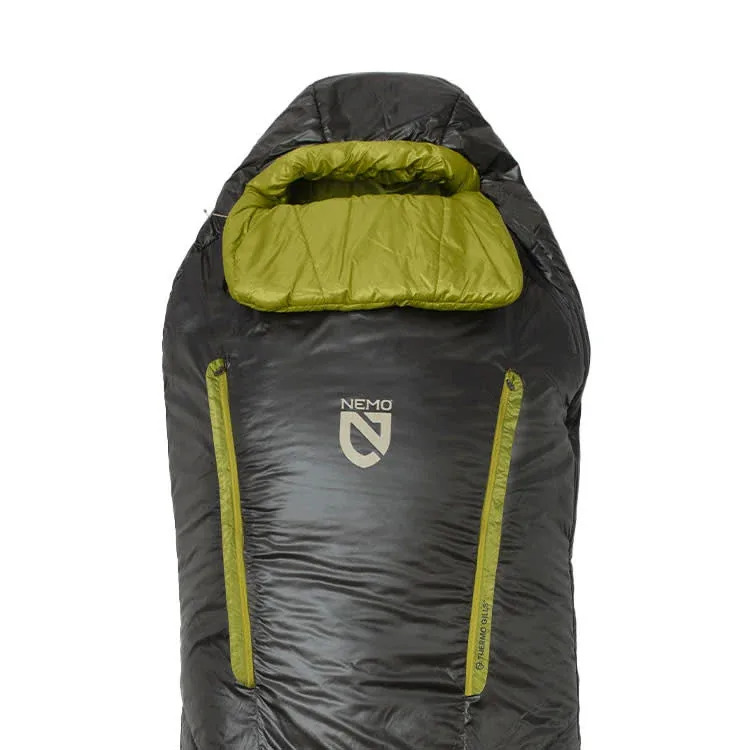
NEMO
NEMO Forte 20
The synthetic Spoon bag, and the right recommendation for anyone camping somewhere persistently damp — the Pacific Northwest, the Appalachians in spring, anywhere a down bag spends a week slowly losing loft. Zerofiber is made entirely from post-consumer recycled polyester, and it keeps insulating wet, which down does not. The cost is real: 53 ounces and 10.6 litres of pack space, roughly a quarter more weight and 60% more volume than the down Disco at a similar rating.
Best for: Wet-climate camping where down is the wrong insulation
Full spec sheet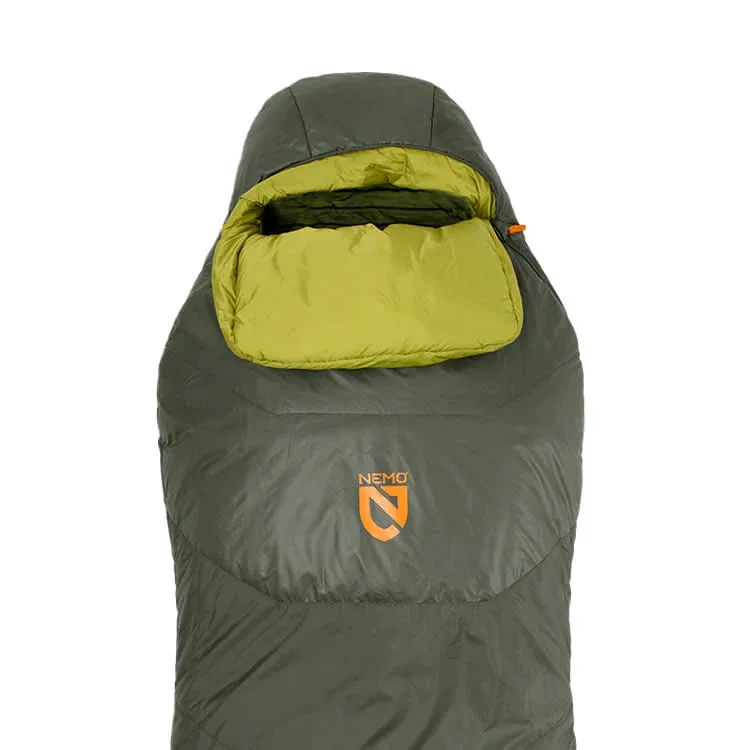
NEMO
NEMO Tempo 20
NEMO's entry synthetic bag: the Spoon shape and the Thermo Gills in a heavier 50-denier shell with a lower grade of Zerofiber, at $170. The 50D fabric is the real difference — it is a much tougher bag than the Forte, which matters more in a campground and on a car-camping trip than the 58-ounce weight does. Published ISO lower limit of 21 °F, honest for a bag with a 20 on the label.
Best for: Campground and car-camping trips in a wet climate
Full spec sheet