NEMO
NEMO Flyer
No citable owner-review average published for this one, so no stars.
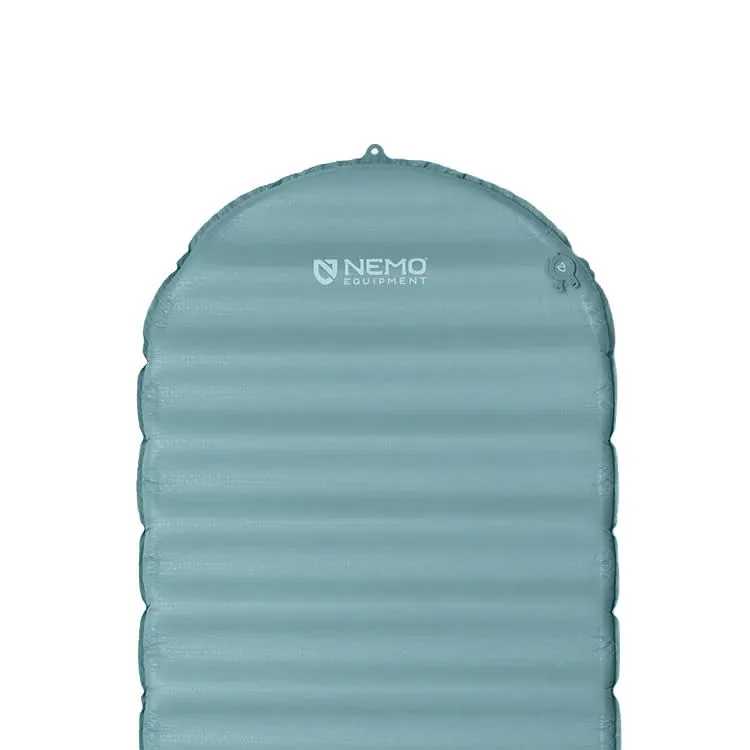
NEMO's self-inflating pad, and at 21 ounces it is the lightest foam-core pad here by a clear margin — three ounces under Therm-a-Rest's Trail ProLite for a slightly better R-value of 4.2. The die-cut foam has large sections removed to save weight, which is also why it is only two inches thick. It is the pad for someone who has punctured one too many air mattresses and wants the failure mode to be a softer night rather than no night.
What this pad supports
R 4.2 puts it in the cold three-season band — frost, frozen ground, shoulder season. On the pairing table that supports a bag rated to roughly 20 °F comfort before the ground becomes the limiting factor.
Size run
One product, 3 sizes. The headline numbers on this page describe the Regular Mummy.
| Size | Weight | Approx. price | Length | Width |
|---|---|---|---|---|
| Regular Mummy | 1 lb 5 oz | ~$140 | 72 in | 20 in |
| Regular Wide Mummy | 1 lb 9 oz | ~$150 | 72 in | 25 in |
| Long Wide Mummy | 1 lb 10 oz | ~$160 | 76 in | 25 in |
Specifications
Highlights
Features
- Self-inflating
- Wide option
- Quiet fabric
- Recycled fabric
What it does well
- 21 ounces is the lightest self-inflating pad in this catalogue, three ounces under the closest comparison.
- R-value 4.2 from foam rather than film, so a puncture costs comfort rather than the whole night.
- Silent, and warm to the touch in a way reflective-film pads never are.
- $140 is at the bottom of the three-season price range for this much R-value.
What it costs you
- Two inches of loft is thin — side sleepers will feel the ground through it.
- Packs to 10 × 6.5 inches, roughly twice the volume of an ultralight air pad.
- Self-inflation is partial, as always; expect to top it up.
- Sold in mummy cut only, so there is no rectangular version for restless sleepers.
Those two lists are drawn from NEMO’s published specifications and from reviews that measured them. They are not owner sentiment — anything owners said appears under its own heading below.
What owners say
Distilled from owner discussions and long-term published reviews, not from anything measured here.
The Flyer's owners are a small and distinctive group: people who have decided that sleeping well outranks pack weight and who want a pad that cannot fail outright. The recurring setup is a Flyer with a foam pad under it, described by owners as the combination that lets them stop thinking about the sleep system.
There is not enough discussion to build a reliability picture, which is itself informative — foam-core pads generate far fewer complaints than air pads simply because their failure mode is undramatic.
Thickness is where it stops. At two inches this is a comfortable pad rather than a plush one, and owners who want depth go elsewhere.
What owners like
- Owners who use it describe sleep as the thing they refuse to compromise on, and the Flyer as the pad that ended the compromise.
- Commonly paired with a foam pad underneath, giving a setup owners describe as both comfortable and immune to a single failure.
- Side sleepers with older joints name it specifically, which is a narrow but consistent constituency.
- Owners who have punctured an air pad on a trip name it as the deliberate replacement, and describe not thinking about the sleep system afterwards.
Common complaints
- Discussion volume is low, so there is not much of a reliability picture either way.
- It is heavy for backpacking and owners who carry it say so themselves, framing it as a deliberate comfort choice.
- Two inches of loft means the comfort it delivers comes from the foam's feel rather than from depth.
Questions owners ask
Why choose this over a lighter air pad?
Is it comfortable enough for a side sleeper?
Does it self-inflate fully?
NEMO Flyer, head to head
Other pads at this level
More from NEMO →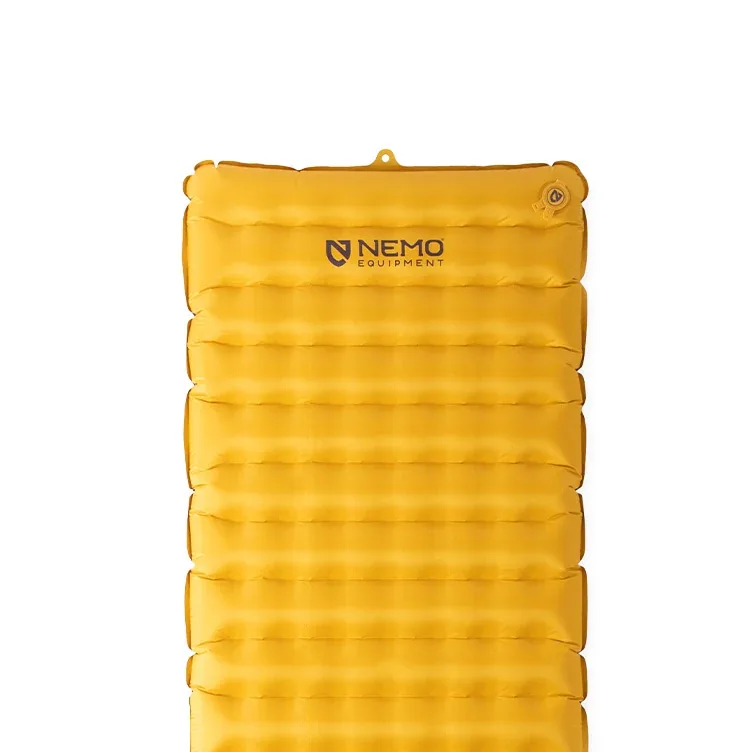
The summer member of the Tensor family: same 3.5-inch loft, same quiet suspended-film baffles, one layer of film instead of several, R-value 2.8. That is a proper three-season number in mild country and not enough for frost, and the pad is priced and weighted accordingly. For a summer sleeper who wants the Tensor's thickness and silence without paying for insulation they won't use, it is the sensible member of the line.
Best for: Summer backpacking where the ground never freezes
Full spec sheet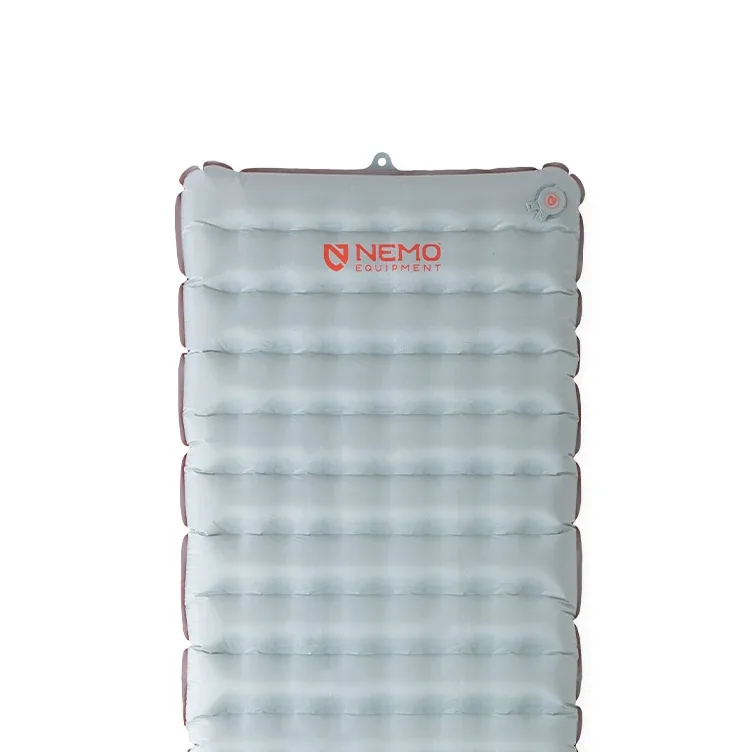
The 2024 Tensor redesign is the pad that took the crinkle argument away from Therm-a-Rest. NEMO's Spaceframe baffles hold the reflective film in suspension rather than laminating it to the fabric, which is why this is the quietest insulated air pad in the catalogue, and the same structure is what gets a three-and-a-half-inch pad to hold its shape under a hip instead of squirming. R-value 5.4 is a genuinely cold-weather number that most people will never max out on a three-season trip. It weighs two and a half ounces more than an XLite and is half an inch thicker.
Best for: Light sleepers and anyone who has returned a crinkly pad
Full spec sheet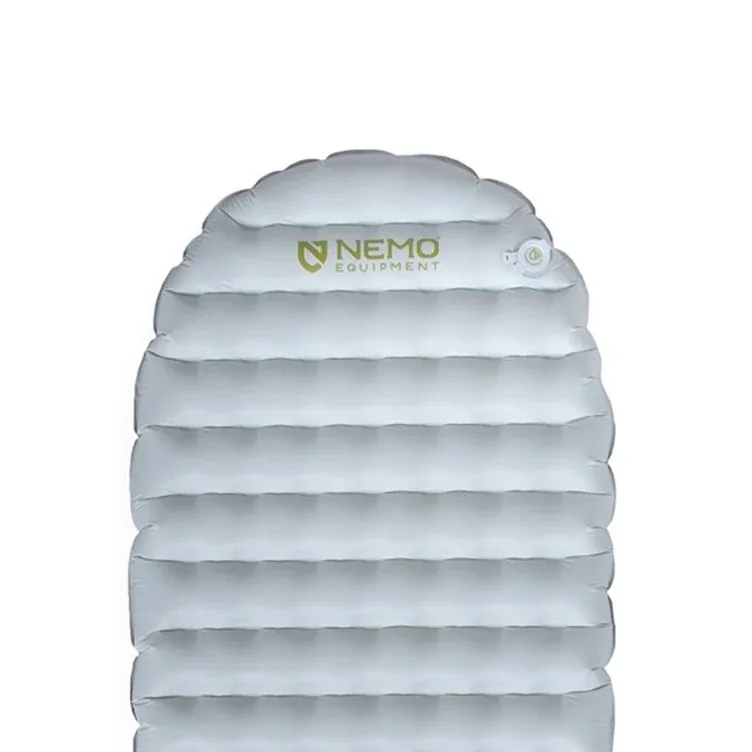
Eight and a half ounces, three inches thick, and a packed size of 5.5 × 3 inches — smaller than most people's water filter. The Elite is what happens when a pad is designed to win a spreadsheet: 10-denier fabric top and bottom, R-value 2.4, and a price that is higher than the warmer, tougher pads in the same family. It is a real product for a real use case — fast summer trips where the pack is the point — but the fabric is the thinnest here by a wide margin and it will not forgive a pine needle.
Best for: Summer fastpacking where packed size decides the kit
Full spec sheet