Therm-a-Rest
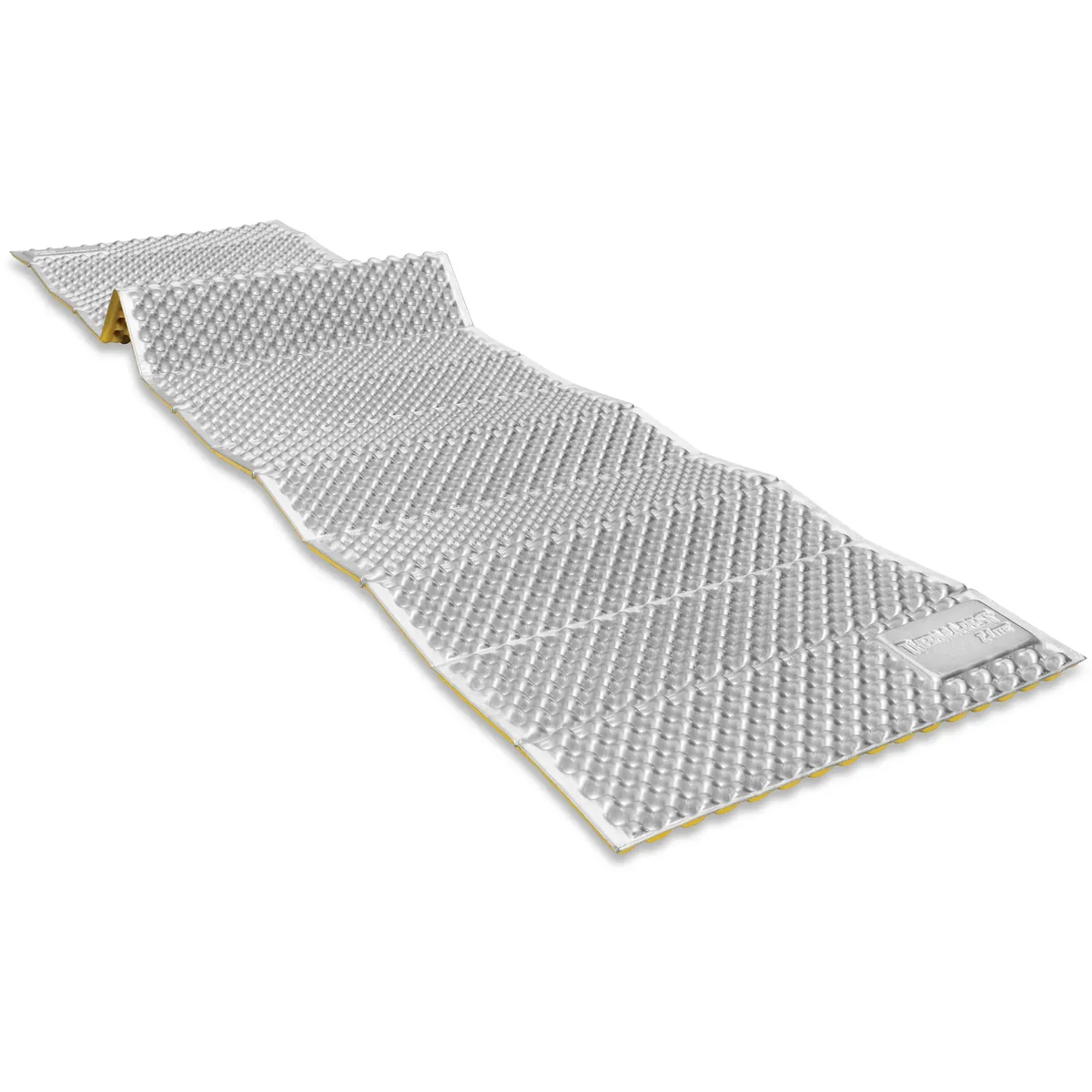
Therm-a-Rest Z Lite Sol
No citable owner-review average published for this one, so no stars.
An accordion of dimpled foam that cannot be punctured, cannot leak, needs no valve and weighs 14 ounces. R-value 2 is genuinely marginal on its own once the ground drops below about 40 °F, and the three-quarter-inch thickness means hips and shoulders feel the ground — but nothing else in the catalogue is this indestructible or this cheap, and its second career is as the layer people put under an inflatable pad in winter to add roughly two points of R-value and protect the fabric. It also folds flat into a sit pad, a pack frame, and a splint, which is why it never quite leaves anyone's kit.
What this pad supports
R 2 puts it in the three-season band — spring through autumn, above freezing. On the pairing table that supports a bag rated to roughly 40 °F comfort before the ground becomes the limiting factor.
Size run
One product, 2 sizes. The headline numbers on this page describe the Regular.
| Size | Weight | Approx. price | Length | Width |
|---|---|---|---|---|
| Small | 10 oz | ~$50 | 51 in | 20 in |
| Regular | 14 oz | ~$60 | 72 in | 20 in |
Specifications
Highlights
Features
- Made in USA
- Under 1 lb
- Packs flat
What it does well
- Zero failure modes: no valve, no seams, no baffles, nothing that can leak at 2 a.m. in the rain.
- Stacks under an inflatable in winter for roughly two extra points of R-value and a layer of puncture protection.
- Unfolds in one motion and packs in another — no pump sack, no waiting, no breath.
- $60 for the Regular, a quarter of what an ultralight air pad costs, and it will outlast three of them.
- Doubles as a sit pad, a pack frame sheet and a windbreak for a stove, which is why it survives gear culls.
What it costs you
- R-value 2 is summer-only on its own; on frozen or even cold damp ground it will not keep up with a 20 °F bag.
- Three-quarters of an inch of foam means side sleepers feel every root, and there is no adjusting it.
- It does not pack down — it straps to the outside of the pack and catches on branches.
- The dimples compress permanently over a season or two of heavy use and the pad loses some of its already-modest warmth.
Those two lists are drawn from Therm-a-Rest’s published specifications and from reviews that measured them. They are not owner sentiment — anything owners said appears under its own heading below.
What owners say
Distilled from owner discussions and long-term published reviews, not from anything measured here.
The Z Lite is the most-mentioned pad in ultralight discussion that almost nobody uses on its own. Its owners fall into two groups: people who genuinely sleep on foam, who are fewer than the mention count suggests, and the much larger group who carry a cut-down section under an inflatable.
The durability claims are remarkable and consistent — owners describe a hundred nights and more of continuous use with no noticeable change in warmth, which is the opposite of every air pad's story. Owners are just as blunt about where it stops: it is cold below about 50 °F on its own, and three-quarters of an inch of foam is three-quarters of an inch of foam.
What recurs most usefully is how people actually deploy it: cut down to torso length, under the inflatable rather than on top, and kept in the kit long after the pad above it has been replaced twice.
What owners like
- Owners report a hundred-plus nights of continuous use with no measurable loss of warmth, which is a durability record nothing inflatable approaches.
- Cutting panels off is treated as standard practice, not vandalism — a shortened Z Lite is one of the most common ultralight sleep setups there is.
- Universally recommended as the winter layer under an inflatable, both for the added R-value and for puncture protection.
- Doubles as a sit pad, a pack frame and, in owner accounts, an improvised rain layer and a mushroom basket.
- Owners keep spare panels for sit pads and kneeling pads, and several carry four sections alongside an inflatable rather than the whole thing.
Common complaints
- On its own it is cold on all but the warmest nights, and owners say so bluntly rather than hedging.
- Comfort is the other honest limit — bony side sleepers who get on with it describe it as a choice rather than a pleasure.
- It does not pack, so it rides on the outside of the pack and snags on everything.
- Excess panels turn up on thru-hiker lists of the first things sent home, which says something about how much pad people actually use.
Questions owners ask
How long before the foam packs out?
Should I cut it down?
Foam on top of the air pad or underneath?
Is it worth cutting down to save weight?
Therm-a-Rest Z Lite Sol, head to head
Other pads at this level
More from Therm-a-Rest →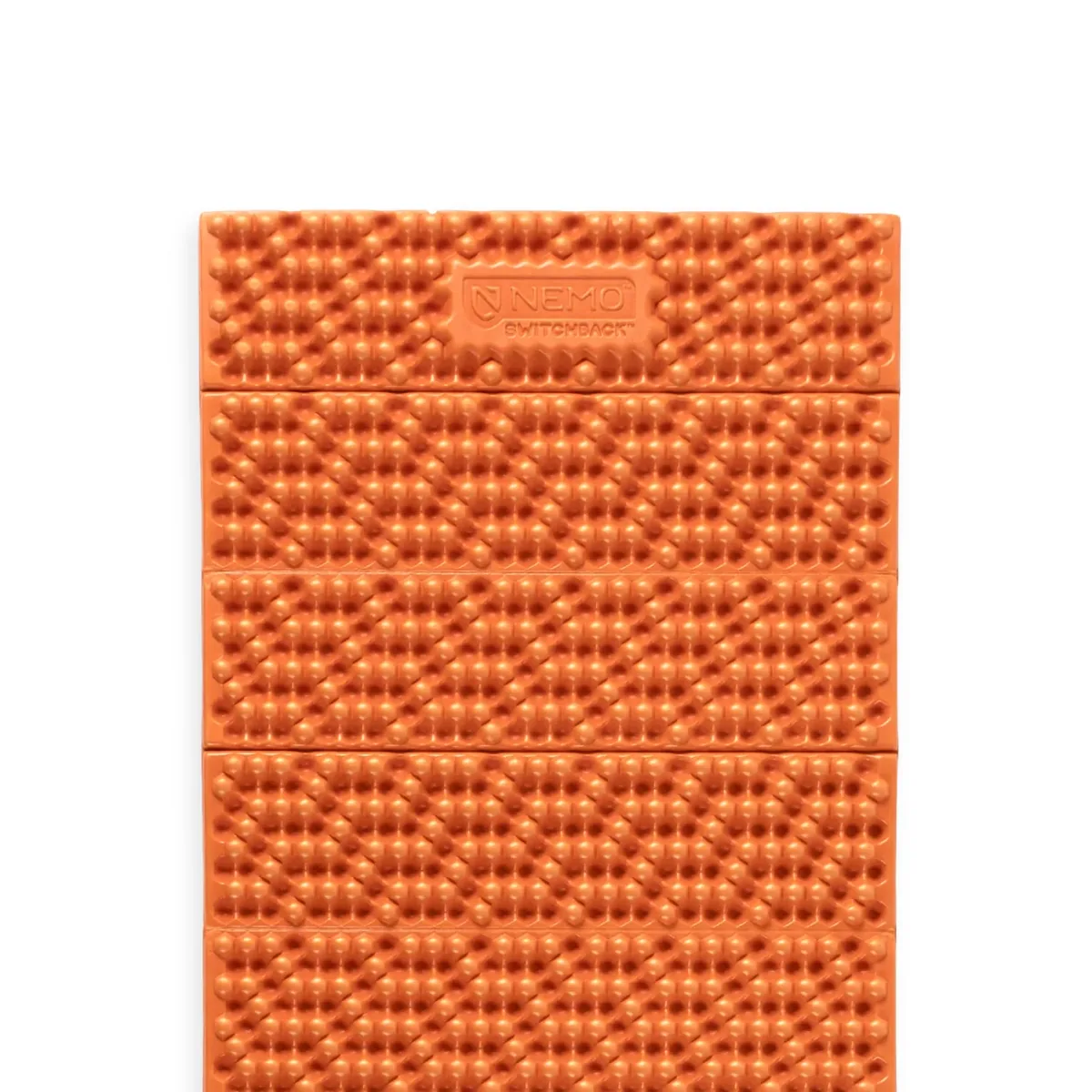
NEMO
NEMO Switchback
The direct competitor to the Z Lite Sol, and the one with slightly deeper nodes — 0.9 inches against 0.75 — which is the whole argument between them. Same R-value of 2, same accordion fold, same complete immunity to punctures. The dual-density foam is firmer underneath and softer on top, and the hexagonal node pattern traps a little more air than the Therm-a-Rest's dimples. Half an ounce heavier and a shade more expensive; whether the extra loft is worth it is a genuinely close call.
Best for: Foam sleepers and as a winter layer under an air pad
Full spec sheet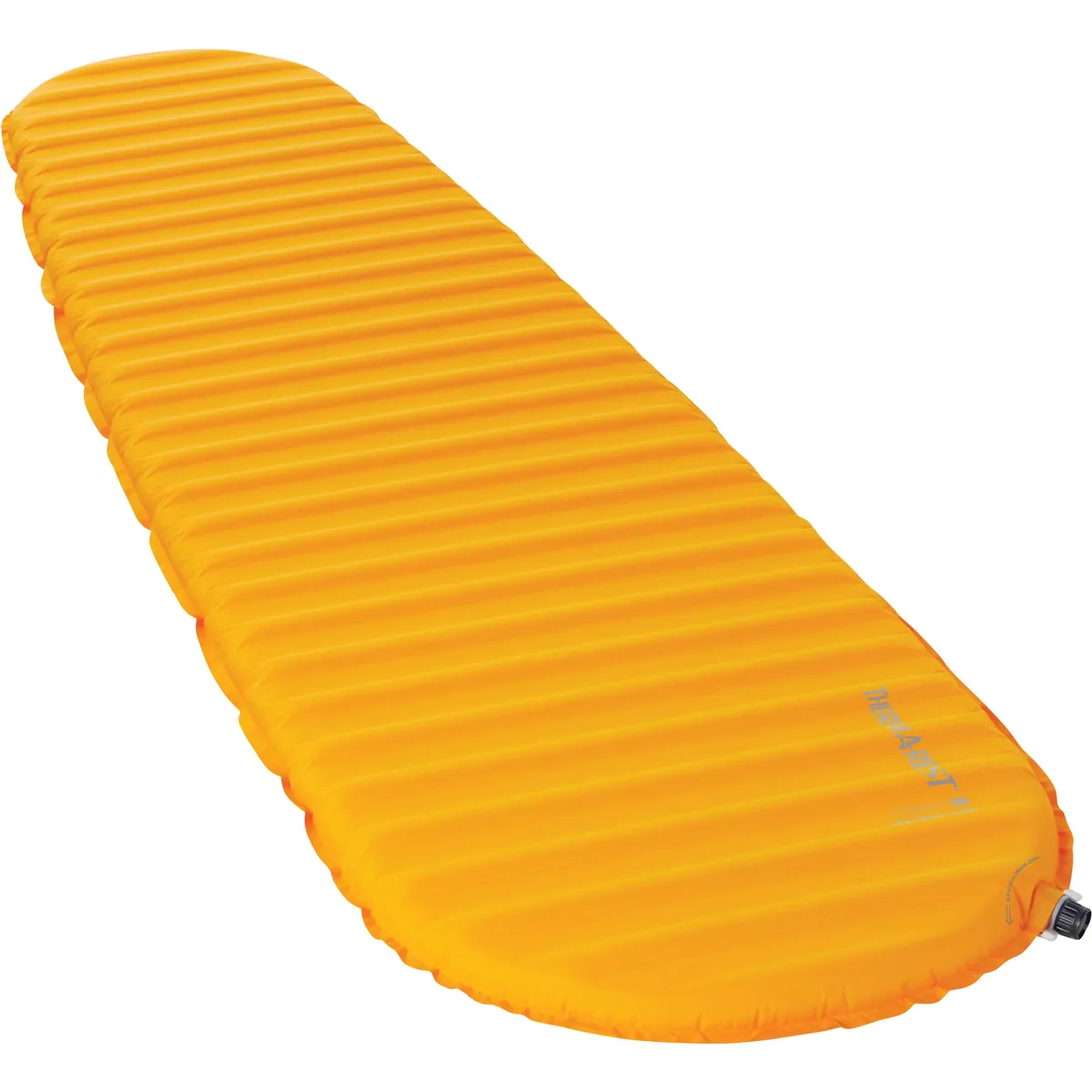
Therm-a-Rest
Therm-a-Rest Trail ProLite
The direct descendant of the original 1970s self-inflating mat, and still the pad to buy if you would rather have something that works than something that weighs less. Open the valve, walk away, come back to a pad that is most of the way there. Two inches is thin by modern standards and 24 ounces is nearly twice an XLite, but 75-denier polyester and foam-filled construction mean a pinhole is an inconvenience rather than a night on the ground — the foam still holds you up. R-value 3.8 covers three seasons honestly.
Best for: Backpackers who want a pad that still works after a puncture
Full spec sheet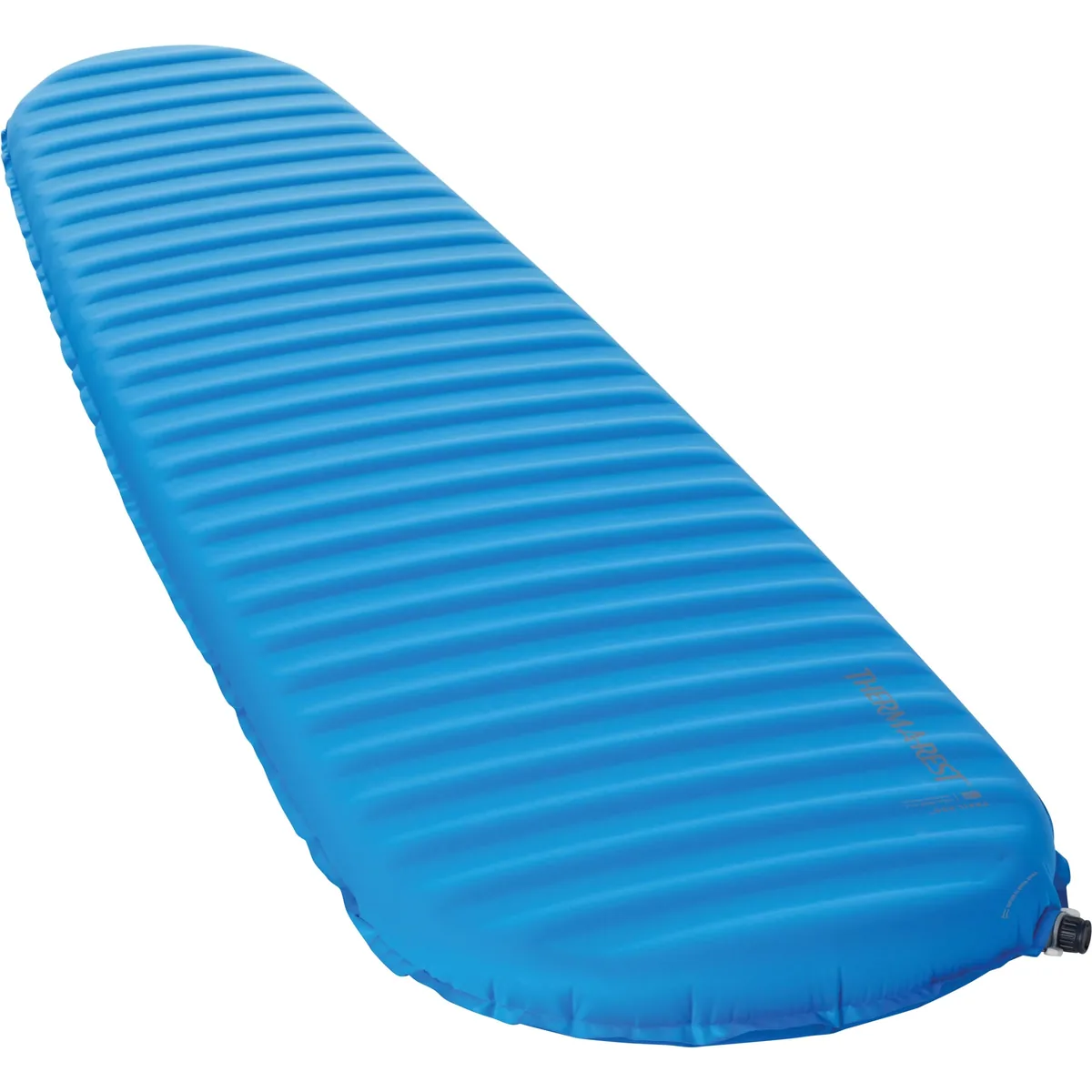
Therm-a-Rest
Therm-a-Rest Trail Pro
The Trail ProLite with another inch of foam and a soft stretch-knit face, which turns it from a serviceable pad into a comfortable one. Three inches and R-value 4.4 put it level with an XLite on both counts, at half the price and twice the weight — a trade that makes complete sense for weekend trips and none at all for a thru-hike. The knit top is the part people remark on: it does not feel cold or slippery against a bag, and it does not crinkle.
Best for: Weekend backpacking and basecamps where two extra pounds don't decide anything
Full spec sheet