Therm-a-Rest
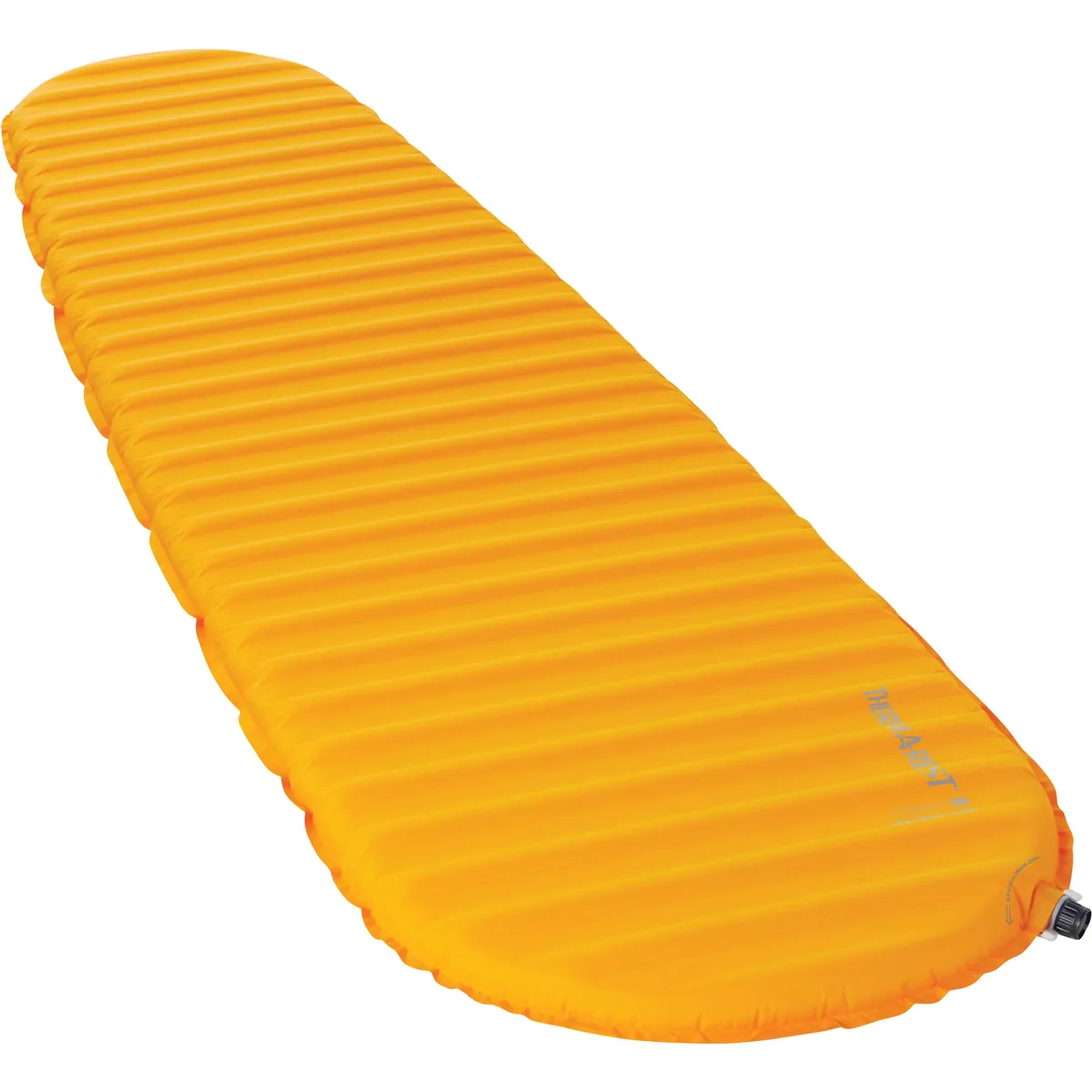
Therm-a-Rest Trail ProLite
No citable owner-review average published for this one, so no stars.
The direct descendant of the original 1970s self-inflating mat, and still the pad to buy if you would rather have something that works than something that weighs less. Open the valve, walk away, come back to a pad that is most of the way there. Two inches is thin by modern standards and 24 ounces is nearly twice an XLite, but 75-denier polyester and foam-filled construction mean a pinhole is an inconvenience rather than a night on the ground — the foam still holds you up. R-value 3.8 covers three seasons honestly.
What this pad supports
R 3.8 puts it in the three-season band — spring through autumn, above freezing. On the pairing table that supports a bag rated to roughly 30 °F comfort before the ground becomes the limiting factor.
Size run
One product, 3 sizes. The headline numbers on this page describe the Regular.
| Size | Weight | Approx. price | Length | Width |
|---|---|---|---|---|
| Regular | 1 lb 8 oz | ~$140 | 72 in | 20 in |
| Regular Wide | 1 lb 14 oz | ~$150 | 72 in | 25 in |
| Large | 2 lb | ~$160 | 77 in | 25 in |
Specifications
Highlights
Features
- Self-inflating
- Repair kit included
- Wide option
- Quiet fabric
- Made in USA
What it does well
- Foam core means a leak degrades the pad rather than ending the night — the single biggest argument for self-inflating over air.
- 75-denier polyester is more than twice the fabric of the ultralight air pads and shrugs off tent-floor grit.
- Inflates itself to about 80% while you set up the tent; a few breaths finishes it.
- $140 for a 3.8 R-value pad is good value next to $210 air pads with a similar rating.
- Silent. There is no film and no crinkle, which is the thing people notice first after switching from a NeoAir.
What it costs you
- Two inches of loft is not enough for most side sleepers; hips find the ground.
- 24 ounces and a 11 × 6.8-inch packed size are both roughly double an XLite's.
- Self-inflating is a generous description — it gets most of the way and then needs help, especially when cold.
- The foam takes a set after long storage compressed; it wants to live unrolled with the valve open.
Those two lists are drawn from Therm-a-Rest’s published specifications and from reviews that measured them. They are not owner sentiment — anything owners said appears under its own heading below.
What owners say
Distilled from owner discussions and long-term published reviews, not from anything measured here.
Self-inflating pads occupy a quieter corner of owner discussion than air pads do, and the people who use them tend to have arrived there deliberately after an inflatable let them down. That is the recurring theme: the Trail ProLite gets bought by people who care more about the pad still working after a puncture than about the twelve ounces it costs.
Comfort is where it loses. Two inches of foam is not enough for a side sleeper, and owners say that plainly. What it offers instead is a pad that is silent, tough enough to use carelessly, cheap enough to replace, and capable of degrading rather than failing.
The practical pattern in the reports is that people own one alongside something lighter, and choose between them by trip rather than owning it as their only pad.
What owners like
- Owners value the failure mode above everything: a leak makes the night worse rather than ending it, and people who have had an air pad fail say that is why they switched.
- The heavier fabric is treated as a feature rather than a penalty — owners describe using it without a groundsheet in situations where they would not risk an ultralight pad.
- Silent, and owners who came from a film-insulated pad mention it unprompted.
- Price comes up regularly as the reason it stays in the kit even after someone buys something lighter.
Common complaints
- Two inches is thin, and side sleepers say so — it is the most common complaint by a distance.
- It is heavy for backpacking, and owners who carry one generally frame it as a deliberate trade rather than the best option.
- The self-inflation is partial and gets slower in the cold; everyone finishes it by mouth.
- Rolling it tightly enough to fit its own stuff sack is a repeated grumble.
Questions owners ask
Does it really keep working after a puncture?
Is two inches enough?
Does it really self-inflate?
Therm-a-Rest Trail ProLite, head to head
Other pads at this level
More from Therm-a-Rest →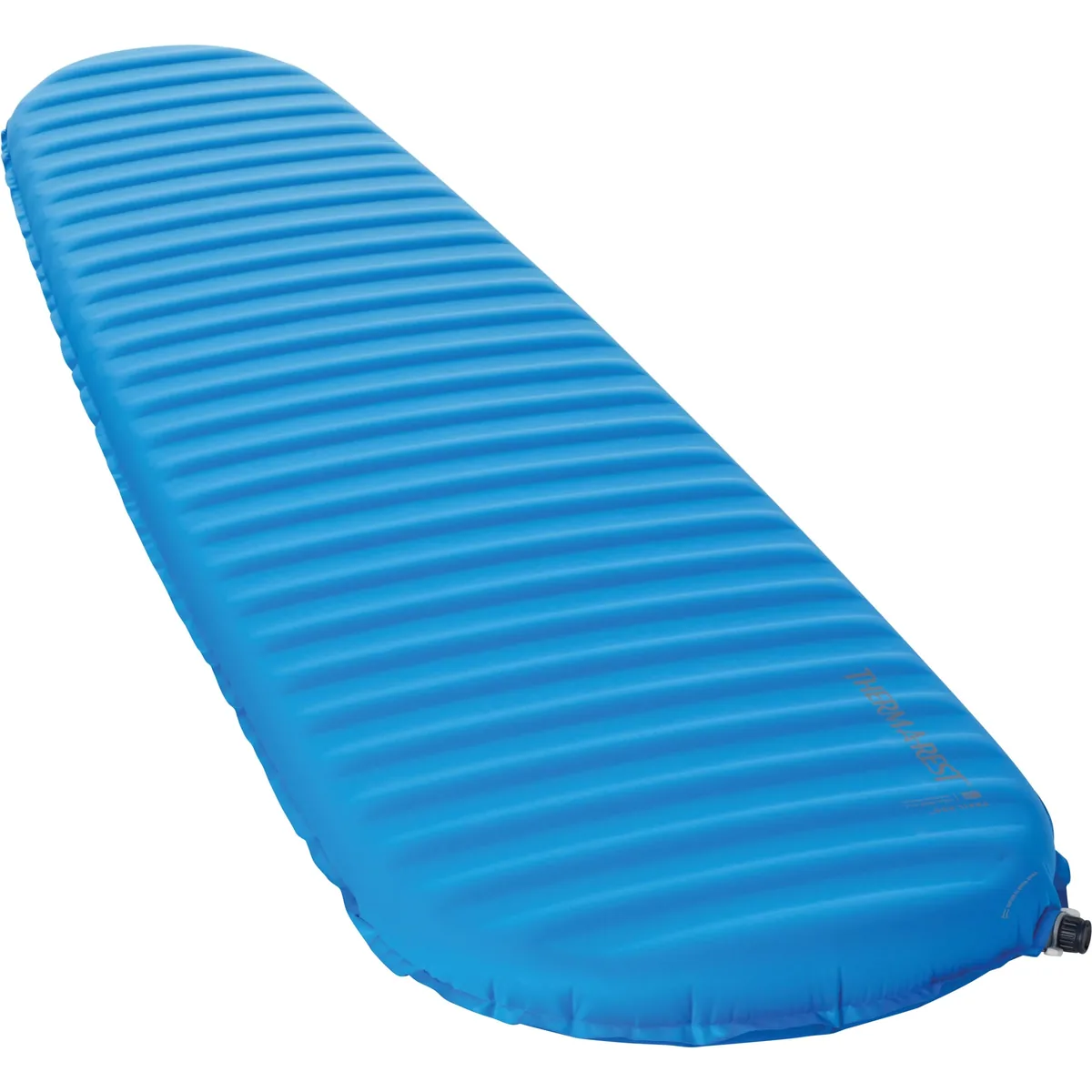
Therm-a-Rest
Therm-a-Rest Trail Pro
The Trail ProLite with another inch of foam and a soft stretch-knit face, which turns it from a serviceable pad into a comfortable one. Three inches and R-value 4.4 put it level with an XLite on both counts, at half the price and twice the weight — a trade that makes complete sense for weekend trips and none at all for a thru-hike. The knit top is the part people remark on: it does not feel cold or slippery against a bag, and it does not crinkle.
Best for: Weekend backpacking and basecamps where two extra pounds don't decide anything
Full spec sheet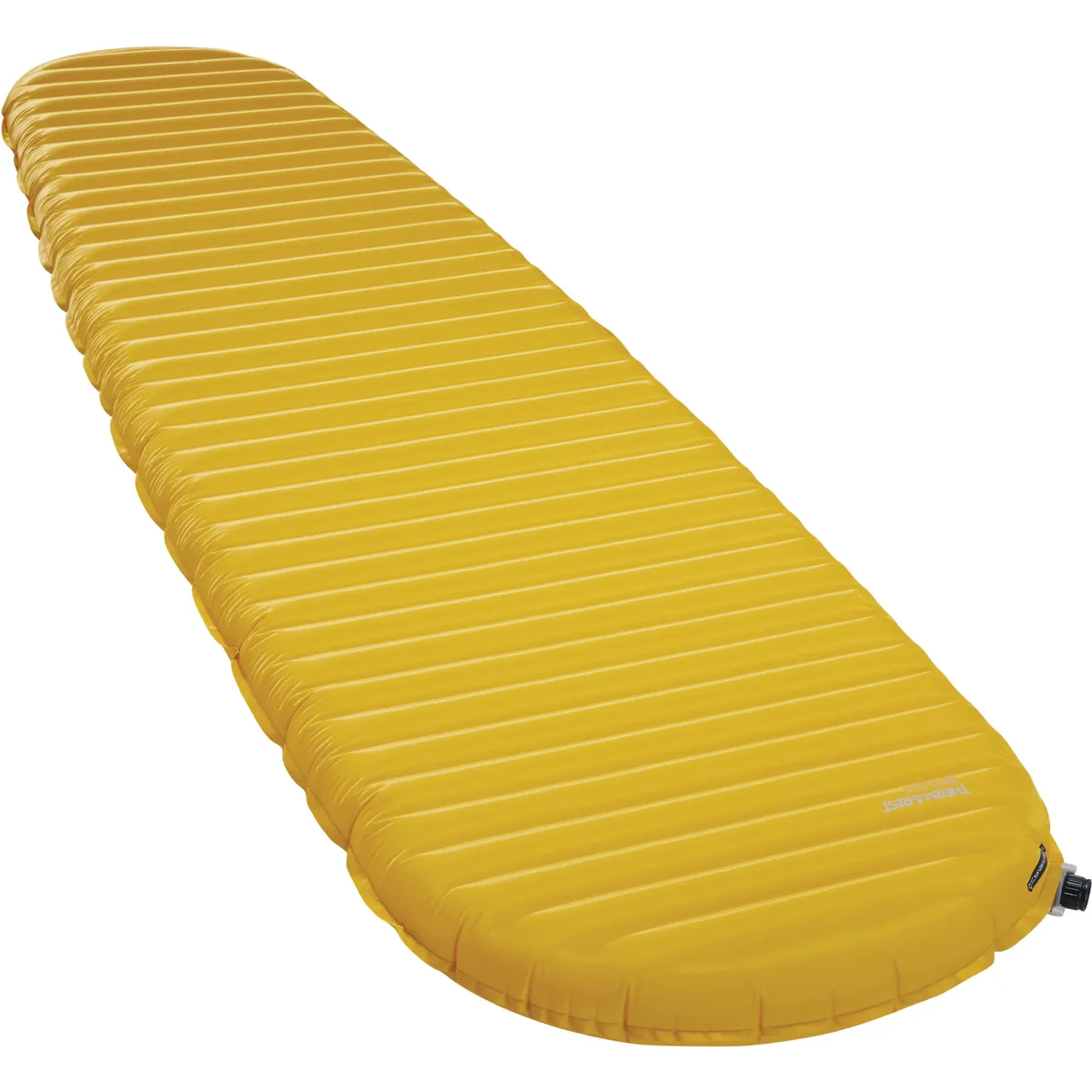
Therm-a-Rest
Therm-a-Rest NeoAir XLite NXT
The XLite has been the default long-distance backpacking pad for a decade, and the NXT revision is the version that finally answered the two complaints people had: it is quieter than the pad it replaced, and the R-value rose from 4.2 to 4.5 without adding weight. Thirteen ounces buys three inches of loft and a rating that covers shoulder-season nights on frozen ground, which is a combination nothing else in the catalogue matches at this weight. The WingLock valve dumps air in a couple of seconds and takes the included pump sack, so nobody has to blow moisture into the baffles. What you give up is durability margin: 30-denier fabric top and bottom is thin, and the pad wants a groundsheet or a foam layer under it on sharp ground.
Best for: Thru-hikers and three-season backpackers counting every ounce
Full spec sheet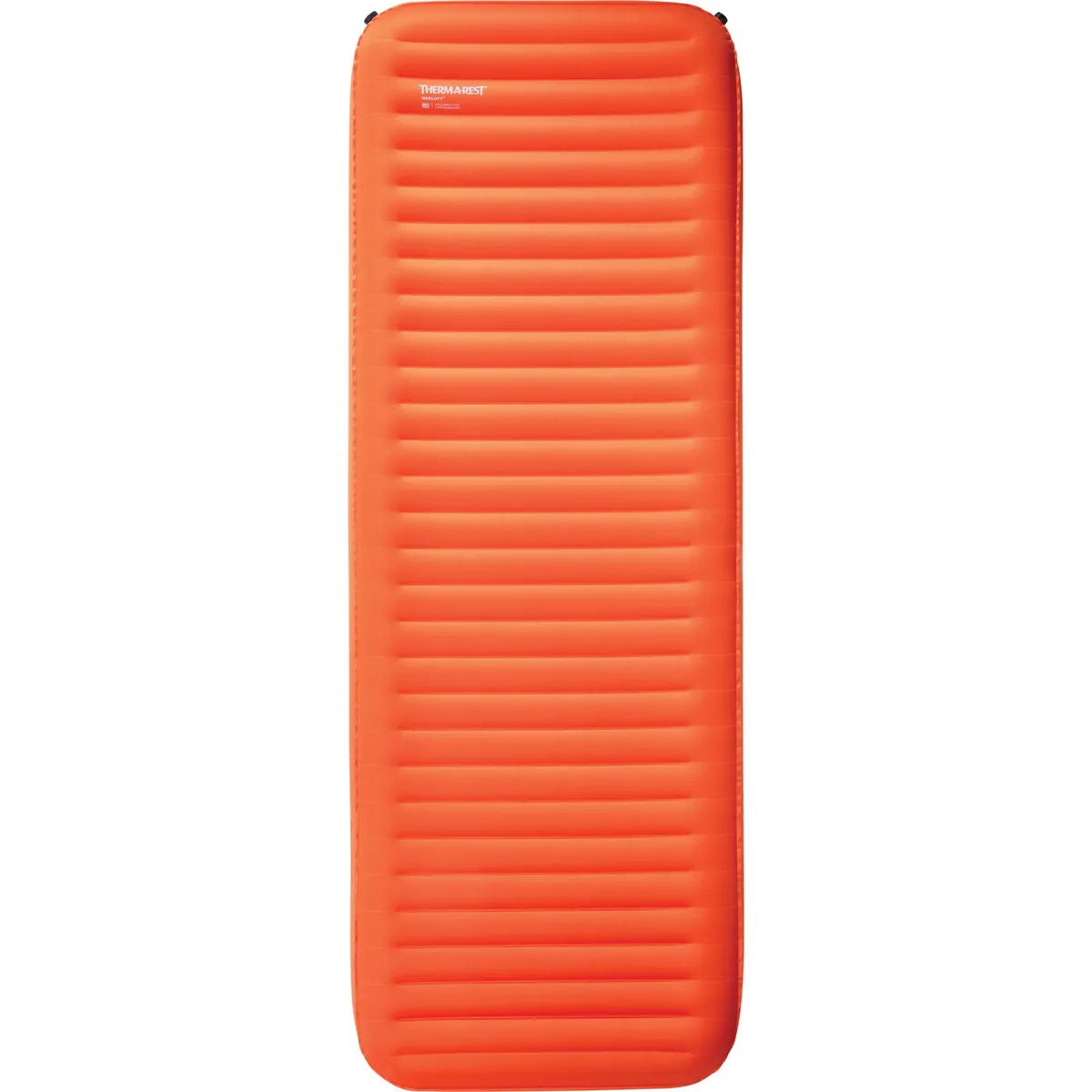
Therm-a-Rest
Therm-a-Rest NeoLoft
Therm-a-Rest's answer to the people who bought an XLite, slept badly on it and went back to car camping. The NeoLoft is 4.6 inches thick — nearly half again as deep as anything else you would carry on your back — with a 50-denier stretch-knit top that feels like fabric rather than a balloon, and it is two inches wider than a standard pad at 22 inches. It costs 12 ounces over an XLite for essentially the same warmth, which is the whole argument: this is comfort bought with weight, not warmth bought with weight. Side sleepers and anyone over about 200 pounds are the people it was built for.
Best for: Side sleepers who want a real mattress but still have to carry it
Full spec sheet