Therm-a-Rest
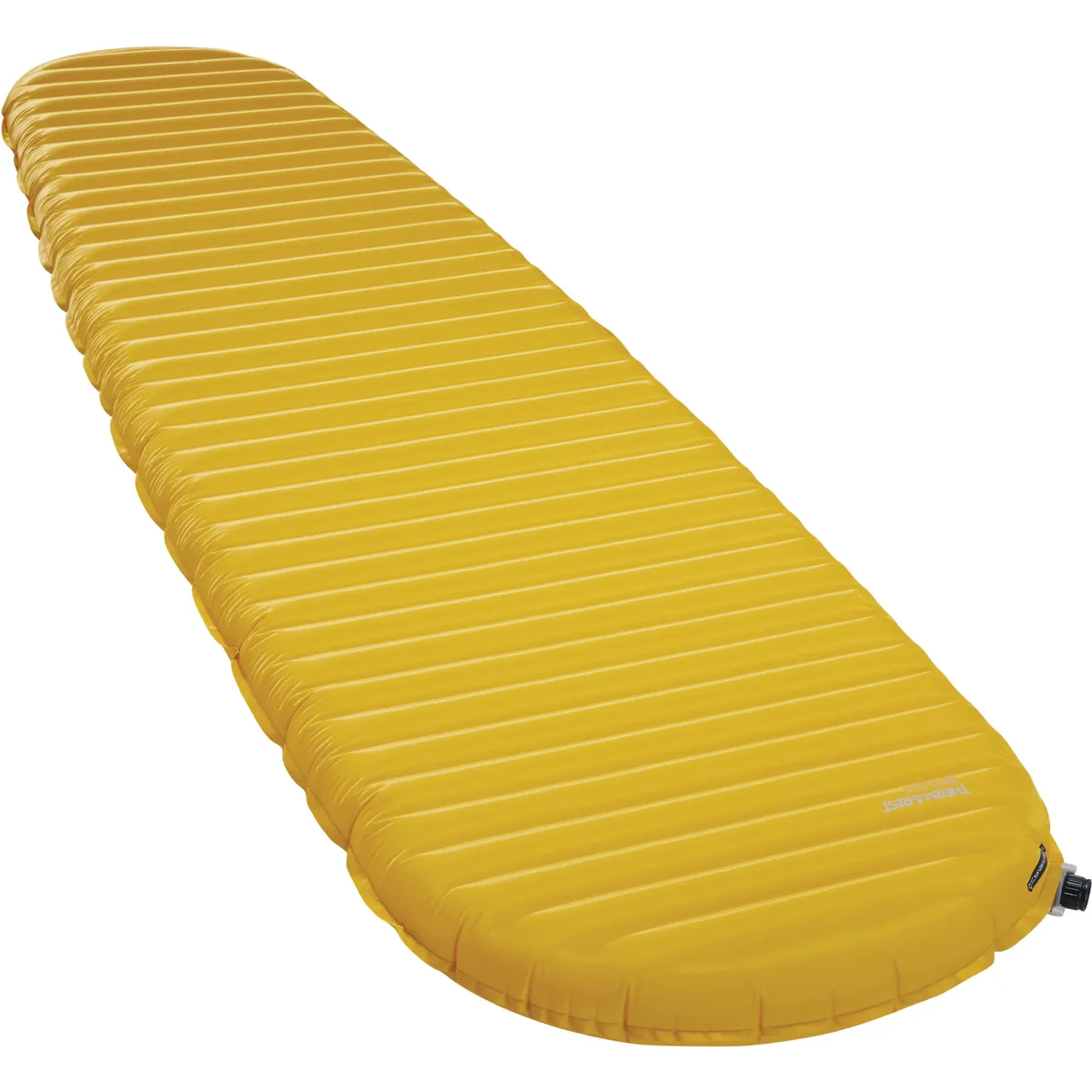
Therm-a-Rest NeoAir XLite NXT
No citable owner-review average published for this one, so no stars.
The XLite has been the default long-distance backpacking pad for a decade, and the NXT revision is the version that finally answered the two complaints people had: it is quieter than the pad it replaced, and the R-value rose from 4.2 to 4.5 without adding weight. Thirteen ounces buys three inches of loft and a rating that covers shoulder-season nights on frozen ground, which is a combination nothing else in the catalogue matches at this weight. The WingLock valve dumps air in a couple of seconds and takes the included pump sack, so nobody has to blow moisture into the baffles. What you give up is durability margin: 30-denier fabric top and bottom is thin, and the pad wants a groundsheet or a foam layer under it on sharp ground.
What this pad supports
R 4.5 puts it in the cold three-season band — frost, frozen ground, shoulder season. On the pairing table that supports a bag rated to roughly 20 °F comfort before the ground becomes the limiting factor.
Size run
One product, 4 sizes. The headline numbers on this page describe the Regular.
| Size | Weight | Approx. price | Length | Width |
|---|---|---|---|---|
| Regular Short | 11.5 oz | ~$200 | 66 in | 20 in |
| Regular | 13 oz | ~$210 | 72 in | 20 in |
| Regular Wide | 1 lb | ~$220 | 72 in | 25 in |
| Large | 1 lb 1 oz | ~$240 | 77 in | 25 in |
Specifications
Highlights
Features
- Pump sack included
- Repair kit included
- Wide option
- Made in USA
- Under 1 lb
What it does well
- 4.5 R-value at 13 ounces is the best warmth-per-ounce of any non-winter pad here — 0.35 R per ounce, against 0.27 for the Nemo Tensor All-Season.
- Three inches of loft keeps a side sleeper's hip off the ground, which the older 2.5-inch generation of ultralight pads never quite did.
- The WingLock valve deflates in about two seconds and accepts the included pump sack, so you never have to breathe damp air into the baffles.
- Packs to roughly the size of a one-litre bottle, which is what makes it work in a 40-litre pack.
- Sold in Short, Regular, Wide and Large, so you can trade 1.5 ounces for six inches of length rather than buying the wrong pad.
- Still made in Seattle, and Therm-a-Rest's warranty service on punctured pads is the most-cited reason people buy a second one.
What it costs you
- 30-denier fabric top and bottom is thin for the price; on granite or pine duff it wants a groundsheet or a thin foam pad underneath.
- The NXT is quieter than the old XLite but not silent — the reflective film still crinkles when you roll over.
- At 20 inches wide the Regular is narrow; broad-shouldered sleepers end up with an arm on the ground and need the Wide.
- $210 for the Regular is roughly double what a comparable-R self-inflating pad costs, and the durability goes the other way.
Those two lists are drawn from Therm-a-Rest’s published specifications and from reviews that measured them. They are not owner sentiment — anything owners said appears under its own heading below.
What owners say
Distilled from owner discussions and long-term published reviews, not from anything measured here.
The XLite is the pad most backpackers own and the one most backpackers have opinions about, which makes the owner picture unusually clear. Almost nobody disputes that it works: 4.5 R-value at thirteen ounces with three inches of loft is the combination that made it the default, and owners who have tried the alternatives generally come back to it on the numbers.
Durability comes up just as often. Baffle separation at somewhere between fifty and a hundred and twenty nights is reported often enough by careful owners at normal body weights that it reads as a design margin rather than bad luck, and at least as many owners say the warranty has made that liveable — replacement after replacement, no argument, several hundred nights out of one purchase. Whether that is acceptable seems to depend entirely on whether you would rather carry a heavier pad or make a warranty claim.
What owners tell each other to do: buy the Wide if you sleep on your side, clear the ground properly every night, and consider a thin foam sheet underneath — which owners describe as puncture insurance more than as warmth.
What owners like
- The single most-recommended three-season pad in backpacking discussions, and usually the one other pads get measured against rather than the one being questioned.
- Therm-a-Rest's warranty comes up constantly and always favourably — owners describe getting replacement after replacement over hundreds of nights without argument.
- Owners who moved to the NXT from the previous generation say the crinkle is reduced, if not gone.
- Repairable in the field and at home; several long-term owners describe pads carrying a dozen patches and still holding air years later.
- The 25-inch Wide comes up again and again as the fix for side sleepers who found the standard 20-inch version too narrow.
Common complaints
- Baffle separation is the recurring failure, and it is not rare. Owners report pads failing in the same way at roughly 50 to 120 nights of use, repeatedly, at ordinary body weights.
- Several long-term owners describe the fabric as a thin balloon you put your whole weight on, and treat the failure rate as the cost of the weight saving rather than a defect.
- Clearing the tent site properly is treated as mandatory rather than optional; punctures from twigs and grit under the floor are a standard story.
- The 20-inch standard width is genuinely narrow, and the complaint comes from people of average build, not just large ones.
- It still crinkles. Quieter than it was is not the same as quiet, and light sleepers sharing a tent notice.
Questions owners ask
How long does an XLite actually last?
Is the NXT really quieter than the old XLite?
Should I get the regular or the wide?
Do I need a foam pad underneath it?
Is the women's version worth considering if I am not a woman?
Therm-a-Rest NeoAir XLite NXT, head to head
Other pads at this level
More from Therm-a-Rest →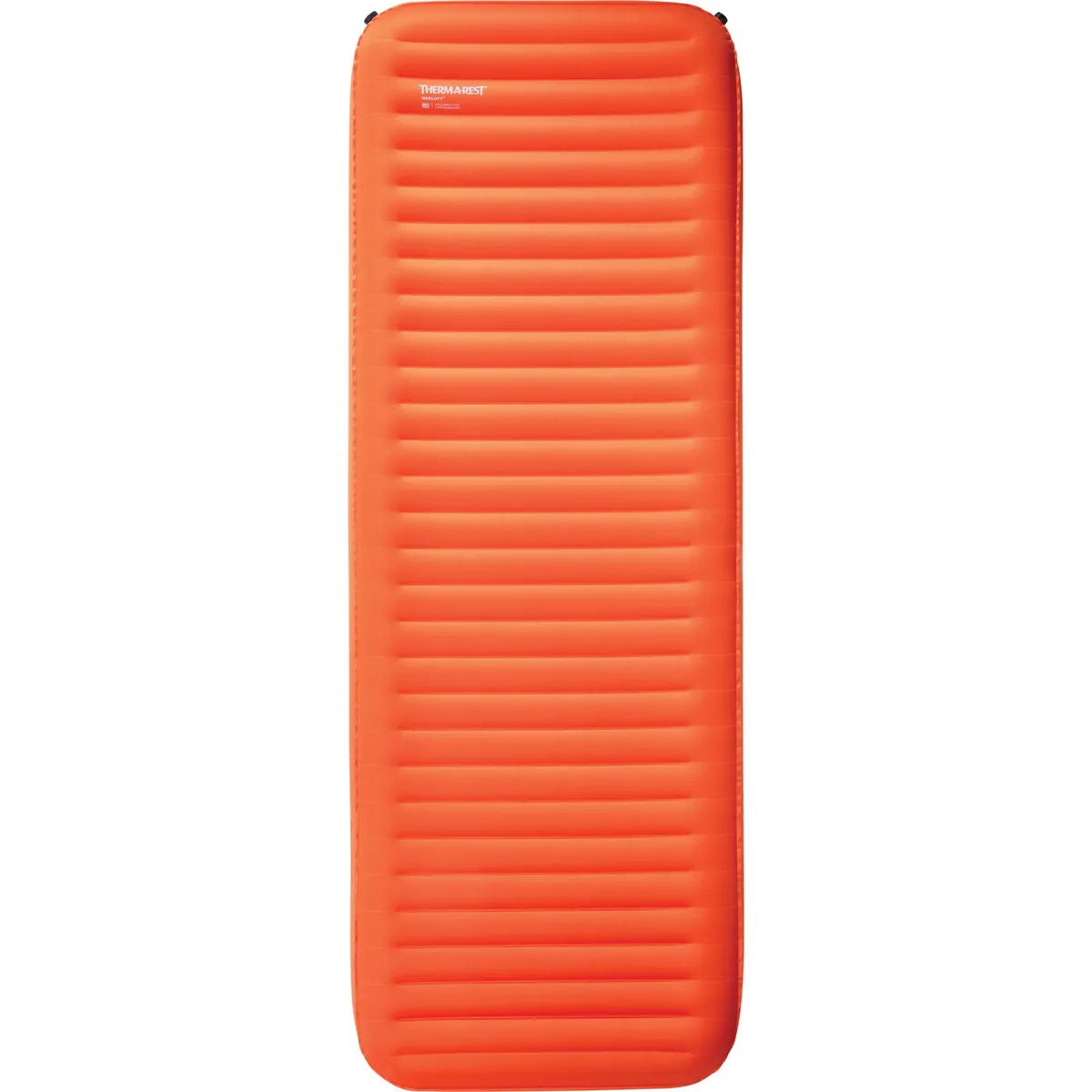
Therm-a-Rest
Therm-a-Rest NeoLoft
Therm-a-Rest's answer to the people who bought an XLite, slept badly on it and went back to car camping. The NeoLoft is 4.6 inches thick — nearly half again as deep as anything else you would carry on your back — with a 50-denier stretch-knit top that feels like fabric rather than a balloon, and it is two inches wider than a standard pad at 22 inches. It costs 12 ounces over an XLite for essentially the same warmth, which is the whole argument: this is comfort bought with weight, not warmth bought with weight. Side sleepers and anyone over about 200 pounds are the people it was built for.
Best for: Side sleepers who want a real mattress but still have to carry it
Full spec sheet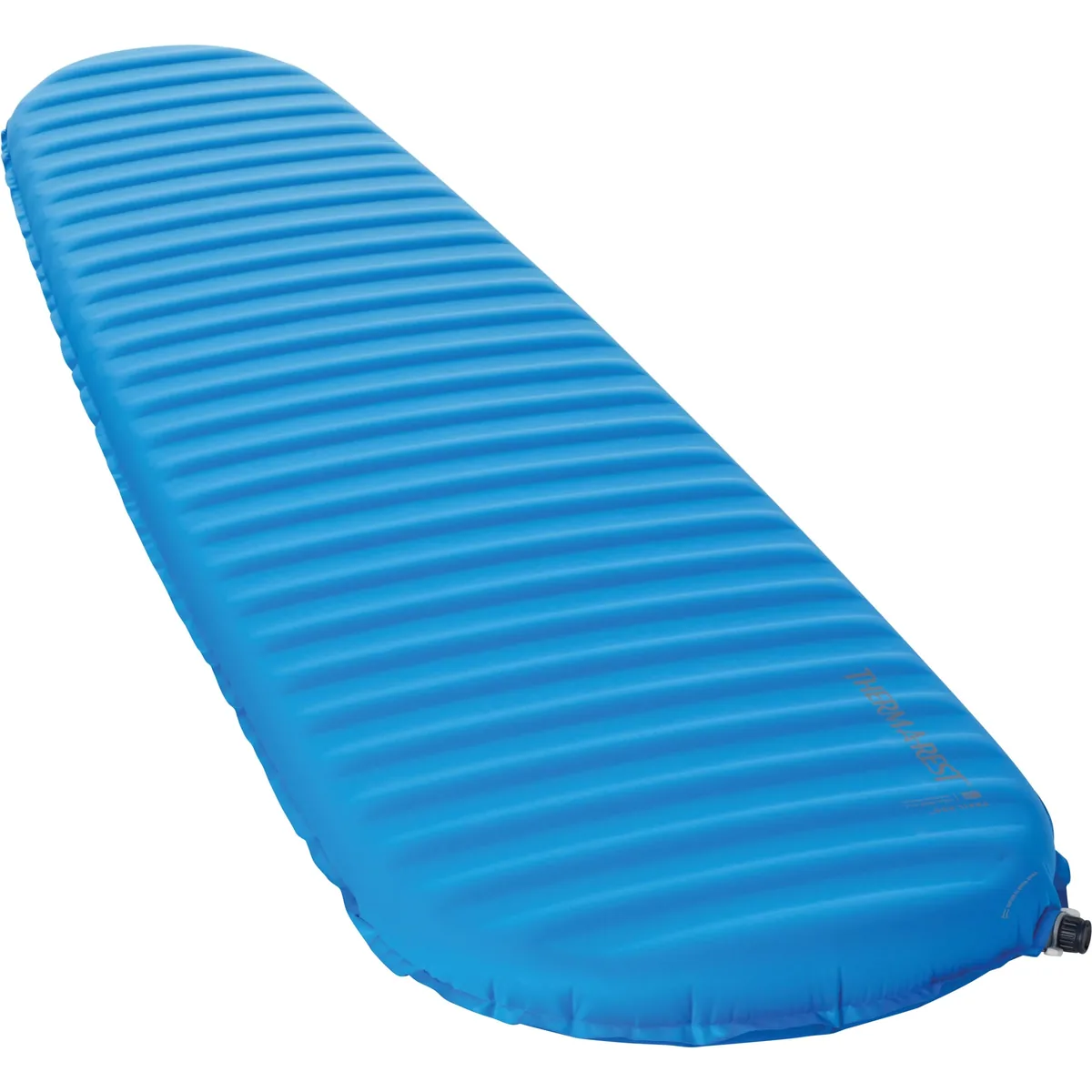
Therm-a-Rest
Therm-a-Rest Trail Pro
The Trail ProLite with another inch of foam and a soft stretch-knit face, which turns it from a serviceable pad into a comfortable one. Three inches and R-value 4.4 put it level with an XLite on both counts, at half the price and twice the weight — a trade that makes complete sense for weekend trips and none at all for a thru-hike. The knit top is the part people remark on: it does not feel cold or slippery against a bag, and it does not crinkle.
Best for: Weekend backpacking and basecamps where two extra pounds don't decide anything
Full spec sheet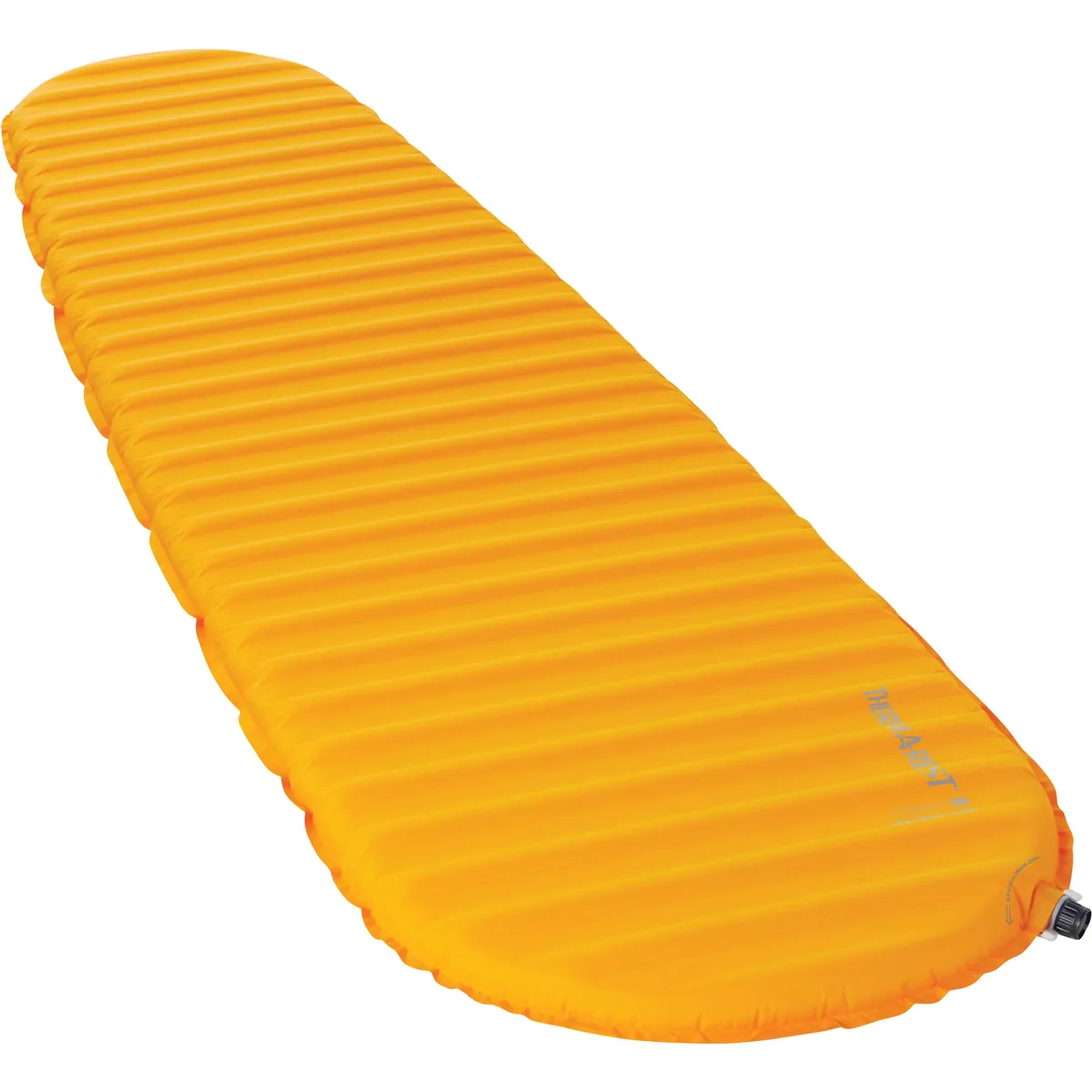
Therm-a-Rest
Therm-a-Rest Trail ProLite
The direct descendant of the original 1970s self-inflating mat, and still the pad to buy if you would rather have something that works than something that weighs less. Open the valve, walk away, come back to a pad that is most of the way there. Two inches is thin by modern standards and 24 ounces is nearly twice an XLite, but 75-denier polyester and foam-filled construction mean a pinhole is an inconvenience rather than a night on the ground — the foam still holds you up. R-value 3.8 covers three seasons honestly.
Best for: Backpackers who want a pad that still works after a puncture
Full spec sheet