Sea to Summit
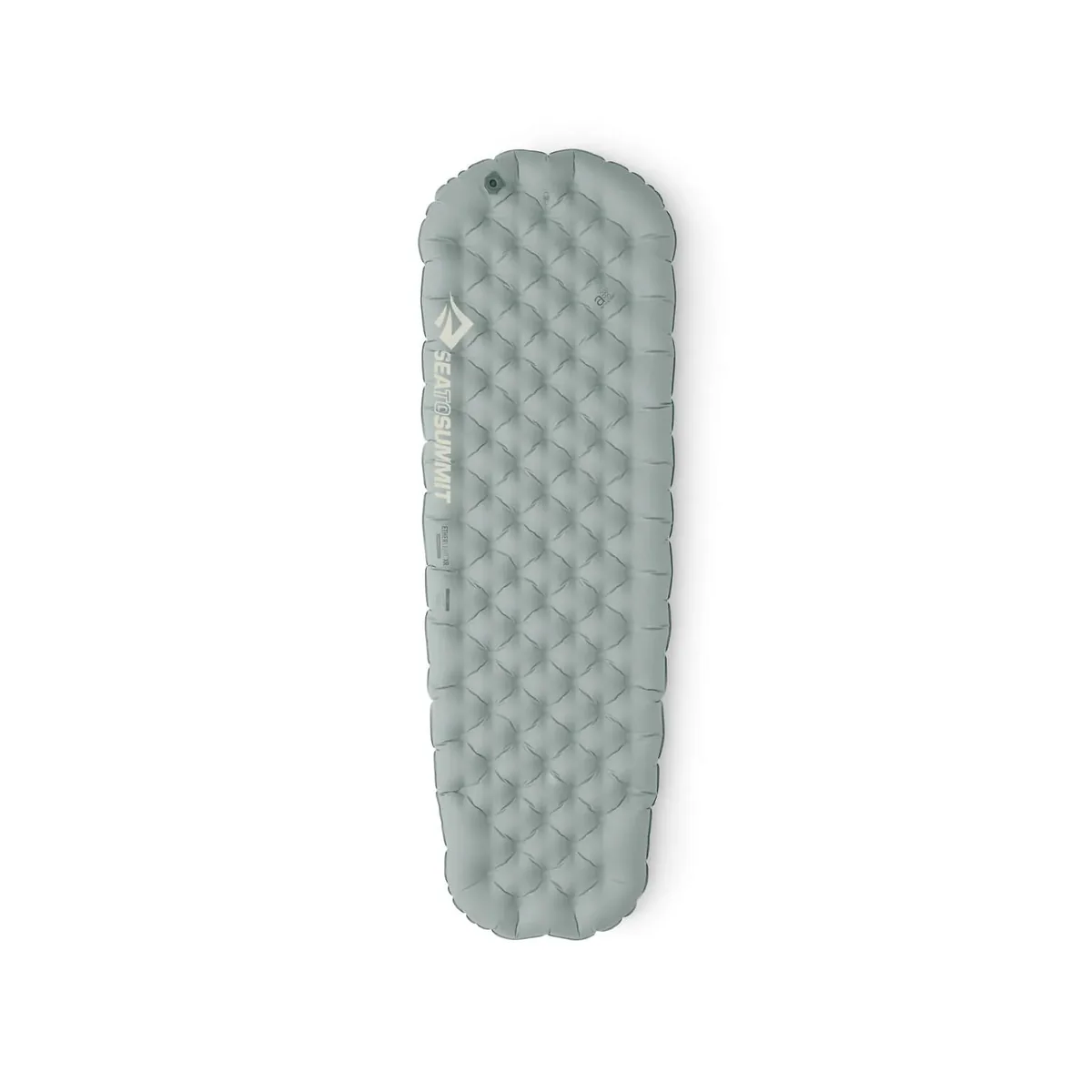
Sea to Summit Ether Light XR Insulated
No citable owner-review average published for this one, so no stars.
Four inches thick — the deepest air pad here that still weighs under a pound — built from a grid of individual Air Sprung Cells rather than long baffles, so it behaves more like a mattress and less like a pool toy. That structure is the whole point: a hip pressing into one cell does not push air into the next one, which is what stops the bounce and the roll-off that thick pads usually suffer from. R-value 4.1 is honest three-season. The Airstream pump sack is built into the stuff sack and inflates it in a few passes.
What this pad supports
R 4.1 puts it in the cold three-season band — frost, frozen ground, shoulder season. On the pairing table that supports a bag rated to roughly 20 °F comfort before the ground becomes the limiting factor.
Size run
One product, 5 sizes. The headline numbers on this page describe the Regular.
| Size | Weight | Approx. price | Length | Width |
|---|---|---|---|---|
| Small | 15.7 oz | ~$189 | 66 in | 22 in |
| Regular | 1 lb 0.6 oz | ~$199 | 72 in | 22 in |
| Regular Rectangular Wide | 1 lb 5.3 oz | ~$239 | 72 in | 25 in |
| Large | 1 lb 5.3 oz | ~$219 | 78 in | 25 in |
| Large Rectangular | 1 lb 7.5 oz | ~$259 | 78 in | 25 in |
Specifications
Highlights
Features
- Pump sack included
- Repair kit included
- Wide option
- Rectangular option
- Quiet fabric
What it does well
- Four inches of loft at 16.6 ounces — the best thickness-to-weight in this catalogue outside the Tensor Elite.
- The Air Sprung Cell grid stops the wobble that ruins most thick air pads for side sleepers.
- Five sizes across mummy and rectangular cuts, so the fit choice is real rather than nominal.
- The Airstream pump is integrated into the stuff sack, so there is no extra item to lose.
- Sea to Summit publishes the ASTM figure and explains the test on the product page, which is unusually straight.
What it costs you
- R-value 4.1 is lower than several lighter pads here — the XLite is 4.5 at 13 ounces.
- Four inches is a long way to fall if it deflates, and a tall pad in a low tent is a tight fit.
- $199 for the Regular puts it in the same bracket as warmer pads.
- The many-celled construction makes it slower to deflate and pack than a simple baffled pad.
Those two lists are drawn from Sea to Summit’s published specifications and from reviews that measured them. They are not owner sentiment — anything owners said appears under its own heading below.
What owners say
Distilled from owner discussions and long-term published reviews, not from anything measured here.
The Ether Light has the clearest split personality of any pad here. On comfort, owner reports are close to unanimous: four inches of Air Sprung Cells is stable in a way thick pads usually are not, and people who own one describe carrying extra weight happily to keep it.
On warmth, the picture is the opposite. "Not as warm as it should be" is close to a stock phrase in owner discussion, including from people who added foam underneath and were still cold. Whether that is a fair criticism of an ASTM-tested figure or a reflection of how a very thick pad feels is not settled, but it recurs often enough that it belongs on the page.
The practical conclusion owners reach: excellent three-season pad, wrong choice for snow, and buy the wide version if you sleep on your side.
What owners like
- Comfort is the thing owners buy it for and the thing they defend it on — several say they accept a weight penalty for it because it is the most comfortable pad they have used.
- The Air Sprung Cell grid is credited with stability: the pad does not roll or bounce the way a baffled pad of the same depth does.
- Owners report the fabric as durable and not slippery, which comes up as a contrast with pads a quilt slides off.
- The integrated Airstream pump sack is described as fast and as one fewer item to lose.
- Owners specifically praise the fabric as not overly slick, which matters because a quilt slides off a slippery pad.
Common complaints
- It sleeps colder than the R-value suggests, and this is the single most repeated owner observation about it — people report being cold in one even with foam underneath.
- Owners specifically warn against it for winter, describing it as inadequate on snow regardless of what is under it.
- At 22 inches wide it is still narrow enough that side sleepers report switching to a 25-inch pad and calling it life-changing.
- Four inches of loft makes a deflation more dramatic, and the many-celled construction is slower to pack than a simple baffled pad.
Questions owners ask
Does it really sleep colder than its R-value?
Is it worth the weight over a lighter pad?
Should I get the wide version?
Sea to Summit Ether Light XR Insulated, head to head
Other pads at this level
More from Sea to Summit →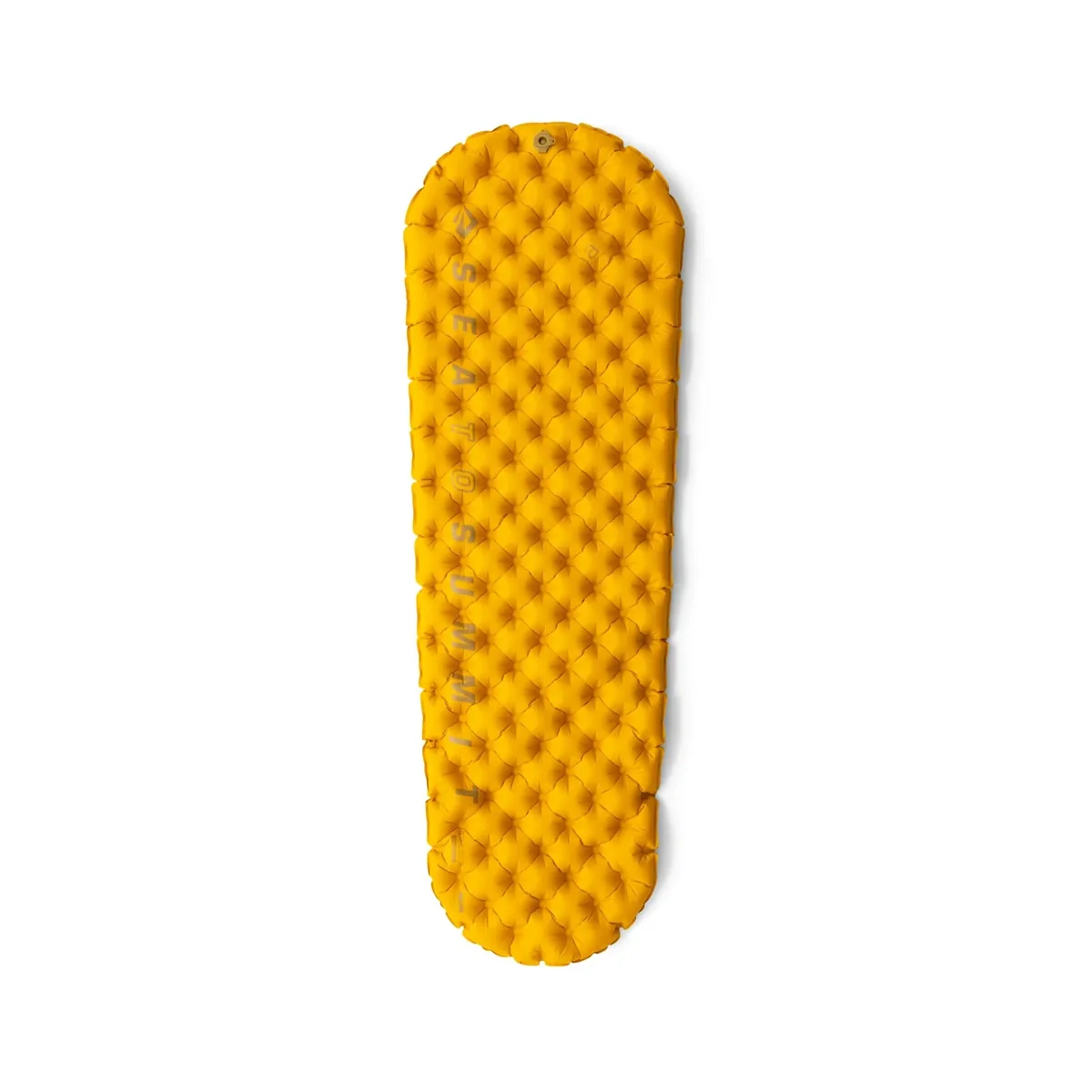
Sea to Summit
Sea to Summit Ultralight XR Insulated
The Ether Light's thinner, cheaper sibling: the same Air Sprung Cell grid at two and a half inches instead of four, 14.6 ounces, R-value 3.6, $149. The 22-inch width is the quiet advantage — two inches wider than most ultralight pads at this weight, which is worth more to a side sleeper than the last half-point of R-value. Hybrid 30- and 40-denier nylon top and bottom, which is a little more fabric than the lightest pads carry.
Best for: Three-season backpacking on a budget that still cares about width
Full spec sheet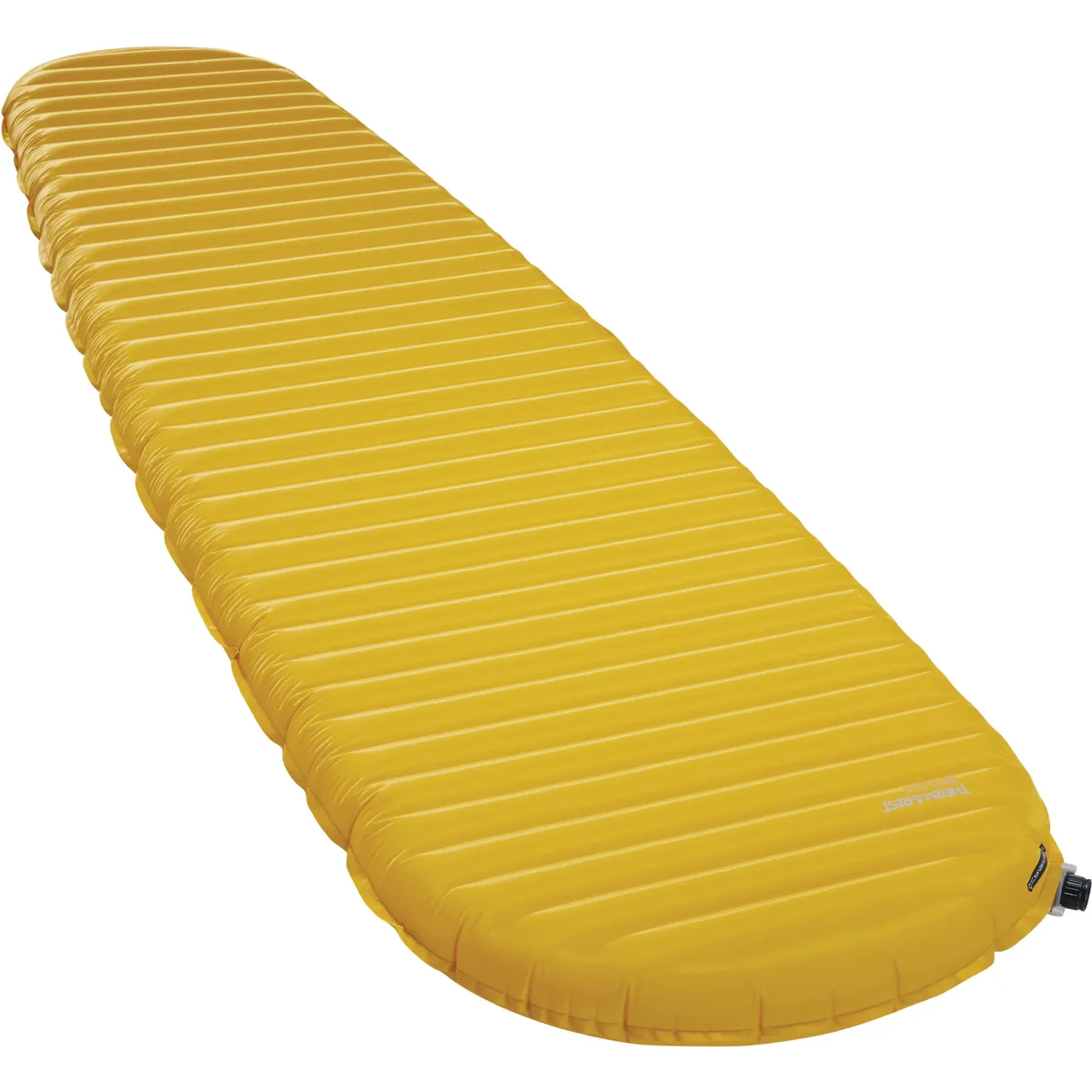
Therm-a-Rest
Therm-a-Rest NeoAir XLite NXT
The XLite has been the default long-distance backpacking pad for a decade, and the NXT revision is the version that finally answered the two complaints people had: it is quieter than the pad it replaced, and the R-value rose from 4.2 to 4.5 without adding weight. Thirteen ounces buys three inches of loft and a rating that covers shoulder-season nights on frozen ground, which is a combination nothing else in the catalogue matches at this weight. The WingLock valve dumps air in a couple of seconds and takes the included pump sack, so nobody has to blow moisture into the baffles. What you give up is durability margin: 30-denier fabric top and bottom is thin, and the pad wants a groundsheet or a foam layer under it on sharp ground.
Best for: Thru-hikers and three-season backpackers counting every ounce
Full spec sheet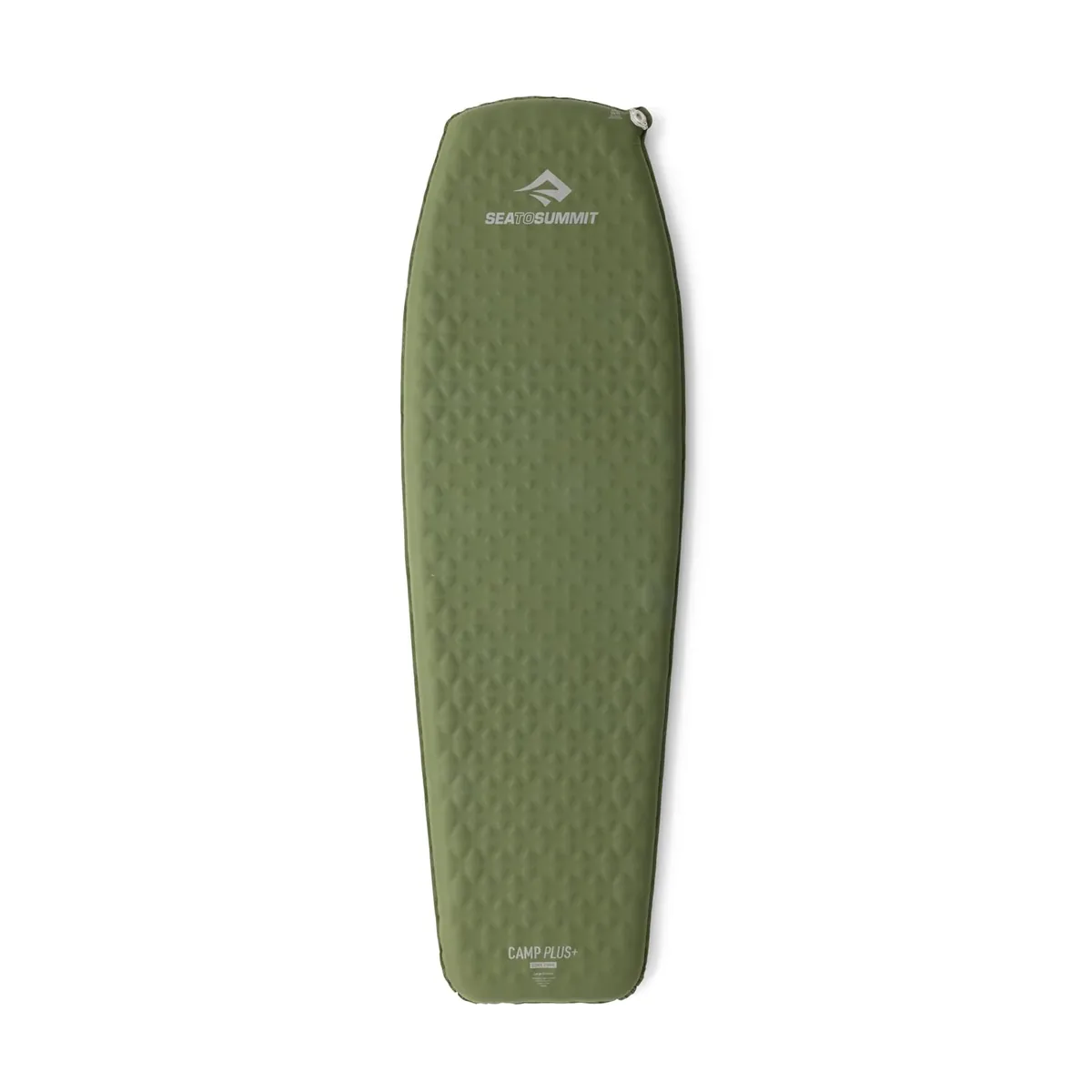
Sea to Summit
Sea to Summit Camp Plus Self Inflating
R-value 5.3 for $99 is the best warmth-per-dollar figure in this catalogue by a wide margin — the nearest air pad with that rating costs more than twice as much. The catch is 37 ounces and a packed size you would not put in a backpack. Sea to Summit varies the foam density along the pad so the insulation sits where the body is and the weight comes out where it isn't, which is why this is thinner and lighter than most self-inflating pads at this R-value.
Best for: Campground sleeping and anyone who wants warmth without spending
Full spec sheet