Cold Through the Pad With a Quilt: What's Going Wrong
Short answer
Usually the pad's R-value is too low for the bag's rating, not the quilt's fault. A 20 °F quilt needs roughly an R-4 pad under it; anything less and the ground wins before the quilt does. The second most common cause is a pad narrower than your shoulders, which lets the quilt edges fall to the ground and vent.
Check the pairing first
A sleep system is only as warm as its weakest half, and the arithmetic is not intuitive: doubling a pad's R-value roughly halves the heat the ground takes. The rule of thumb this site uses is R 2 for a 40 °F night, R 3 for 30 °F, R 4 for 20 °F, R 5.5 for 10 °F, and R 7 for 0 °F. Those are floors, not targets.
People who switch from a bag to a quilt often keep the same pad, and the pad was already marginal — the bag's crushed underside was doing a tiny bit of work that the quilt doesn't even pretend to do. The quilt gets blamed for a gap that was already there.
Then check the edges
The second cause is a genuine quilt problem: air moving in and out along the sides. A quilt seals against the pad rather than around you, so anything that breaks that seal — a pad narrower than your shoulders, straps cinched so tight the quilt is pinned flat and cannot move with you, or a quilt too narrow to tuck under a hip — turns every roll into a bellows.
The attachment systems that work best let the quilt float: a cord-and-clip arrangement that holds the edges down without flattening the loft against the pad. The ones that work worst pull the quilt taut, crushing the very down you are lying against.
Things that are not the problem
It is almost never the quilt's temperature rating being wrong, because most quilt makers publish a number with no lab test behind it and people already discount it. It is rarely the fill power either — 800 and 950 fill quilts with the same fill weight have near-identical loft. And it is not usually the shell fabric, unless it is soaked.
If the pad is right and the edges are sealed and you are still cold, the honest answer is that the quilt's rating is optimistic and you need more loft — either an overfilled quilt, a warmer one, or a layer worn inside it.
Gear this applies to
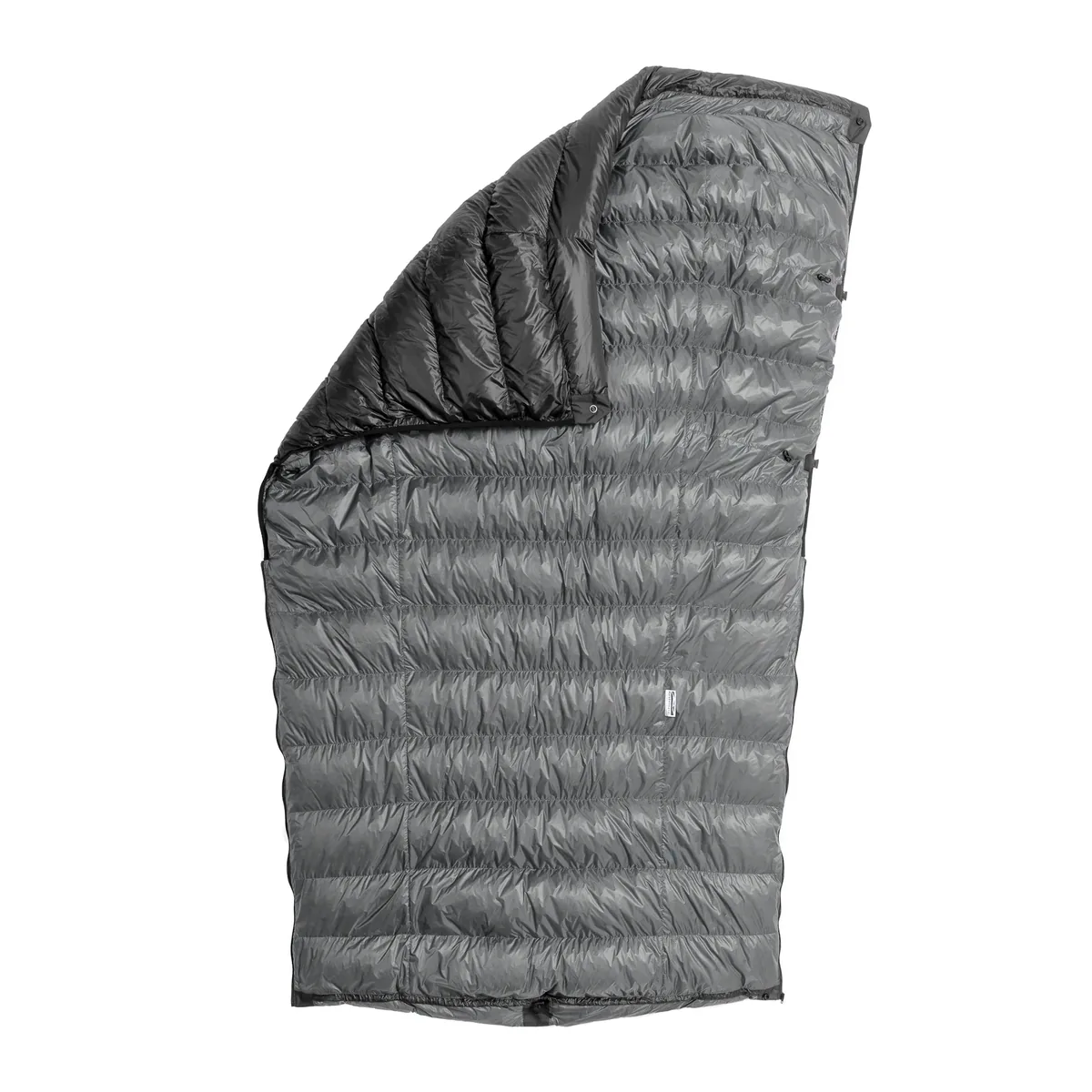
Katabatic Gear
Katabatic Flex 22 Quilt
Katabatic's pad-attachment system is the thing the rest of the quilt world copies, and the Flex is the model built around it: the quilt clips to two cords that run under the pad, and it can slide and roll with you while the edges stay sealed. That is the whole answer to the standard complaint about quilts. The Flex adds a zippered footbox to the formula so the same quilt opens flat into a blanket on a warm night, at the cost of an ounce or so over the sewn-footbox Alsek. Katabatic publishes single-side loft (2.75 inches here) and exact fill weights per size, but no lab rating.
Best for: Quilt sceptics — the attachment system is the reason to try one
Full spec sheet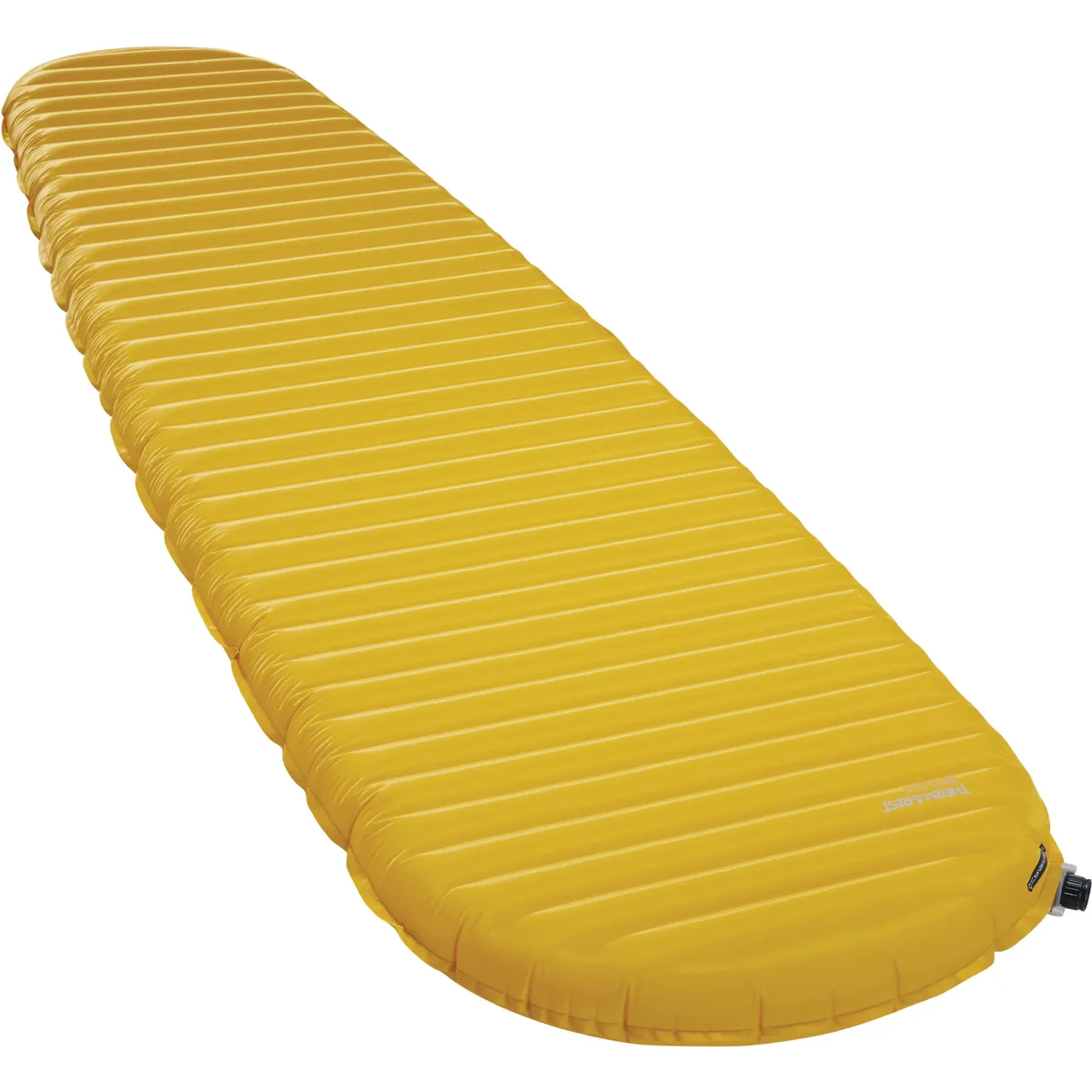
Therm-a-Rest
Therm-a-Rest NeoAir XLite NXT
The XLite has been the default long-distance backpacking pad for a decade, and the NXT revision is the version that finally answered the two complaints people had: it is quieter than the pad it replaced, and the R-value rose from 4.2 to 4.5 without adding weight. Thirteen ounces buys three inches of loft and a rating that covers shoulder-season nights on frozen ground, which is a combination nothing else in the catalogue matches at this weight. The WingLock valve dumps air in a couple of seconds and takes the included pump sack, so nobody has to blow moisture into the baffles. What you give up is durability margin: 30-denier fabric top and bottom is thin, and the pad wants a groundsheet or a foam layer under it on sharp ground.
Best for: Thru-hikers and three-season backpackers counting every ounce
Full spec sheet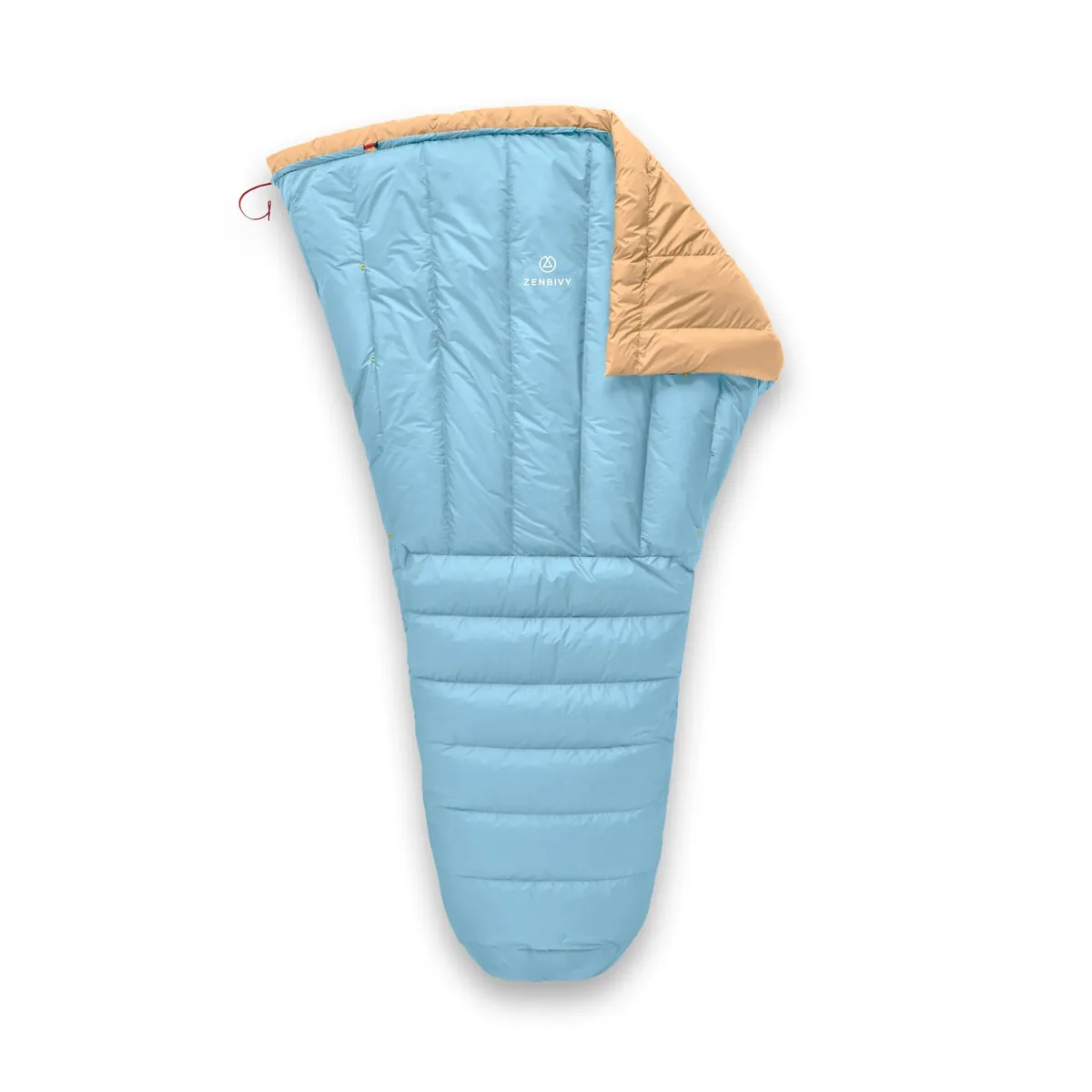
Zenbivy
Zenbivy Light Quilt 25
Zenbivy solved the quilt draft problem differently from everyone else: instead of strapping the quilt to the pad, the quilt clips to a fitted sheet that is already on the pad, so the seal moves with you and there is a hood-like head end built into the sheet. It is the most bed-like sleep system in this catalogue. Zenbivy publishes a limit-and-comfort pair of its own — 25 °F and 35 °F for this model — but does not claim ISO testing, so treat those as the maker's figures rather than lab ones.
Best for: Quilt users who have never got the drafts under control
Full spec sheetThe full reference for every number mentioned here is on the spec-sheet page.