Therm-a-Rest
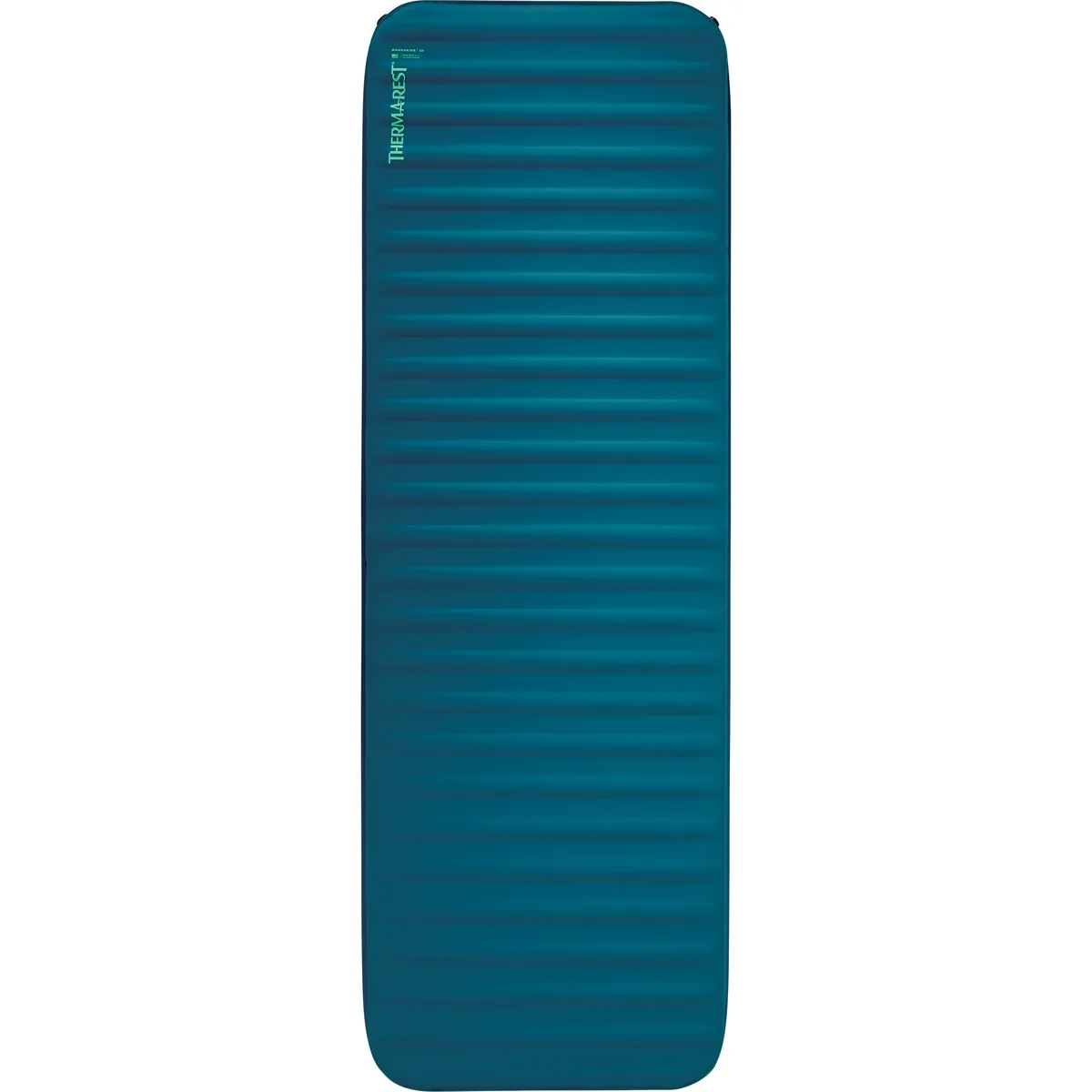
Therm-a-Rest MondoKing 3D
No citable owner-review average published for this one, so no stars.
Four and a quarter inches of self-inflating foam, 25 inches wide, R-value 7. This is the pad that ends the argument about whether car camping has to be uncomfortable. It weighs four and a half pounds and rolls up to the size of a small duffel, so it never goes in a backpack, but nothing you can carry sleeps like it. The R-value is high enough for winter truck camping and cold cabin floors, and the stretch-knit top takes a fitted sheet.
What this pad supports
R 7 puts it in the winter band — snow and sustained sub-freezing ground. On the pairing table that supports a bag rated to roughly 0 °F comfort before the ground becomes the limiting factor.
Size run
One product, 2 sizes. The headline numbers on this page describe the Large.
| Size | Weight | Approx. price | Length | Width |
|---|---|---|---|---|
| Large | 4 lb 6 oz | ~$260 | 77 in | 25 in |
| XXLarge | 5 lb 8 oz | ~$290 | 80 in | 30 in |
Specifications
Highlights
Features
- Self-inflating
- Winter R-value
- Quiet fabric
- Made in USA
- Foam topper
What it does well
- 4.25 inches of real foam is closer to a guest-room mattress than to a camping pad, and it holds that loft all night.
- R-value 7 is a winter number — this works on a frozen campground or an uninsulated cabin floor.
- Self-inflates almost completely on its own given ten minutes; the pump/stuff sack tops it off.
- 25 inches wide in the Large and 30 in the XXLarge, so you can actually roll over.
- Fabric and foam are heavy-duty enough that this is a decade-scale purchase rather than a season one.
What it costs you
- Four and a half pounds and a 26-inch roll — this never leaves the vehicle.
- Getting it small enough to fit its own sack takes a knee and some determination.
- $260 is a lot for a camping pad, though it is priced against a decade of use rather than a season.
- The foam core needs to be stored unrolled with the valve open, which takes closet space most people don't plan for.
Those two lists are drawn from Therm-a-Rest’s published specifications and from reviews that measured them. They are not owner sentiment — anything owners said appears under its own heading below.
What owners say
Distilled from owner discussions and long-term published reviews, not from anything measured here.
Car-camping mattress discussion is dominated by a handful of names, and the MondoKing is one of them. The comments are unusually consistent: people who own one describe it as the end of the argument about whether camping has to be uncomfortable, and several say they use it at home for guests.
The warmth is the part that gets underrated. Owners who moved from an uninsulated camping airbed to a foam-core mattress describe the difference on a cold campground as larger than the thickness alone suggests — which is exactly what an R-value of 7 against an airbed's 1 or 2 predicts.
The complaints are all logistics. It is bulky, it is a wrestle to pack, and it needs cupboard space to live unrolled between trips. None of that is a defect; it is the shape of the product.
What owners like
- Owners describe it as genuinely bed-like rather than merely comfortable for camping, and side sleepers say hips stay off the ground.
- The R-value gets specific credit for cold campgrounds and truck-bed sleeping where thinner mattresses left people cold.
- Build quality is spoken about in decades rather than seasons — owners mention pads still in service after many years of family camping.
- Self-inflation does most of the work on a mattress this size, which owners appreciate more than they expected to.
Common complaints
- Enormous when rolled, and owners are blunt that it only ever leaves the vehicle to go into the tent.
- Getting it back into its own bag is repeatedly described as a two-person job, or at least a knee-on-it job.
- It has to be stored unrolled with the valve open, and people who did not plan for that say so.
- The price is the usual objection, though owners who have had one a long time generally say it stopped mattering.
Questions owners ask
Is it warmer than a camping airbed?
How hard is it to pack away?
Does it have to be stored unrolled?
Therm-a-Rest MondoKing 3D, head to head
Other pads at this level
More from Therm-a-Rest →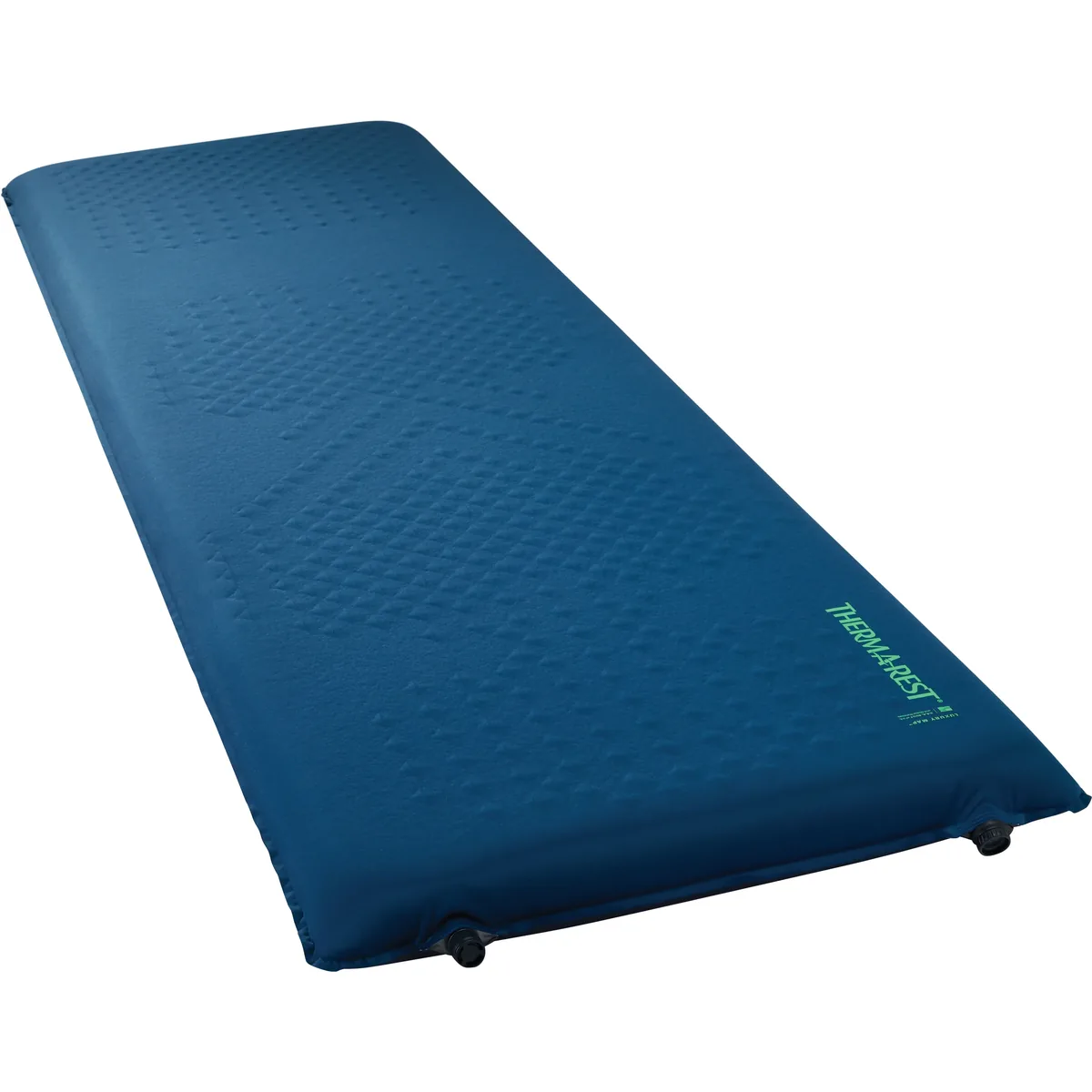
Therm-a-Rest
Therm-a-Rest LuxuryMap
The MondoKing's cheaper, thinner sibling, and the better buy for most campers. Three inches instead of four and a quarter, R-value 6 instead of 7, about a pound lighter and $40 cheaper in the comparable size. The trick in the name is that the foam is die-cut in different densities along the pad — firmer under the hips, softer under the shoulders — which is why it feels better than three inches has any right to.
Best for: Campground and basecamp sleeping without the MondoKing's bulk
Full spec sheet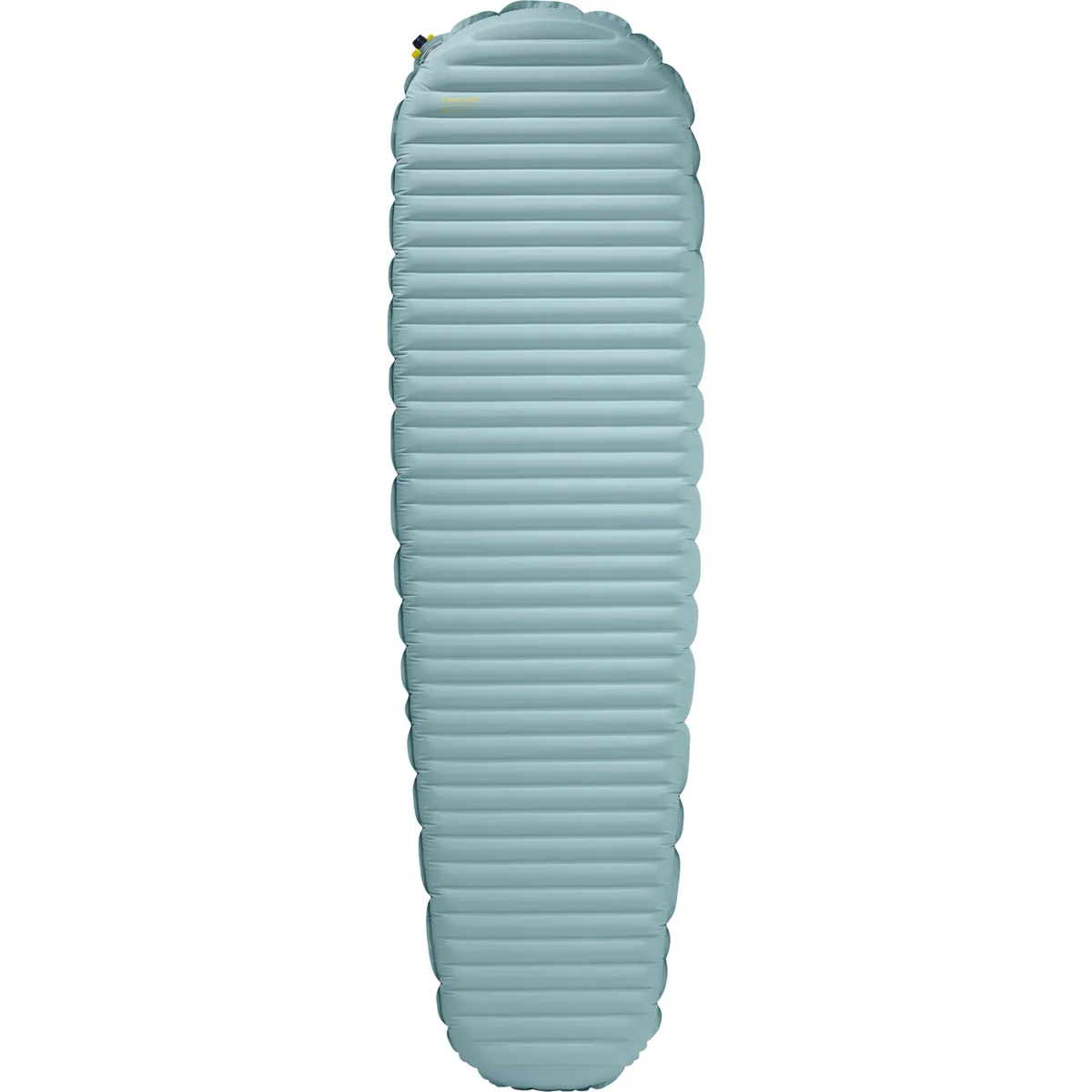
Therm-a-Rest
Therm-a-Rest NeoAir XTherm NXT
Add two and a half ounces to an XLite and you get a pad rated 7.3 — enough to sleep on snow — which is the trade that makes the XTherm the pad winter backpackers and shoulder-season sceptics buy instead. The extra warmth comes from more layers of the same reflective film rather than from bulk, so it packs almost as small and feels the same underneath. The 70-denier bottom fabric is a real upgrade over the XLite's 30D and the reason this one survives on crusted snow and scree. It is a lot of R-value to carry in July, and the honest answer for most three-season use is that it is more pad than the trip needs.
Best for: Winter and high-alpine trips where the ground is frozen
Full spec sheet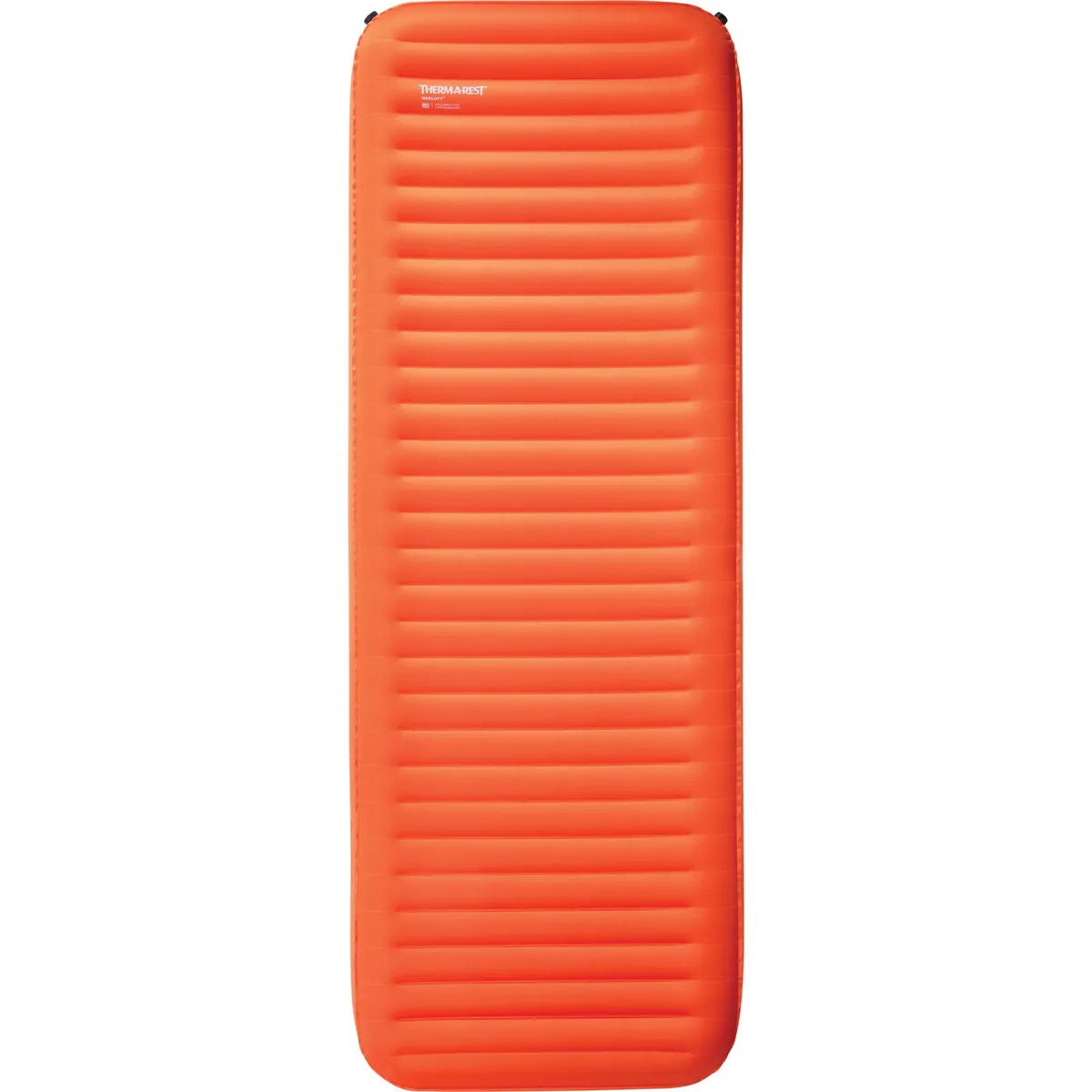
Therm-a-Rest
Therm-a-Rest NeoLoft
Therm-a-Rest's answer to the people who bought an XLite, slept badly on it and went back to car camping. The NeoLoft is 4.6 inches thick — nearly half again as deep as anything else you would carry on your back — with a 50-denier stretch-knit top that feels like fabric rather than a balloon, and it is two inches wider than a standard pad at 22 inches. It costs 12 ounces over an XLite for essentially the same warmth, which is the whole argument: this is comfort bought with weight, not warmth bought with weight. Side sleepers and anyone over about 200 pounds are the people it was built for.
Best for: Side sleepers who want a real mattress but still have to carry it
Full spec sheet