Sea to Summit
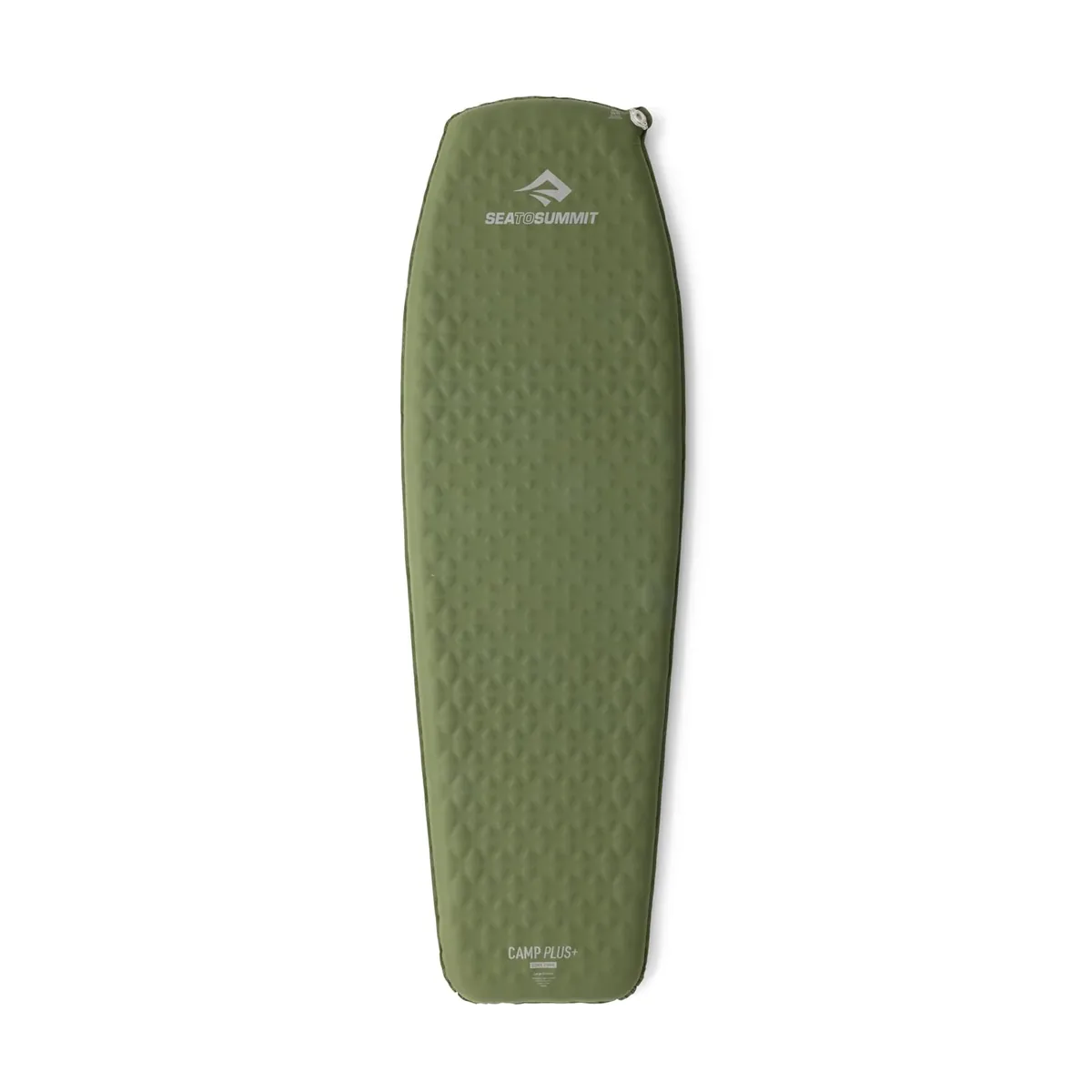
Sea to Summit Camp Plus Self Inflating
No citable owner-review average published for this one, so no stars.
R-value 5.3 for $99 is the best warmth-per-dollar figure in this catalogue by a wide margin — the nearest air pad with that rating costs more than twice as much. The catch is 37 ounces and a packed size you would not put in a backpack. Sea to Summit varies the foam density along the pad so the insulation sits where the body is and the weight comes out where it isn't, which is why this is thinner and lighter than most self-inflating pads at this R-value.
What this pad supports
R 5.3 puts it in the cold three-season band — frost, frozen ground, shoulder season. On the pairing table that supports a bag rated to roughly 20 °F comfort before the ground becomes the limiting factor.
Size run
One product, 4 sizes. The headline numbers on this page describe the Regular.
| Size | Weight | Approx. price | Length | Width |
|---|---|---|---|---|
| Regular | 2 lb 5 oz | ~$99 | 72 in | 22 in |
| Regular Rectangular Wide | 3 lb 0.3 oz | ~$99 | 72 in | 25 in |
| Large | 2 lb 13.7 oz | ~$109 | 78 in | 25 in |
| Large Rectangular | 3 lb 4.7 oz | ~$109 | 78 in | 25 in |
Specifications
Highlights
Features
- Self-inflating
- Wide option
- Rectangular option
- Quiet fabric
What it does well
- R 5.3 at $99 is the cheapest warmth in the catalogue — about $19 per point of R-value.
- Body-mapped foam zones keep the weight down for a self-inflating pad at this rating.
- Foam core means a leak is survivable, and the fabric is heavy enough for a campground.
- Four sizes including two rectangular cuts.
What it costs you
- 37 ounces in the Regular and 53 in the biggest size — this stays in the car.
- 2.8 inches of loft is modest for a camping pad; the plush options are twice as thick.
- Self-inflation is partial and slow when cold, like every foam pad.
- Packed at 11 × 6 inches it is bulky for what it is.
Those two lists are drawn from Sea to Summit’s published specifications and from reviews that measured them. They are not owner sentiment — anything owners said appears under its own heading below.
What owners say
Distilled from owner discussions and long-term published reviews, not from anything measured here.
This pad's owner discussion is short and entirely positive, which usually means either that it is very good or that very few people own it. What exists points at the former: families describing the whole household sleeping on them across varied conditions, with the recurring note that they are surprised the pad is not talked about more.
The cold-weather performance gets specific mention, which matches an R-value above 5 at a price under a hundred dollars. Nothing in the reports suggests a weakness beyond the obvious one — it weighs over two pounds and packs like a camping pad, because it is one.
What owners like
- Owners describe genuinely good cold-weather performance for the money and are surprised more people do not use it.
- It holds up — families report using the same pads across a range of conditions over years.
- The foam core in the Plus version is noticeably more open than the standard Camp, which owners who have both point out.
- At an ASTM figure above 5 for under a hundred dollars it is the best warmth-per-dollar in this catalogue, and owners notice.
Common complaints
- Weight and packed size are car-camping figures, and nobody pretends otherwise.
- Under-discussed enough that there is little accumulated data on how it fails, if it does.
- Self-inflation is partial, as with every foam-core pad.
Questions owners ask
What is the difference between Camp and Camp Plus?
Is it warm enough for shoulder season?
Can it be used for backpacking?
Other pads at this level
More from Sea to Summit →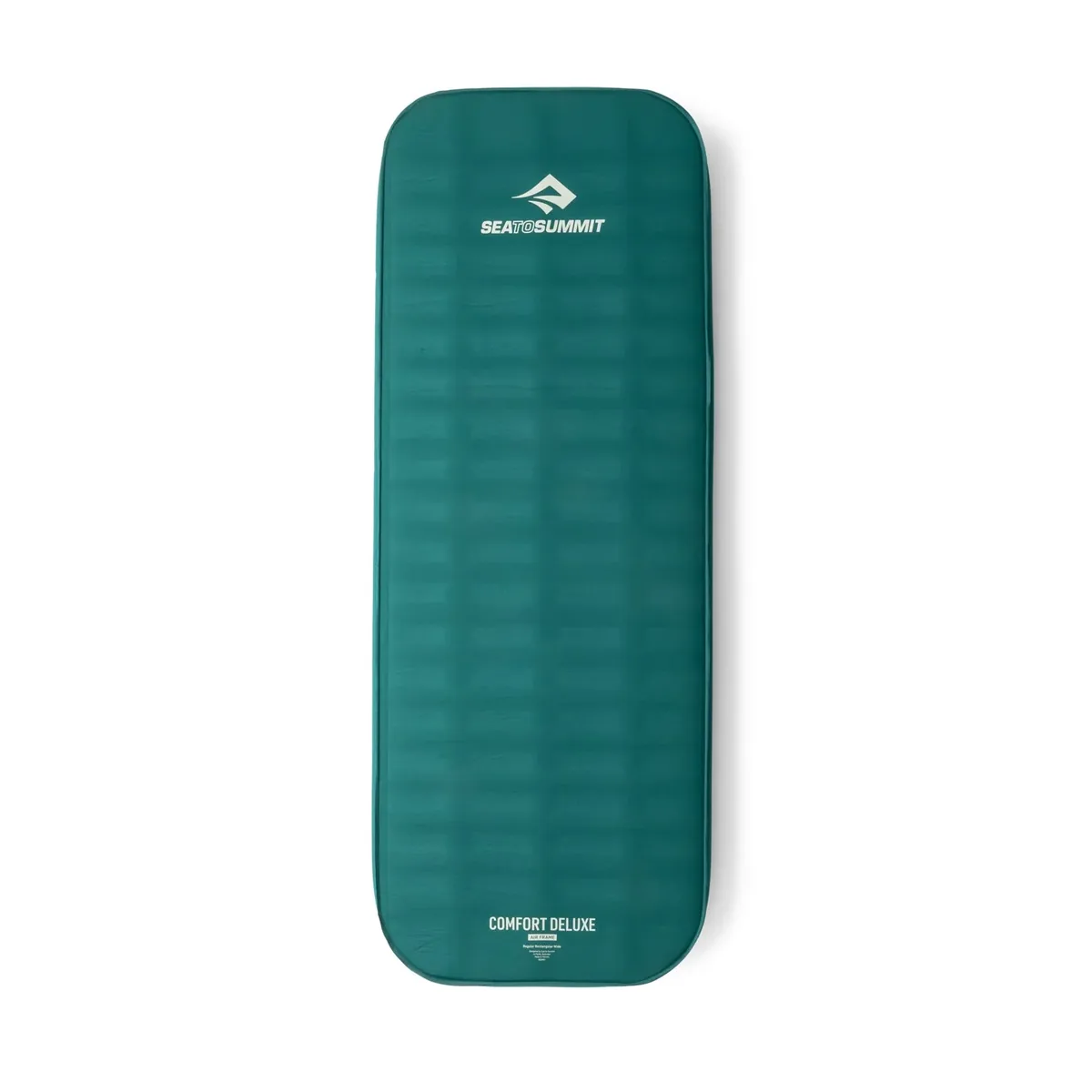
Sea to Summit
Sea to Summit Comfort Deluxe Self Inflating
R-value 7.7 and four inches of foam, with a stretch-knit face that takes a fitted sheet. This is the warmest camping mattress in the catalogue and the closest thing here to sleeping at home. The Air Frame construction puts a stabilising structure inside the foam, which is what stops a four-inch pad from feeling like a waterbed, and the 52-inch Double version genuinely fits two adults without the usual valley down the middle.
Best for: Car camping and van sleeping in cold weather
Full spec sheet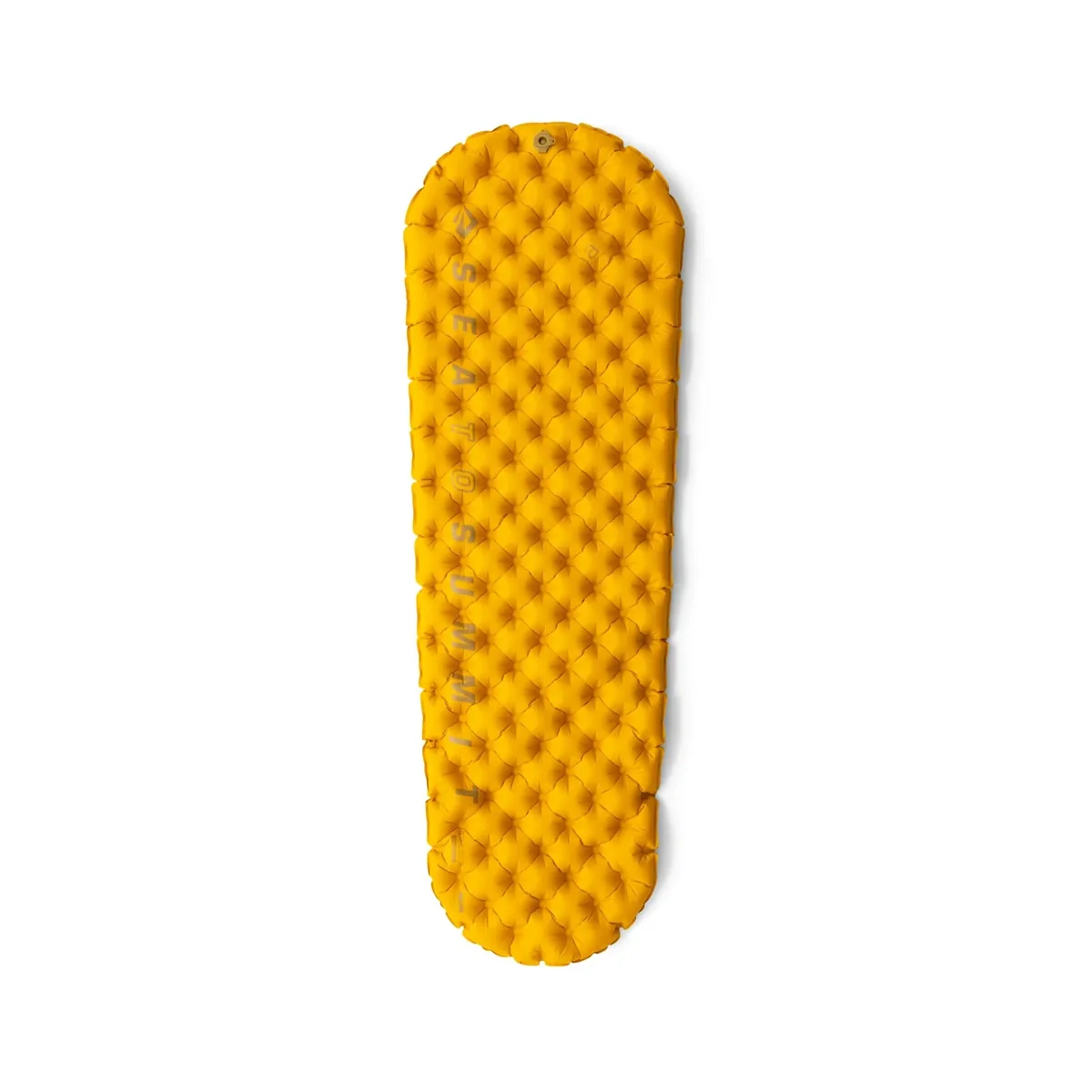
Sea to Summit
Sea to Summit Ultralight XR Insulated
The Ether Light's thinner, cheaper sibling: the same Air Sprung Cell grid at two and a half inches instead of four, 14.6 ounces, R-value 3.6, $149. The 22-inch width is the quiet advantage — two inches wider than most ultralight pads at this weight, which is worth more to a side sleeper than the last half-point of R-value. Hybrid 30- and 40-denier nylon top and bottom, which is a little more fabric than the lightest pads carry.
Best for: Three-season backpacking on a budget that still cares about width
Full spec sheet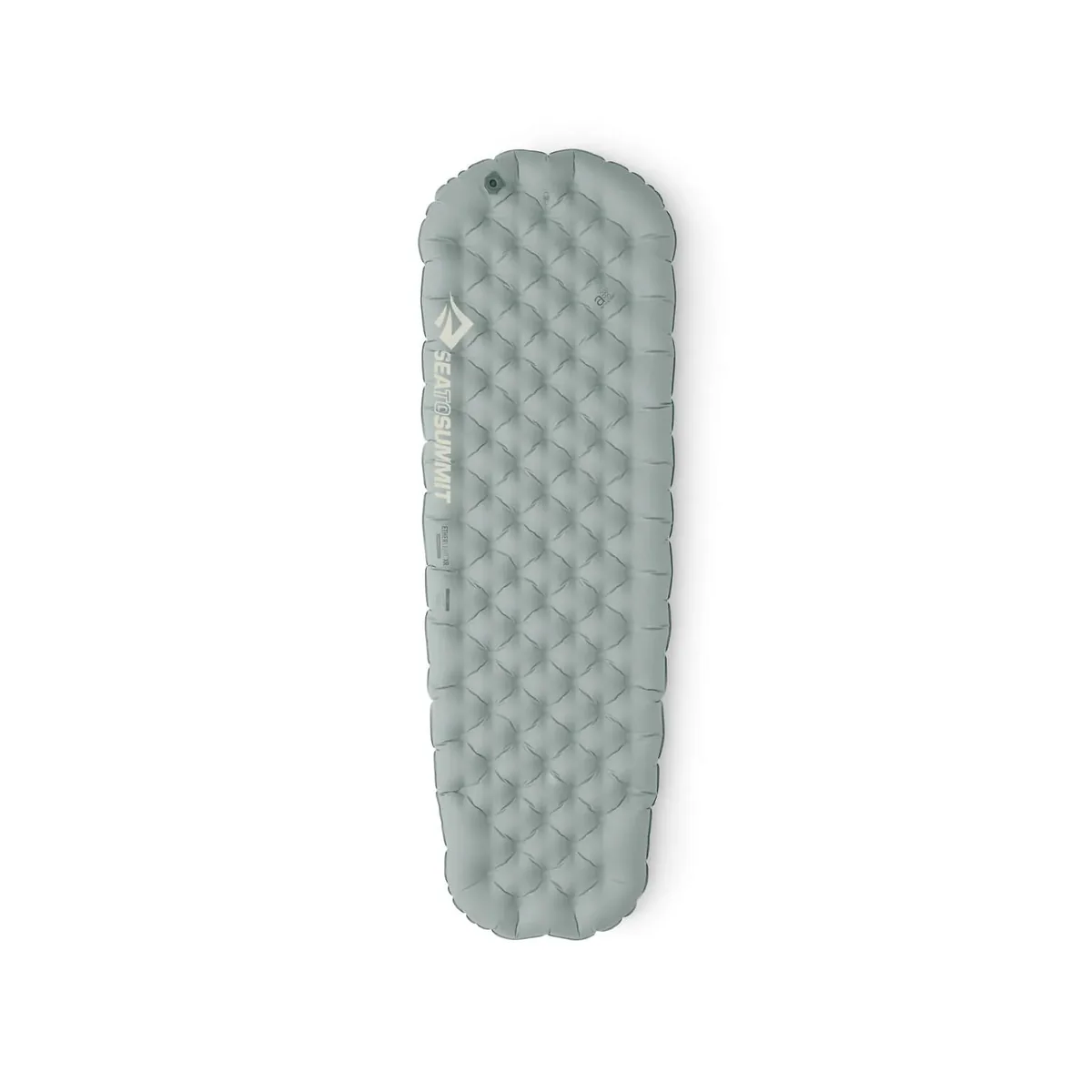
Sea to Summit
Sea to Summit Ether Light XR Insulated
Four inches thick — the deepest air pad here that still weighs under a pound — built from a grid of individual Air Sprung Cells rather than long baffles, so it behaves more like a mattress and less like a pool toy. That structure is the whole point: a hip pressing into one cell does not push air into the next one, which is what stops the bounce and the roll-off that thick pads usually suffer from. R-value 4.1 is honest three-season. The Airstream pump sack is built into the stuff sack and inflates it in a few passes.
Best for: Side sleepers who want mattress depth in a backpacking pad
Full spec sheet