Klymit
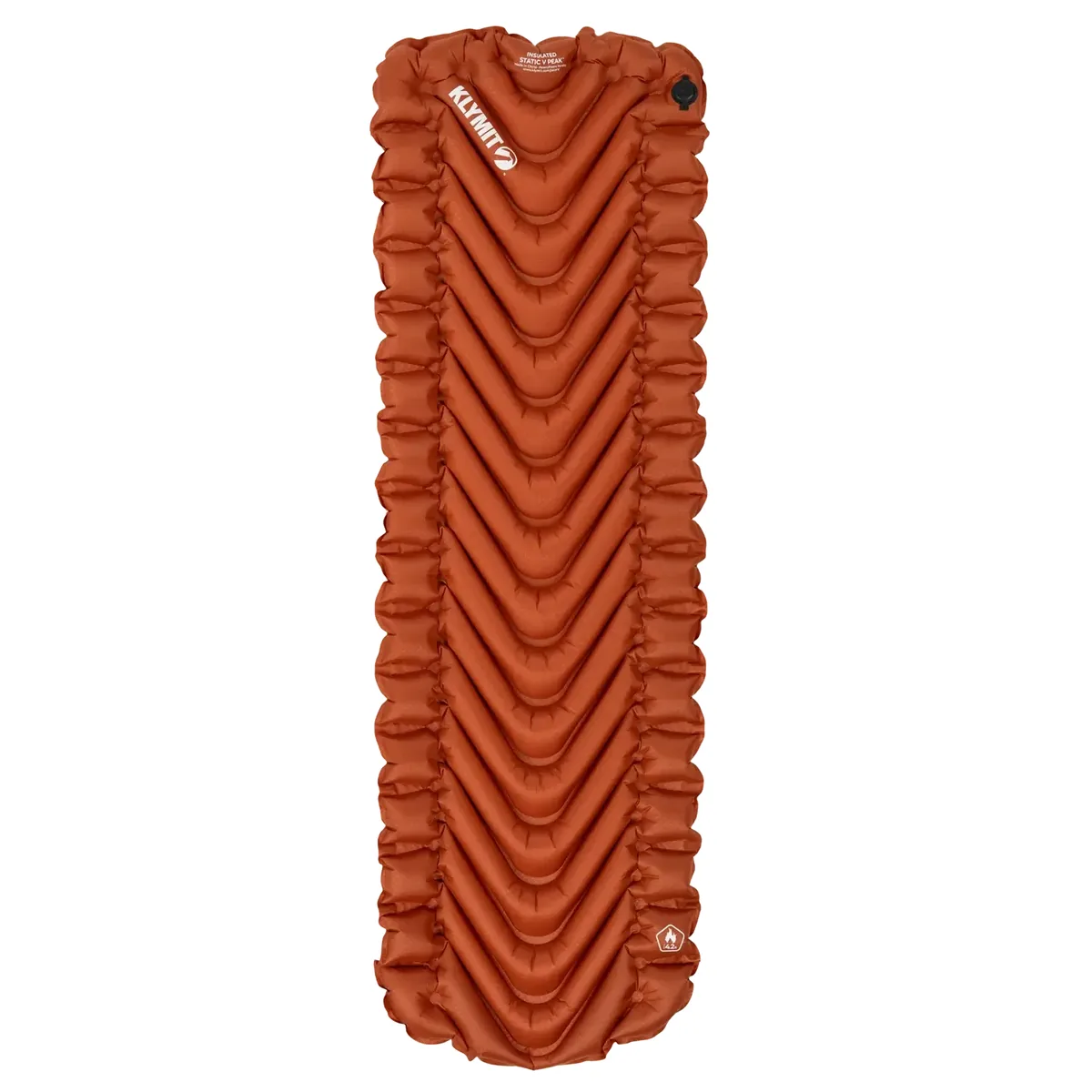
Klymit Insulated Static V Peak
No citable owner-review average published for this one, so no stars.
The insulated version of the Static V, and a much more interesting product: R-value 4.2 for $100, which is half what most pads with that rating cost. It gets there with both reflective film and Klymalite synthetic fill, and it keeps the 75-denier polyester and the 23-inch width. The compromises are the ones you would expect at the price — 22 ounces, only two and a half inches of loft, and a flip valve you inflate by mouth.
What this pad supports
R 4.2 puts it in the cold three-season band — frost, frozen ground, shoulder season. On the pairing table that supports a bag rated to roughly 20 °F comfort before the ground becomes the limiting factor.
Size run
One product, 2 sizes. The headline numbers on this page describe the Regular.
| Size | Weight | Approx. price | Length | Width |
|---|---|---|---|---|
| Regular | 1 lb 6 oz | ~$100 | 72 in | 23 in |
| Extra Large | 2 lb 4 oz | ~$130 | 78 in | 30 in |
Specifications
Highlights
Features
- Rectangular option
- Repair kit included
- Wide option
What it does well
- R-value 4.2 for $100 — about half the cost per point of R-value of the ultralight air pads.
- 23 inches wide as standard and 30 in the Extra Large, both wider than most pads here.
- 75-denier polyester shrugs off tent grit that would worry a 20-denier pad.
- Real synthetic fill alongside the reflective film, so it doesn't rely on film alone.
What it costs you
- 22 ounces is heavy for a three-season backpacking pad — more than a pound and a third.
- Two and a half inches of loft leaves a heavy side sleeper on the ground.
- Mouth inflation only, and moisture inside an insulated pad is a long-term problem.
- Klymit's model naming (Peak, Summit, Base, Lite Eco) makes it hard to tell the line apart on a shelf.
Those two lists are drawn from Klymit’s published specifications and from reviews that measured them. They are not owner sentiment — anything owners said appears under its own heading below.
What owners say
Distilled from owner discussions and long-term published reviews, not from anything measured here.
This is the Klymit pad that the brand's credibility problem was really about, and also the one that resolves it. The earlier insulated Static V was sold with an R-value that ASTM testing later more than halved, and owners have long memories about it — the warning still circulates even now that Klymit publishes tested figures.
The current Peak model publishes an ASTM figure, and at that number it is genuinely strong value: a real three-season R-value on a wide, tough pad for around a hundred dollars. The specification is now trustworthy; the reputation has not caught up with it.
What has not changed is the physical pad: heavy, firm, only two and a half inches thick, and wider than almost anything else at the price.
What owners like
- Klymit now publishes ASTM-standard figures across the line, which is what owners were asking for and is the reason this model can be taken at face value.
- Price against R-value is genuinely strong once the figure is the tested one.
- 23 inches wide as standard, which is more than most pads at any price.
- Tough 75-denier fabric that owners treat as effectively unpuncturable by tent-floor standards.
Common complaints
- The brand's history of overstated R-values means owners still warn each other about Klymit numbers even where the current ones are ASTM-tested.
- Earlier insulated Static V models are the specific example people cite when arguing that pre-standard R-values were unreliable — buyers of used pads should be careful which generation they are getting.
- Heavy for a backpacking pad at 22 ounces.
- 2.5 inches of loft is thin for side sleepers.
Questions owners ask
Can I trust the R-value now?
Is it warm enough for shoulder season?
Is it comfortable enough at 2.5 inches?
Klymit Insulated Static V Peak, head to head
Other pads at this level
More from Klymit →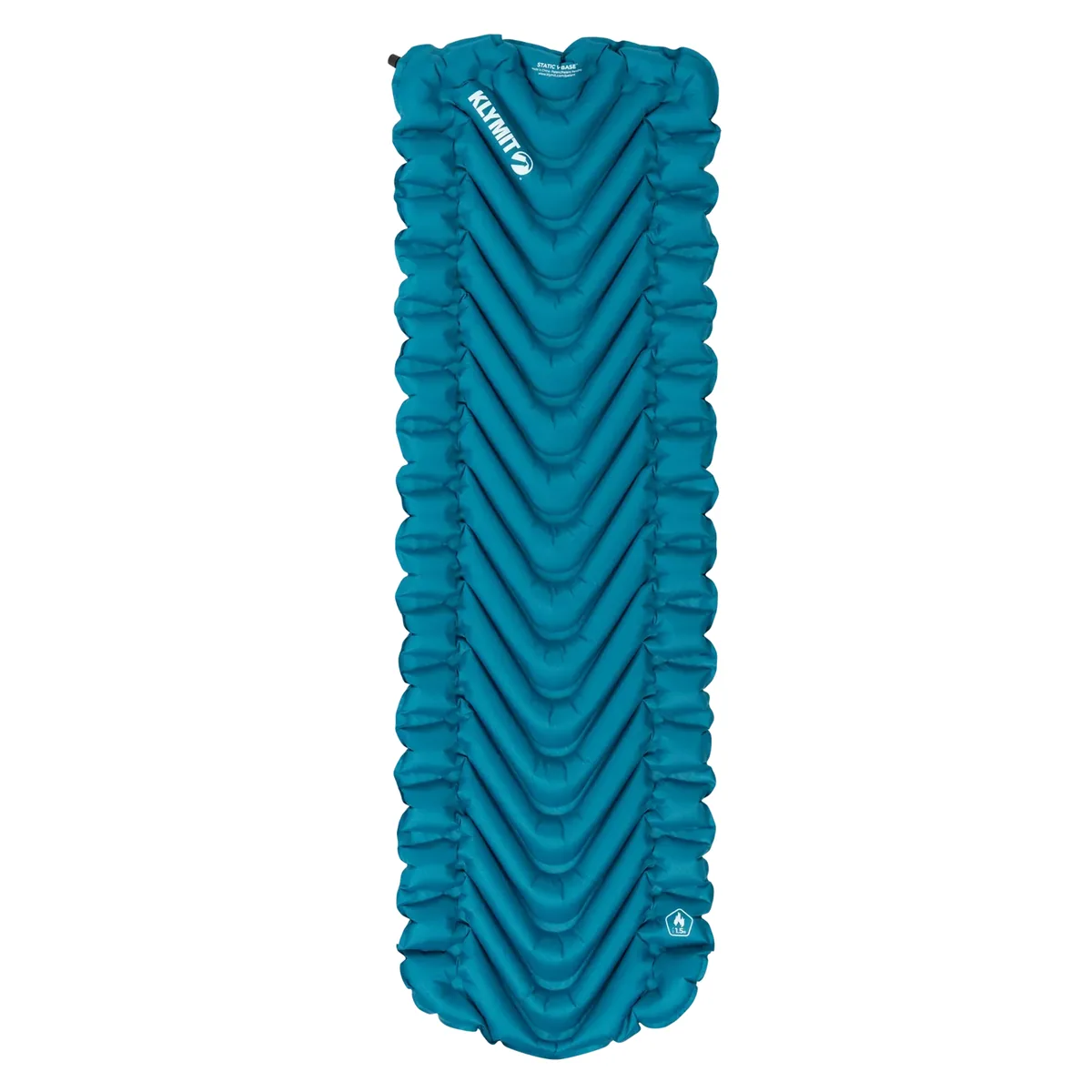
Klymit
Klymit Static V Base
Fifty dollars, 23 inches wide, and R-value 1.3 — which is the honest reason it costs fifty dollars. There is no insulation in it at all; the V-chamber pattern reduces air movement inside the pad, which helps a little, but on cold ground this loses heat fast. What it is good at is being cheap, wide, tough (75-denier polyester) and small enough to pack. For summer, for a spare, for a guest, or stacked on top of a foam pad, it earns its place. As a three-season pad it does not.
Best for: Warm-weather trips, spare pads and guests
Full spec sheet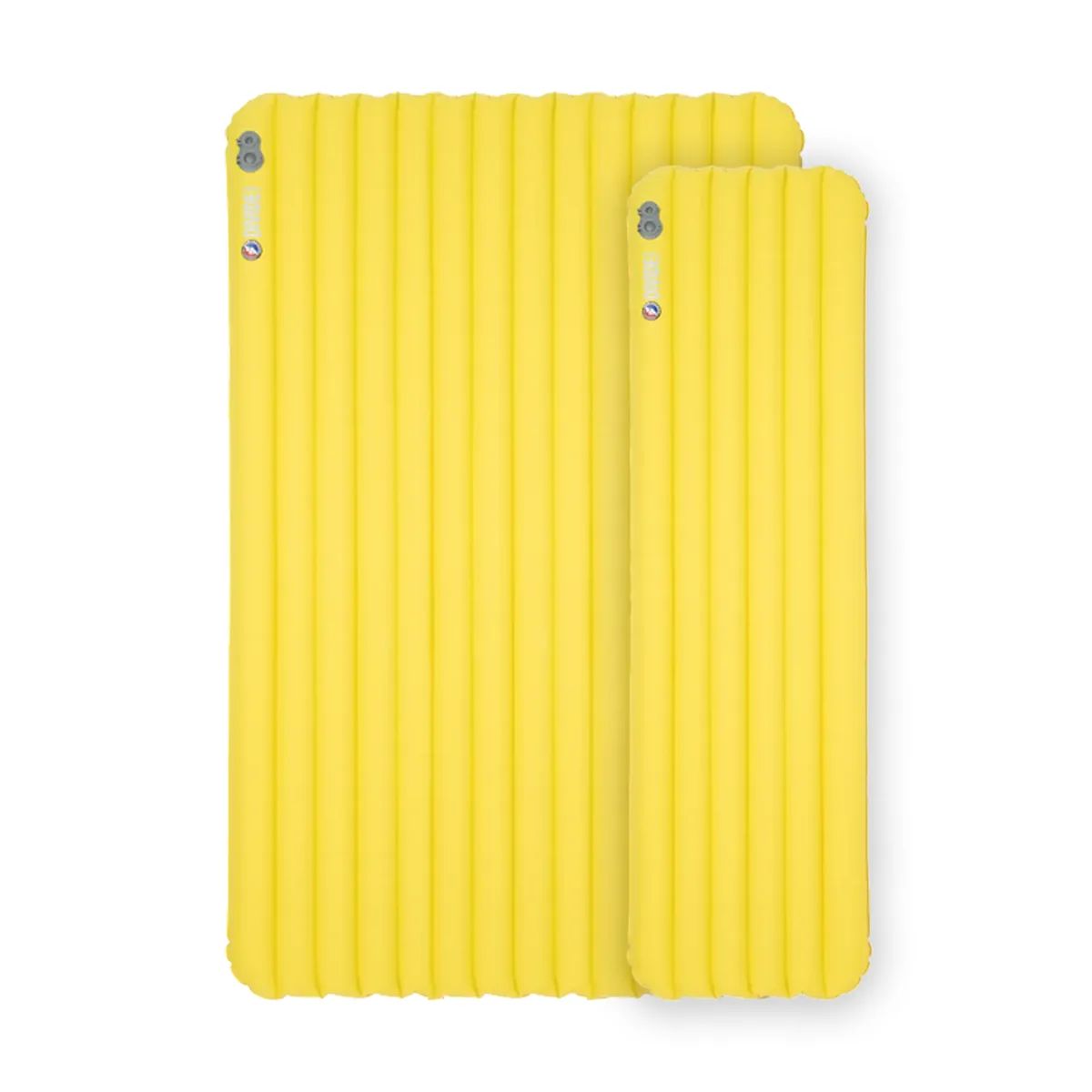
Big Agnes
Big Agnes Divide Insulated
The value entry in Big Agnes's insulated line, and one of the few air pads here that uses real synthetic insulation alongside the reflective film rather than film alone. R-value 4 for $110 is the cheapest insulated air pad in the catalogue, and the 50 × 78-inch version is a proper double for $229. Eight ounces heavier than the Zoom UL for $60 less, which is the whole proposition. Vertical baffles rather than the Rapide's offset rails, which makes for a flatter, less cradling surface.
Best for: First insulated pad, or a spare for guests
Full spec sheet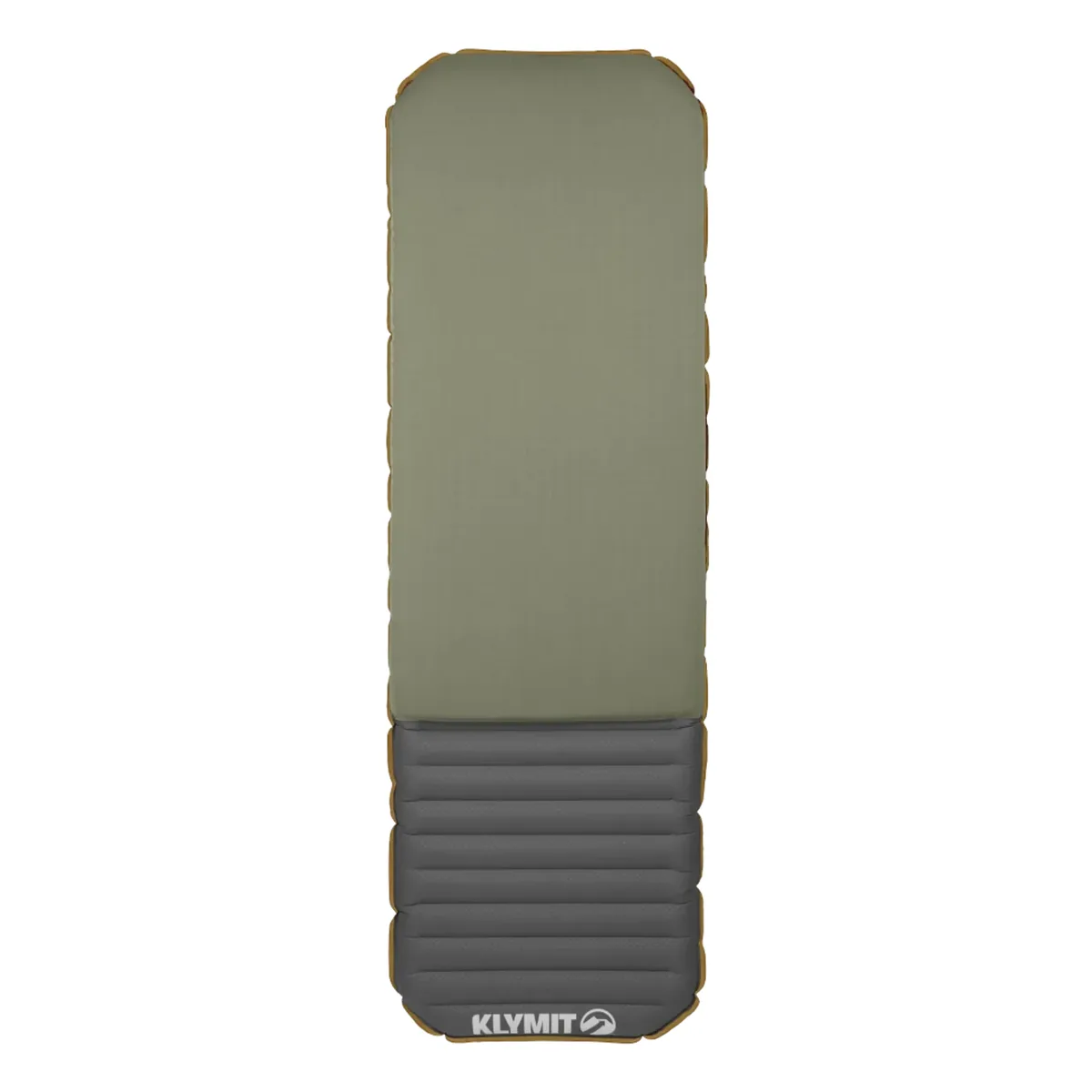
Klymit
Klymit Klymaloft Summit
A foam topper bonded over I-beam air chambers, which is a genuinely good idea: the foam takes the pressure points and the air takes the load. It is comfortable in a way that pure air pads are not. The thing to read carefully is the R-value — 2.4 is a summer number on a pad that looks and feels like a winter mattress, because the foam layer is comfort foam, not insulation. On a 40-degree campground night this will feel colder than its four inches of plush suggest.
Best for: Warm-weather car camping where comfort beats warmth
Full spec sheet