Storing and Washing Down: What Actually Kills Loft
Short answer
A few days compressed does nothing. Months compressed permanently reduces loft. Store a down bag loose in a large cotton or mesh sack, wash it once a year at most with a down-specific soap, and dry it on low heat with something to break up the clumps.
How long is too long in a stuff sack
The damage from compression is cumulative and time-dependent, not instant. A week in a compression sack on a trip is irrelevant. A whole off-season in one measurably flattens the down clusters, and several seasons of that is what turns a warm bag into a cold one. The failure is gradual enough that most people never notice it happening and instead conclude the bag was never as warm as advertised.
Nearly every maker ships a large breathable storage sack with the bag for exactly this reason, and it is the single most-ignored piece of gear in the box.
Washing, when it is finally needed
Body oils and sweat migrate through the lining and coat the down, and oiled down does not loft. That is the real reason a five-year-old bag feels thin, and washing genuinely restores much of it. Use a down-specific wash rather than detergent, a front-loading machine or a bathtub, and never a top-loader with an agitator, which tears baffles.
Drying is where bags get ruined. Low heat, a long time, and a couple of clean tennis balls or a dryer ball to break the wet clumps apart. A bag that comes out of the wash and is put away damp will grow mildew inside the baffles, which is unrecoverable.
How to tell a bag is finished
Lay it out and measure the loft with a ruler — makers who publish a loft figure give you something to compare against, which is one reason that spec is worth more than a temperature rating. If a bag that should loft five inches now lofts three, it has lost roughly forty per cent of its insulating thickness and the temperature on the label is fiction.
Before writing it off, wash it and check again, and look for down migration: if one baffle is stuffed and the next is empty, the baffle wall has failed and the bag needs a repair rather than a replacement. Several makers in this catalogue will re-loft and repair a bag decades old for a fraction of a new one.
Gear this applies to
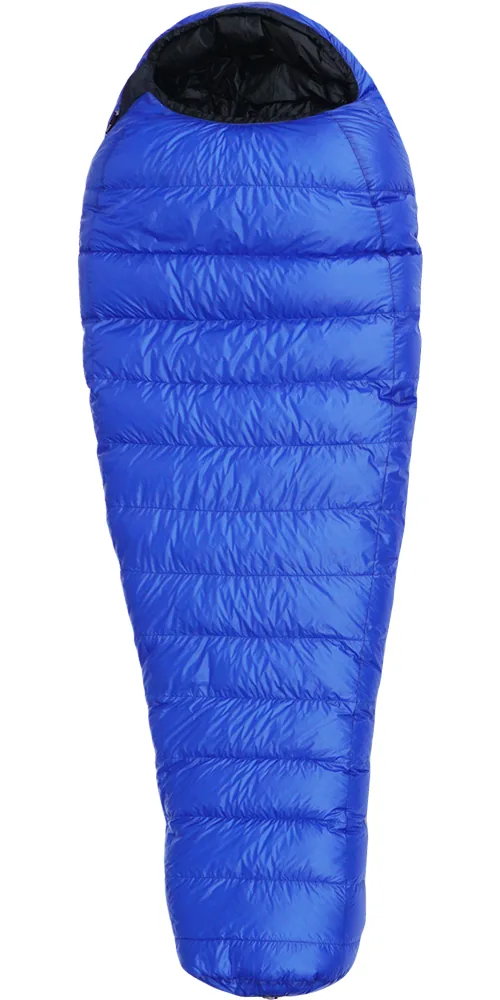
Western Mountaineering
Western Mountaineering UltraLite 20
Western Mountaineering has been building bags in San Jose for fifty years and has never published an EN or ISO rating for any of them — the 20 °F on the UltraLite is the company's own number, and its reputation rests on that number having been accurate for two generations of backpackers. What it does publish is the physics: 5.5 inches of measured loft, 16 ounces of 850-fill goose down, 59 inches of shoulder girth and a 12-denier shell, for a total of 29 ounces. Continuous horizontal baffles let you shake the down to the top on a cold night or to the sides on a warm one, which is a feature almost nobody else offers and which more than compensates for the missing zip vent.
Best for: Buyers who plan to own one bag for twenty years
Full spec sheet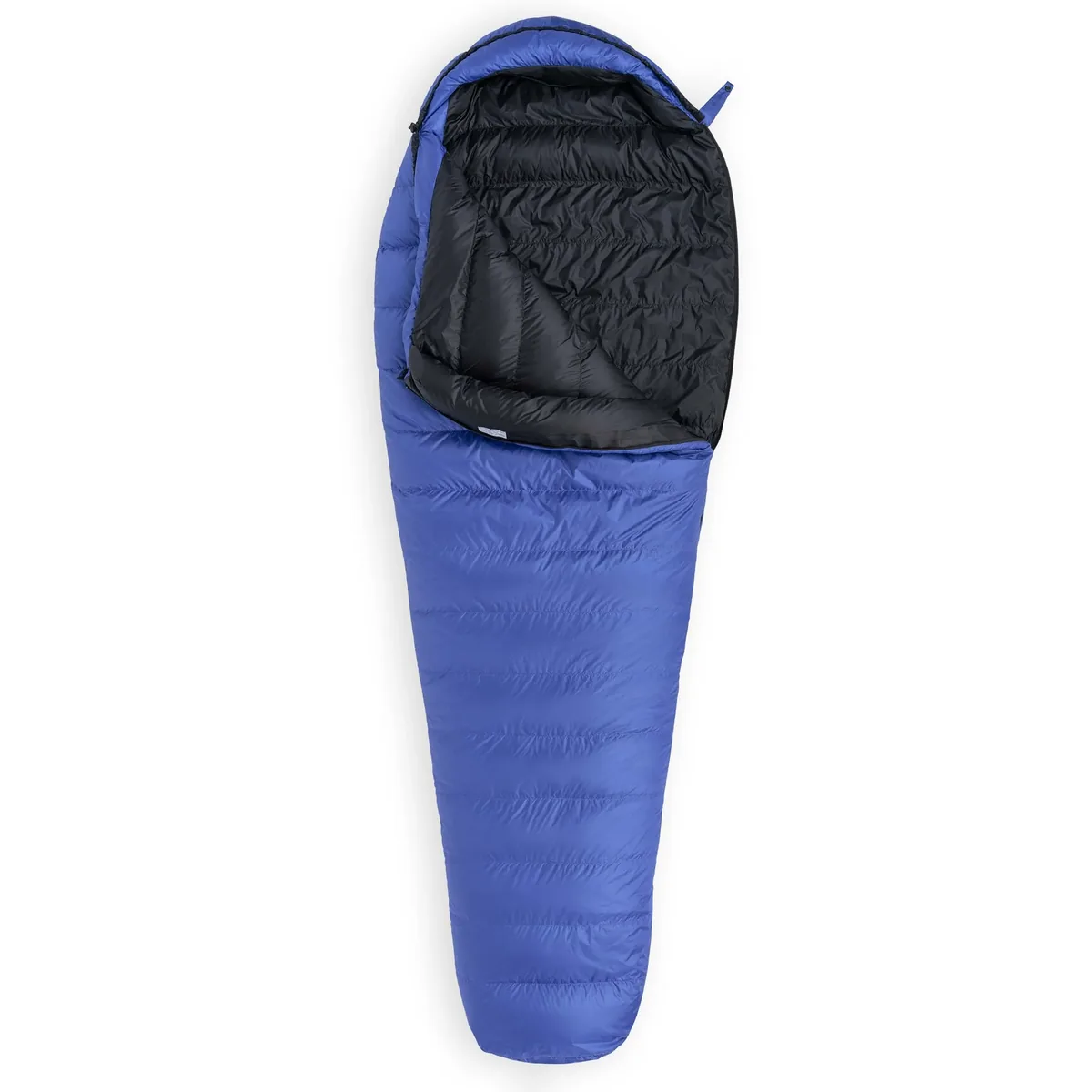
Feathered Friends
Feathered Friends Swallow YF 20
Feathered Friends sew every bag in Seattle and publish girth at four points — shoulder, elbow, hip and footbox — which tells you more about whether a bag will fit than any temperature rating can. The Swallow is their three-season workhorse: 900-fill-power Muscovy down, 16.8 ounces of it, in a 59-inch-shoulder mummy that weighs 29.2 ounces. Like Western Mountaineering they publish no ISO figure, and like Western Mountaineering they have a forty-year record that people buy on instead.
Best for: Three-season backpacking where fit matters as much as warmth
Full spec sheetREI Co-op
REI Co-op Magma 15
The Magma is the bag most people who compare specs end up buying, and the numbers explain why: 850-fill down, 23.3 ounces of it, an ISO comfort rating of 21 °F and an ISO lower limit of 9 °F, for $399. That is a genuinely six-degrees-warmer comfort figure than the 15 in the name, which is the opposite direction from almost every other bag in this catalogue — REI named the bag closer to its limit than its comfort and then published both, which is the honest way round.
Best for: Backpackers who want the best published numbers per dollar
Full spec sheetThe full reference for every number mentioned here is on the spec-sheet page.