Is There Really a Difference Between 800 and 900 Fill Power?
Short answer
Fill power is cubic inches of loft per ounce of down. Higher fill power gets the same warmth from less weight — it does not make a bag warmer at the same fill weight. Moving from 800 to 950 on a 20-degree bag typically saves two to three ounces and adds $100 or more.
What the number measures
One ounce of 800-fill down expands to 800 cubic inches in a standardised test cylinder; one ounce of 950-fill expands to 950. That is the entire definition. It says nothing about warmth on its own, because warmth comes from total loft, which is fill power multiplied by fill weight.
This is why the loft budget — fill weight in ounces times fill power, divided by a thousand — is a more useful comparison than either number alone. A bag with 20 ounces of 650-fill down has a larger loft budget than one with 14 ounces of 900-fill, and it is the warmer bag, just a heavier and bulkier one.
What high fill power actually buys
Weight and packed size, and nothing else. On a 20-degree bag the difference between 800 and 950 fill is roughly two to three ounces of total weight and a couple of litres of compressed volume. On a thru-hike that is worth paying for. On four weekends a year it is not.
There is a durability argument too, and it cuts the other way: high fill-power clusters are larger and more fragile, and a 950-fill bag loses loft faster under bad storage than a 650-fill one. High fill power rewards careful owners.
Where fill power stops mattering
Above about 900 the returns are very small in absolute terms — the gap between 900 and 1000 fill on a quilt is roughly one ounce, for a price step that is often three figures. And below about 650 the down is bulky enough that a synthetic bag becomes competitive on both weight and packed size, without any of down's moisture problems.
The practical band where fill power is worth shopping on is 800 to 900. Below it you are buying bulk; above it you are buying the last ounce.
Gear this applies to
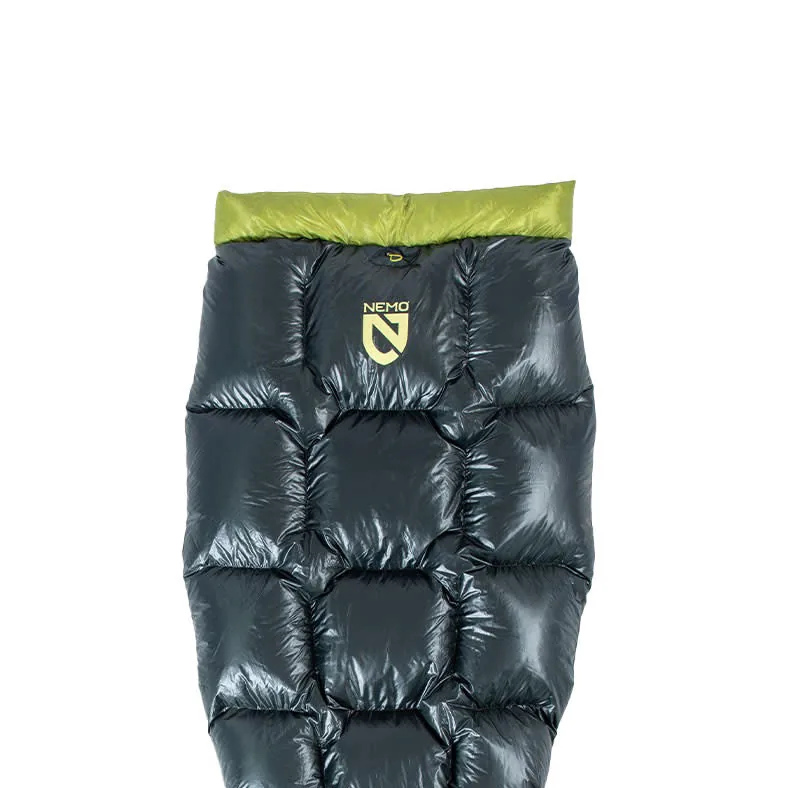
NEMO
NEMO Pulse Quilt
1000-fill down is the highest fill power available at any price, and the Pulse is the only item in this catalogue that uses it. The result is a 2.3-litre packed volume — smaller than a one-litre bottle and a bit — and 18 ounces for a quilt with a published ISO lower limit of 23 °F. It is also $550, which is the most expensive quilt here, and it is the only quilt in the catalogue with a lab figure attached. Whether 1000-fill is worth the money over 900 is the sort of question a spreadsheet answers better than a salesperson does; the honest answer is that the last hundred points of fill power buys about an ounce.
Best for: Thru-hikers optimising packed volume above everything
Full spec sheet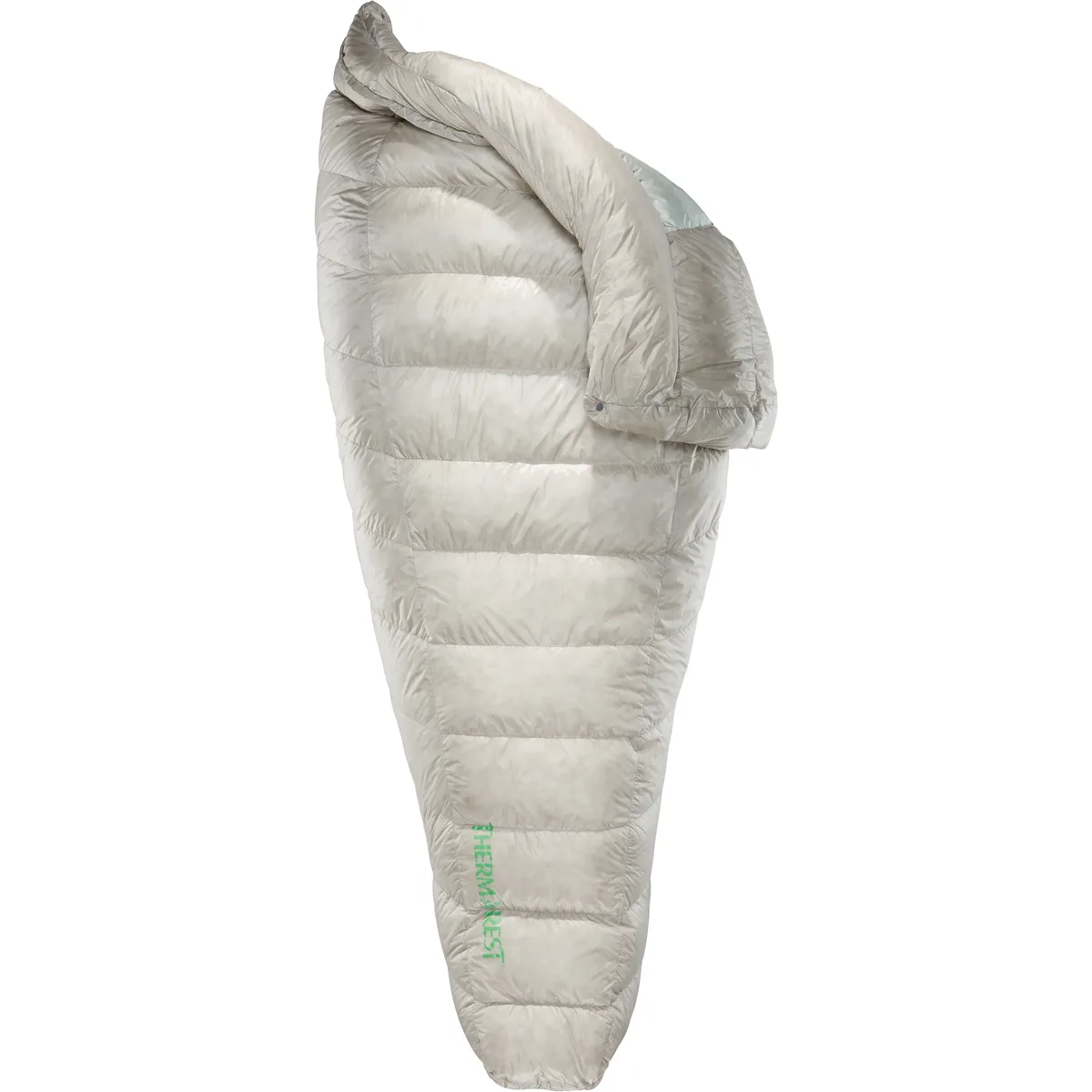
Therm-a-Rest
Therm-a-Rest Vesper 20 Quilt
Nineteen ounces, 900-fill goose down, a 10-denier shell and an EN comfort figure of 32 °F. The Vesper is one of the very few quilts from a mainstream brand that publishes a lab rating at all, and the number it publishes is worth reading carefully: a bag called a 20 that tests to a 32 °F comfort rating is a bag most people will feel cold in at 20. That is not a Therm-a-Rest problem, it is what the 20-degree label has always meant, and the Vesper is one of the few products honest enough to show its working. The SynergyLink straps are the good kind — they let the quilt float rather than pinning it flat.
Best for: Gram-counters who still want a published lab rating
Full spec sheet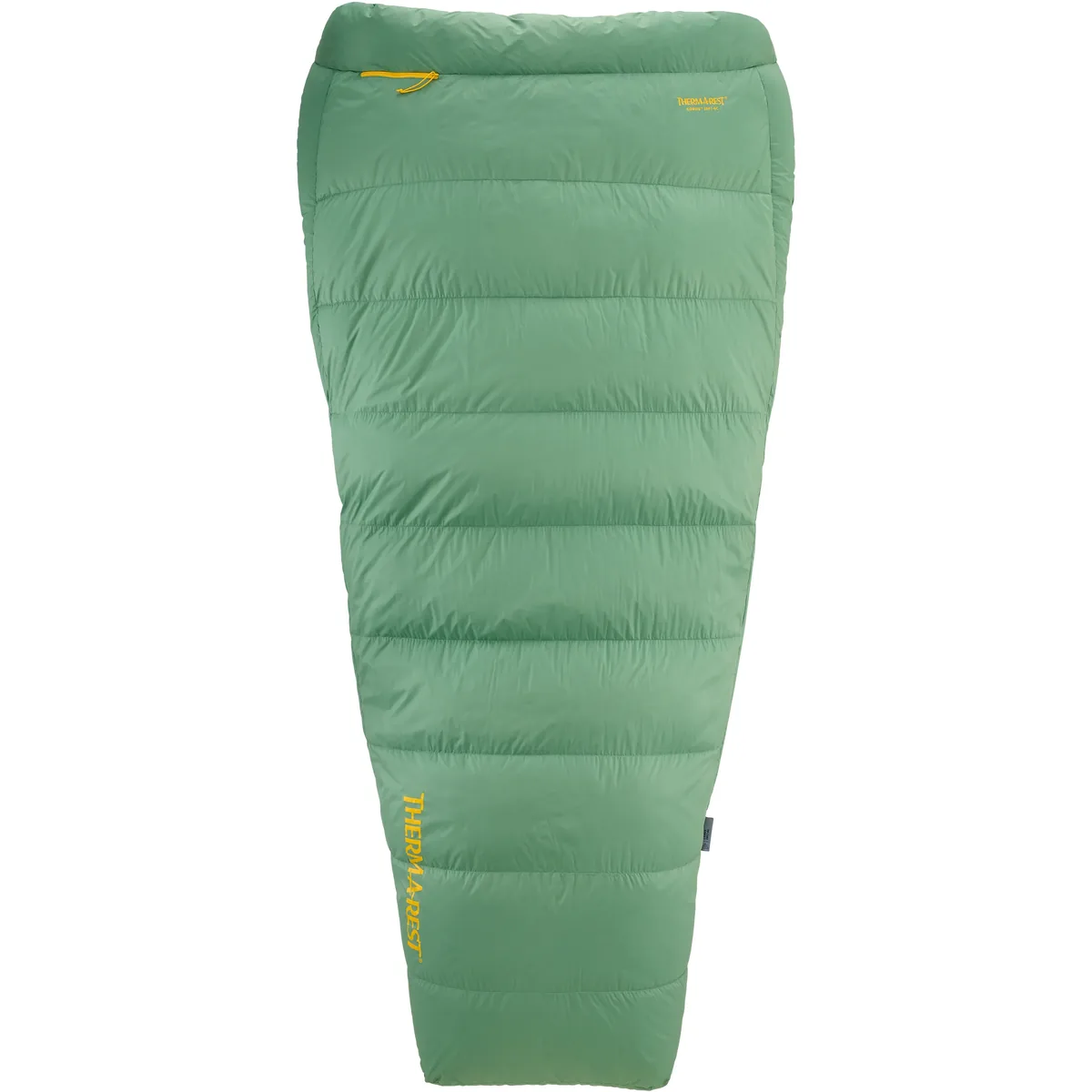
Therm-a-Rest
Therm-a-Rest Corus 20 Quilt
The Vesper's argument made in cheaper materials: same shape, same straps, same EN comfort rating of 32 °F, but 650-fill duck down inside a 20-denier shell instead of 900-fill goose down inside a 10. That costs seven ounces and saves $150, which for most weekend backpackers is the right side of the trade. The thicker shell is also more forgiving of the way quilts actually get used — dragged half-off the pad, sat on at breakfast, stuffed wet.
Best for: First-time quilt buyers who don't want to gamble $460
Full spec sheetThe full reference for every number mentioned here is on the spec-sheet page.