Therm-a-Rest
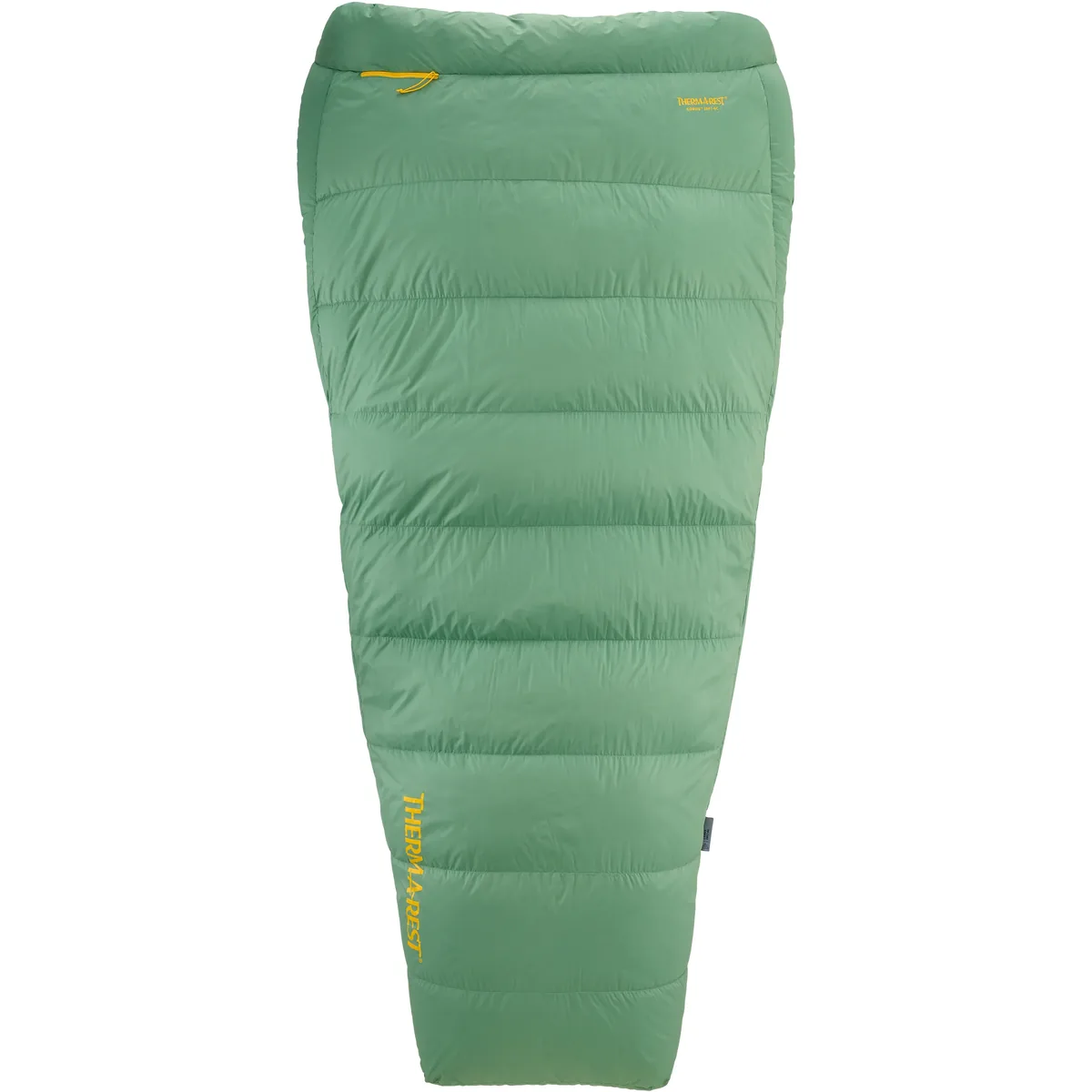
Therm-a-Rest Corus 20 Quilt
No citable owner-review average published for this one, so no stars.
The Vesper's argument made in cheaper materials: same shape, same straps, same EN comfort rating of 32 °F, but 650-fill duck down inside a 20-denier shell instead of 900-fill goose down inside a 10. That costs seven ounces and saves $150, which for most weekend backpackers is the right side of the trade. The thicker shell is also more forgiving of the way quilts actually get used — dragged half-off the pad, sat on at breakfast, stuffed wet.
Label against lab
Sold as a 20 °F bag; its EN 13537 comfort rating is 32 °F, which is 12 °F warmer than the name suggests. Plan around the comfort figure, not the label. Why the gap exists
At that temperature the pairing table wants at least an R 3 pad underneath it.
Size run
One product, 2 sizes. The headline numbers on this page describe the Regular.
| Size | Weight | Approx. price | Length | Shoulder girth |
|---|---|---|---|---|
| Regular | 1 lb 10 oz | ~$310 | 79 in | 49 in |
| Long | 1 lb 13 oz | ~$340 | 83 in | 53 in |
Specifications
Highlights
Features
- ISO or EN rated
- Hydrophobic down
- RDS down
- Pad attachment straps
- Recycled fabric
- Foot vent
What it does well
- Publishes the same 32 °F EN comfort figure as the Vesper at two-thirds the price.
- 20-denier shell takes the abuse a first quilt actually gets, where a 10-denier one would not.
- Nineteen ounces of down — more insulation than the Vesper carries, just at a lower fill power.
- The same SynergyLink strap system, which is the part of a quilt most likely to be badly designed.
What it costs you
- Seven ounces heavier than the Vesper and a much bigger packed size, 7.5 × 11.5 inches against 5.5 × 8.
- 650-fill down means the loft comes from bulk, so it takes up pack space out of proportion to its warmth.
- The 32 °F comfort rating is twelve degrees off the name — this is a freezing-nights quilt, not a 20-degree one.
- One width only, like the Vesper.
Those two lists are drawn from Therm-a-Rest’s published specifications and from reviews that measured them. They are not owner sentiment — anything owners said appears under its own heading below.
What owners say
Distilled from owner discussions and long-term published reviews, not from anything measured here.
The Corus does not attract much argument, which for a mid-priced quilt is a good sign. The owner reports that exist are practical and they line up: warm to around freezing in sleeping clothes on a decent pad, roomy enough that a hammock user describes swimming in it, and still in service after a couple of years and a dozen trips.
Owners land on a better comparison than temperature — fill: a 20-degree Corus carries about sixteen ounces of 650-fill down against a comparable cottage quilt's seventeen ounces of 850-fill. That is the whole difference between the two products, and it explains both the weight gap and the price gap better than any temperature rating does.
Below freezing, owners start adding layers over the top, which is exactly what the published comfort figure predicts.
What owners like
- One owner reports staying warm to about 0 °C in sleeping clothes on an R-4.5 pad, which lines up with the published comfort figure.
- It is described as roomy — an owner using it in a hammock says they feel like they are swimming in it, and likes that.
- Several seasons and a dozen trips in, owners are still using theirs without complaint.
- Owners compare its fill weight directly against cottage quilts, and the comparison is closer than the price gap suggests.
Common complaints
- The fill is 650-power against cottage quilts' 850, so an owner comparing them notes it carries slightly less down at a much lower loft efficiency.
- On the ground rather than in a hammock, owners report a knee occasionally escaping the side.
- Below about 0 °C owners add a separate lightweight down blanket over the top, which is an honest description of the limit.
Questions owners ask
How cold can I take it?
How does it compare with a cottage quilt at the same rating?
Is it wide enough?
Therm-a-Rest Corus 20 Quilt, head to head
Others in the same band
More from Therm-a-Rest →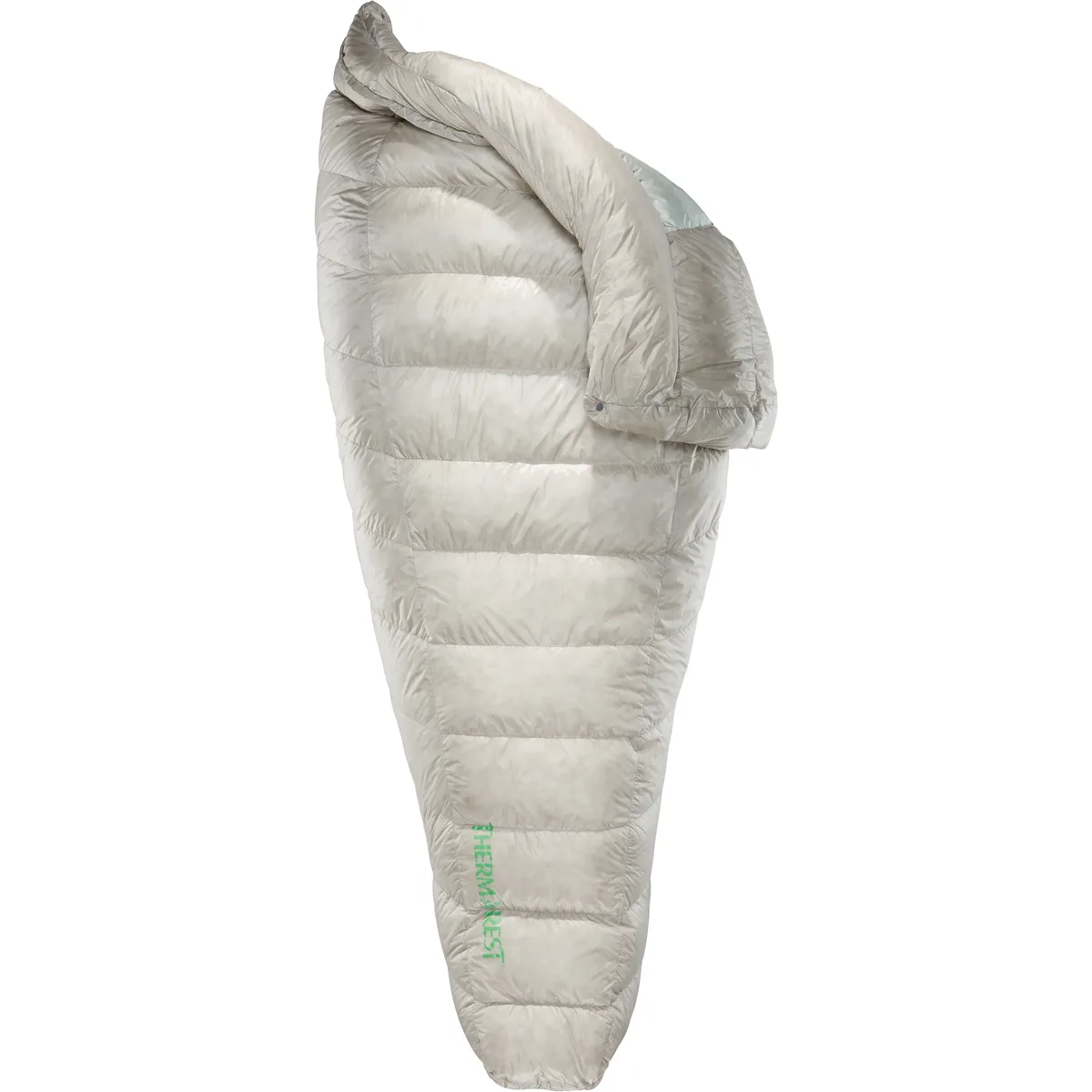
Therm-a-Rest
Therm-a-Rest Vesper 20 Quilt
Nineteen ounces, 900-fill goose down, a 10-denier shell and an EN comfort figure of 32 °F. The Vesper is one of the very few quilts from a mainstream brand that publishes a lab rating at all, and the number it publishes is worth reading carefully: a bag called a 20 that tests to a 32 °F comfort rating is a bag most people will feel cold in at 20. That is not a Therm-a-Rest problem, it is what the 20-degree label has always meant, and the Vesper is one of the few products honest enough to show its working. The SynergyLink straps are the good kind — they let the quilt float rather than pinning it flat.
Best for: Gram-counters who still want a published lab rating
Full spec sheet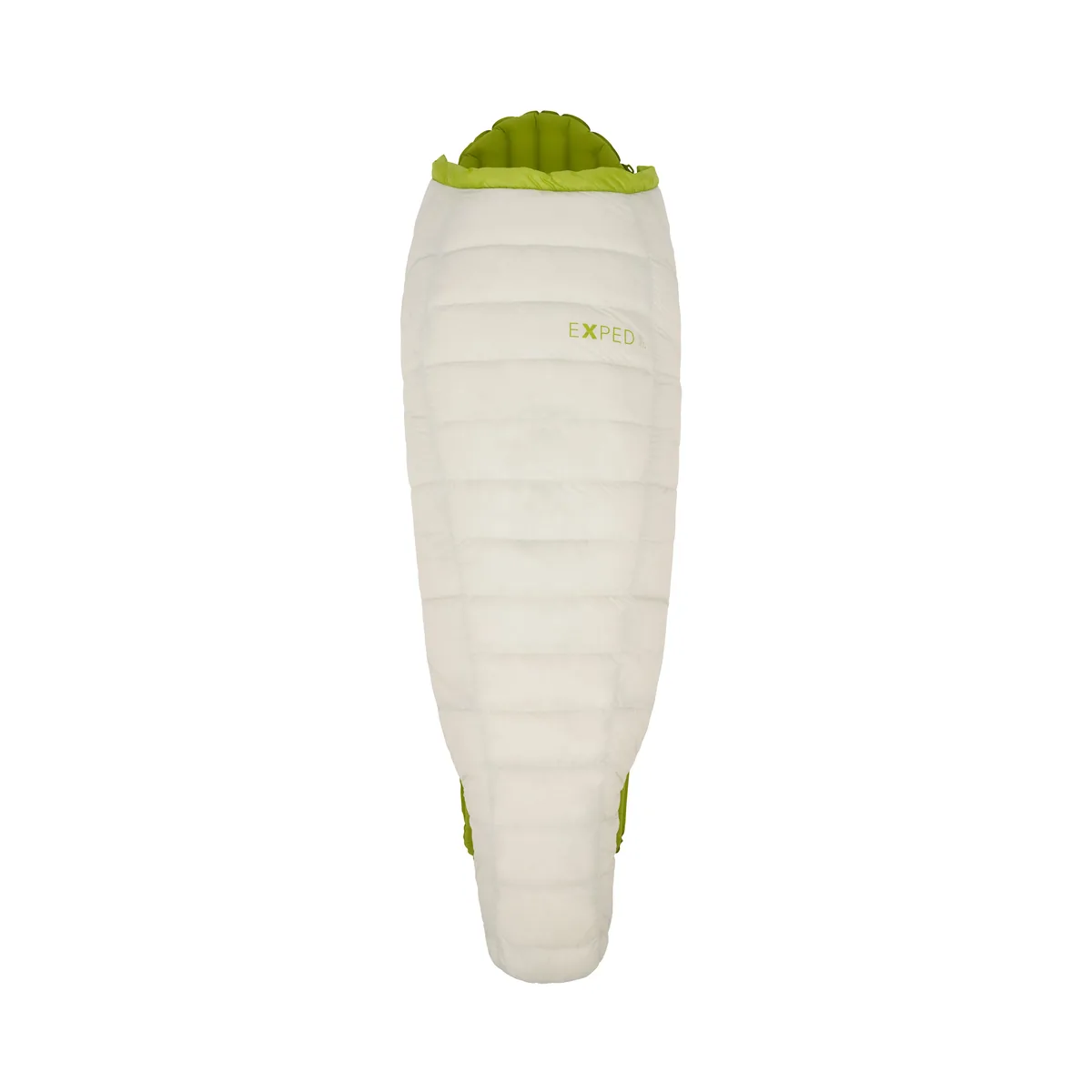
Exped
Exped Ultra Quilt 30
The quilt version of Exped's Ultra bag: 850-fill RDS Muscovy down, a recycled 10-denier shell, 18.5 ounces in the middle size, and — unlike the bag — no ISO figures at all, just a 32 °F number of Exped's own. That is worth knowing, because the hooded bag it shares a shell with tests to a 43 °F comfort rating, and a quilt is if anything harder to stay warm in. A 58-inch wrap width is generous by quilt standards and the three lengths cover most people.
Best for: Summer quilt use where a wide wrap matters more than a lab number
Full spec sheet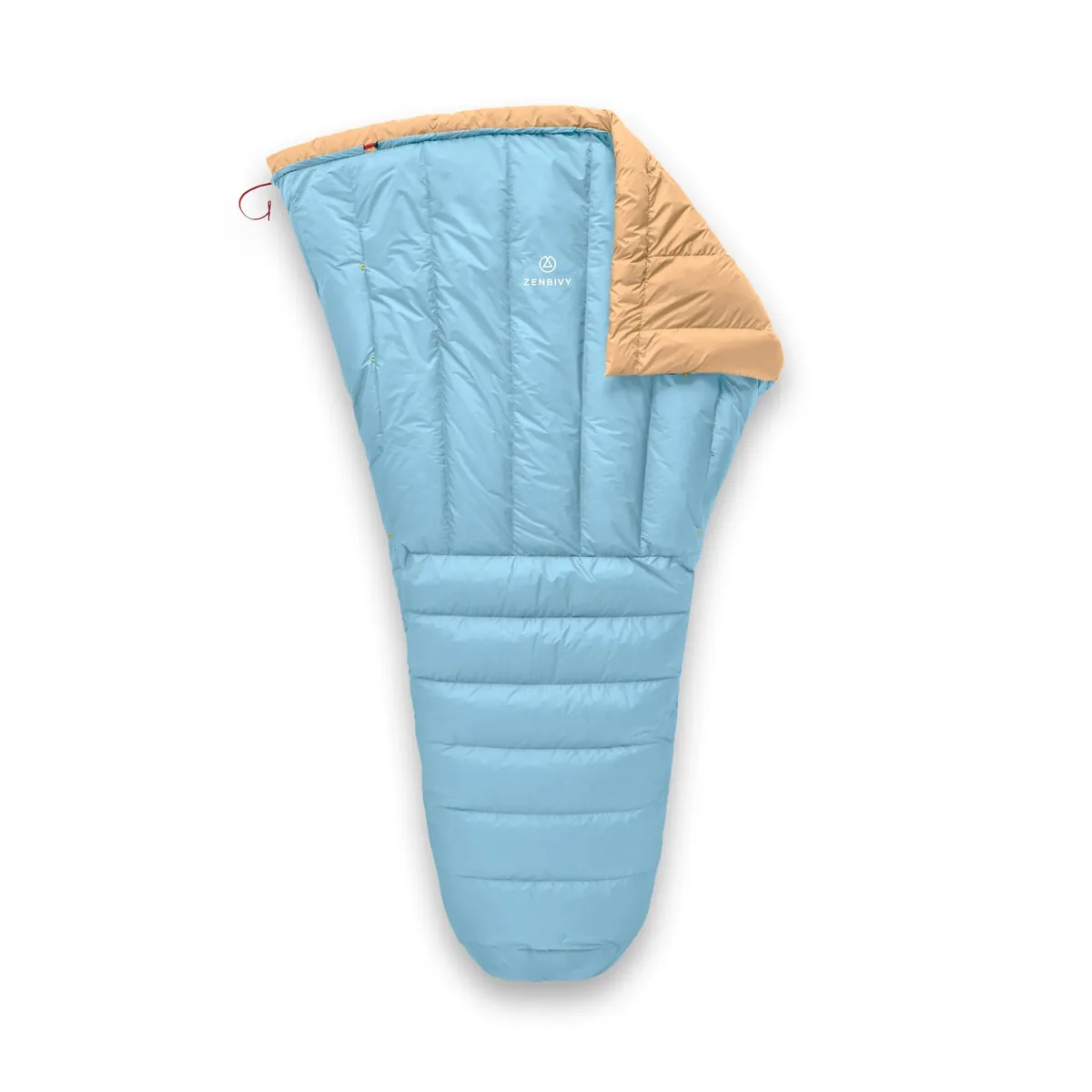
Zenbivy
Zenbivy Light Quilt 25
Zenbivy solved the quilt draft problem differently from everyone else: instead of strapping the quilt to the pad, the quilt clips to a fitted sheet that is already on the pad, so the seal moves with you and there is a hood-like head end built into the sheet. It is the most bed-like sleep system in this catalogue. Zenbivy publishes a limit-and-comfort pair of its own — 25 °F and 35 °F for this model — but does not claim ISO testing, so treat those as the maker's figures rather than lab ones.
Best for: Quilt users who have never got the drafts under control
Full spec sheet