How Much Warmth Does Layering Inside a Bag Actually Add?
Short answer
A dry base layer and a hat are worth roughly five to ten degrees and cost nothing. A puffy jacket adds real warmth only if the bag has room for it to loft — in a snug mummy it compresses both its own insulation and the bag's and can leave you colder than sleeping in a base layer alone.
Loft is the only thing that counts
Insulation works by holding still air. Two inches of loft holds more still air than one inch, regardless of whether the loft comes from a bag, a jacket, or both. So layering adds warmth exactly to the extent that it adds total loft — and it subtracts warmth wherever it compresses loft that was already there.
That is why shoulder girth matters so much on a cold-weather bag. A bag with 62 inches of shoulder girth has room for a jacket to loft inside it. A 57-inch ultralight bag does not; put a puffy on in one of those and you have crushed a layer to gain a layer.
The cheap wins, in order
A hat is first, because the head is the one part a hoodless quilt leaves completely exposed and the one place a mummy hood is easiest to leave loose. Dry socks are second — feet are the coldest part of most people's night and the footbox is the hardest part of a bag to reheat. A dry base layer is third: damp clothing conducts heat away and evaporates, both of which cost you more than the fabric adds.
Only after all three does a jacket make sense, and then only in a bag with room for it.
What a liner does and doesn't do
A fabric liner adds a few degrees at most and mostly exists to keep body oils off the bag's shell, which is worth doing on an expensive bag. A fleece or down liner adds real warmth, but by then you are carrying a second insulation layer and would usually be better served by a warmer bag.
The one liner worth its weight is in hot weather, used alone: a silk or cotton sheet inside a bag you have unzipped flat, which is a completely different use case from adding degrees on a cold night.
Gear this applies to
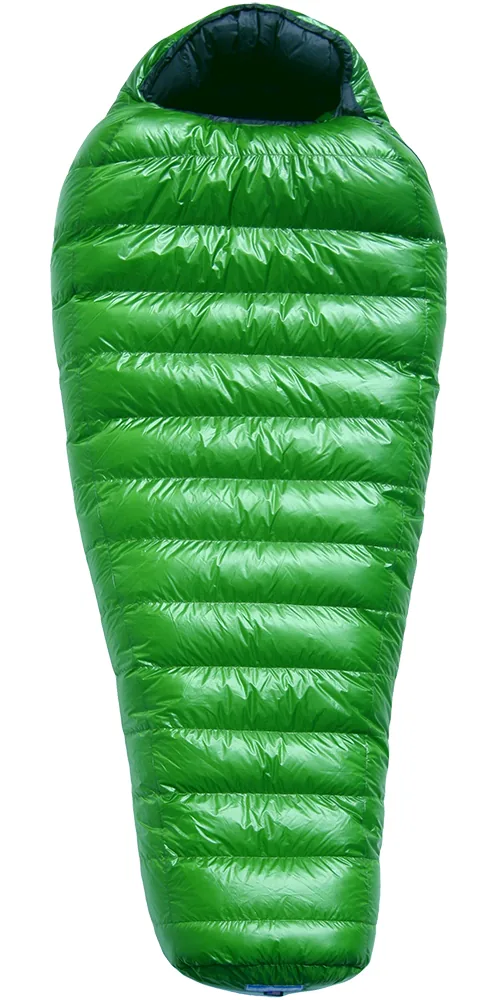
Western Mountaineering
Western Mountaineering VersaLite 10
Ten degrees, six and a half inches of loft, twenty ounces of 850-fill down, and three inches more shoulder girth than the UltraLite — which is the point of it. The VersaLite is the bag for someone whose trips run from October frost to alpine summer and who would rather carry three extra ounces than own two bags. At 32 ounces it weighs less than plenty of 20-degree bags in this catalogue, and the girth means a puffy jacket can be worn inside it without crushing the loft.
Best for: One bag covering shoulder season and light winter
Full spec sheet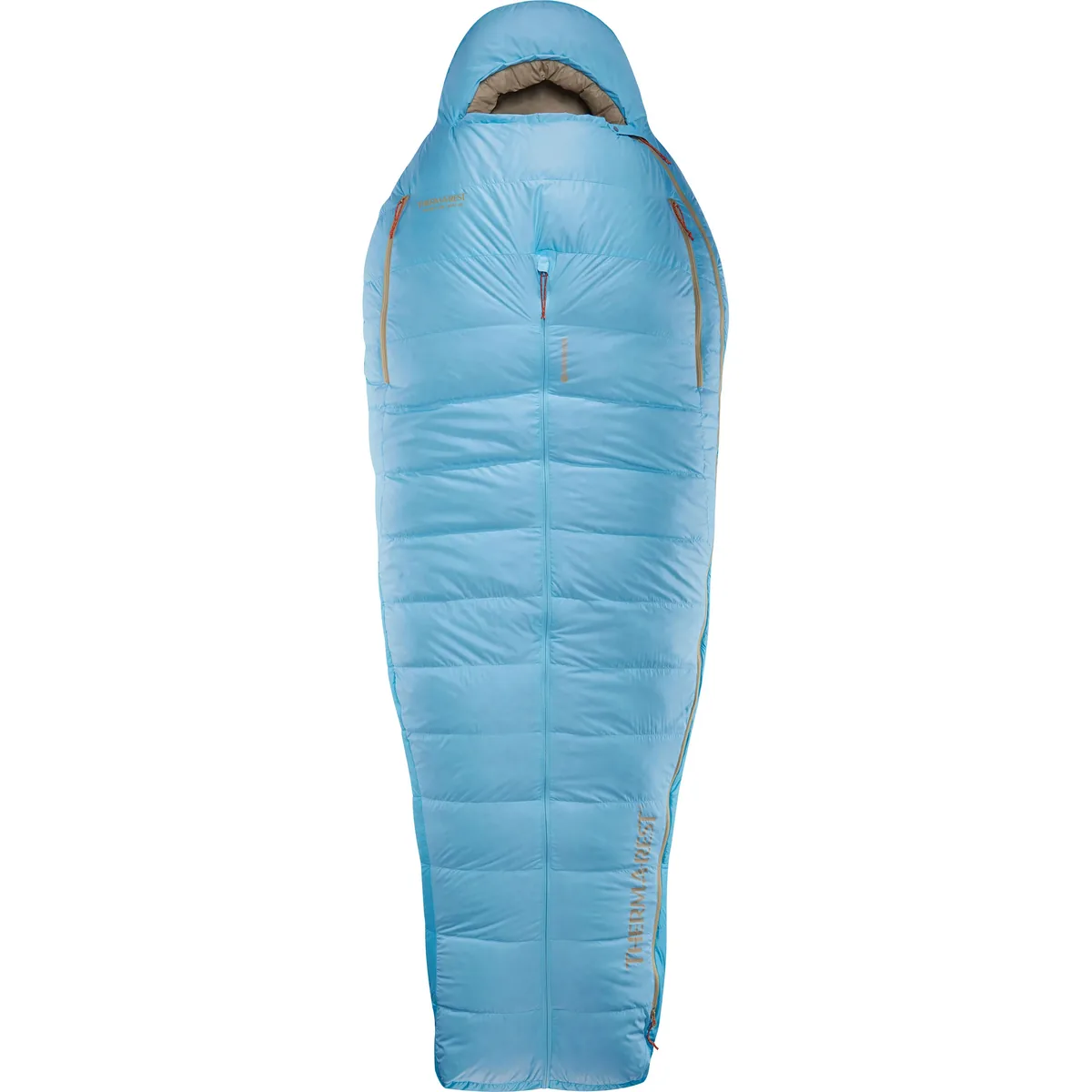
Therm-a-Rest
Therm-a-Rest Boost 650 20
Six sizes, three lengths in two widths, which is more fit choice than almost any other bag here offers and the reason the Boost is worth a look for anyone who has been cold in a standard mummy because they couldn't fill it — or trapped in one because they overfilled it. The Wide versions add eleven or twelve inches of shoulder girth, which is a genuinely different bag rather than a token option. The tradeoff is 650-fill down and 43 ounces in the Regular: heavy for backpacking, entirely reasonable for a bag that gets used a dozen nights a year.
Best for: Sleepers who have never found a mummy bag that fits
Full spec sheet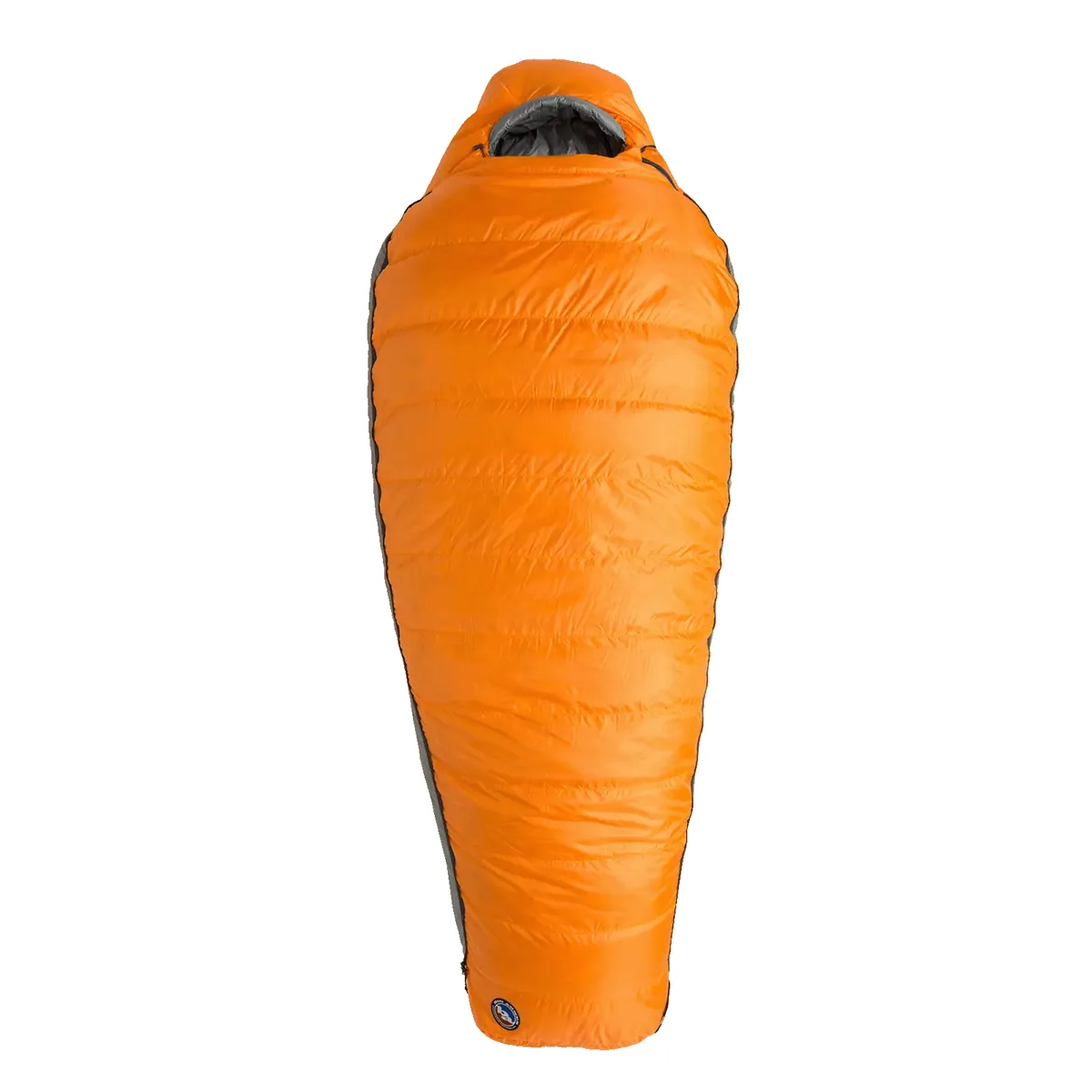
Big Agnes
Big Agnes Torchlight EXP 20
Two zippered expansion panels run from shoulder to footbox and add five inches of girth on each side — ten inches in total — which makes this the only bag here whose fit you can change after you have bought it. Zip them shut on a cold night and it is a normal mummy; open them on a warm one and it is closer to a semi-rectangular bag. That is a genuinely good answer to the problem that a bag tight enough to be warm is too tight to sleep in. The trade is 40 ounces and a manufacturer-only 20-degree rating with no lab figure behind it.
Best for: Sleepers who want a mummy some nights and room on others
Full spec sheetThe full reference for every number mentioned here is on the spec-sheet page.